prostrate knotweed Care (Polygonum aviculare)

Also known as: Wireweed, Hog Weed, knotgrass, Dooryard Knotweed, Common Knotgrass, Bird Knotgrass, Bird Knotweed, Dooryard Weed
prostrate knotweed

About prostrate knotweed

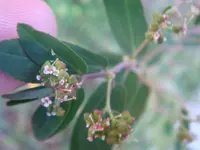
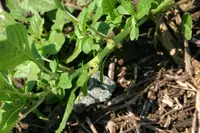
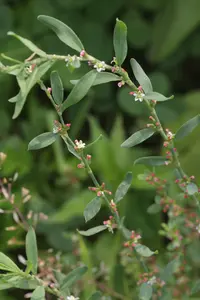
Prostrate knotweed (Polygonum aviculare) is a low, mat-forming annual often found along paths, in compacted soil, and in disturbed urban or roadside sites. It forms dense, wiry mats with many small, gray-green leaves and tiny, pale pink to greenish flowers tucked along the stems.

This species is hardy, tolerant of foot traffic, and thrives in poor, dry, or compacted soils where many other plants fail. It commonly appears as a lawn or garden weed, but its resilience helps stabilize bare ground. Those who want to care for prostrate knotweed should know it prefers open sun, well-drained soil, and does not require rich fertility or frequent watering.

Main Plant Requirements

Care Difficulty

Easy Care

Light Preference

Full Sun

Water Requirements

Moderate Water

Temperature Preference

Cold Hardy

Hardiness Zone

3–9

Soil Texture

Sandy, Loamy, Clay

Soil pH

Slightly acidic (6.5–7.0), Slightly alkaline (7.0–7.5)

Soil Drainage

Well-drained

Fertilization

Minimal (feed rarely)

Get Personalized Care Plan

Scan your plant to receive care tips personalized for your specific plant

Available on iOS and Android

How to Care for the prostrate knotweed

Polygonum aviculare thrives in open, bright conditions typical of roadsides and compacted ground.

  • Provide 6–8 hours of direct sun daily; full sun promotes dense, low growth and abundant flowering in prostrate knotweed.
  • Plant in an area with morning to mid-afternoon sun; it tolerates light partial shade (3–4 hours sun), but stems may elongate and seed set can decline.
  • In hot summers, strong afternoon sun is acceptable if soil moisture is maintained; deep shade leads to sparse, weak plants and reduced vigor.

This species is drought-tolerant once established but still responds to consistent soil moisture.

  • Allow the top 2–5 cm of soil to dry between rains or irrigations; in average garden soil, this often means no supplemental watering except during extended dry spells.
  • Use well-drained soil or sites where water does not pool for more than 24 hours; persistent soggy conditions cause root rot, yellowing leaves, and dieback.
  • During hot, dry periods, monitor for wilting or crisping leaf edges as a sign to water, while pale, soft, or collapsing stems suggest overwatering problems.

This annual species tolerates a wide temperature range typical of temperate climates.

  • Optimal growth occurs around 60–77°F (16–25°C), with steady development of foliage and seeds during mild spring and early summer conditions.
  • Seeds germinate once soils warm above roughly 50°F (10°C), and young plants withstand light frosts down to about 28°F (-2°C) with only minor damage.
  • Mature plants tolerate summer heat up to about 90–95°F (32–35°C) if soil moisture is adequate, but prolonged hard freezes below 25°F (-4°C) kill above-ground growth.

This species is highly tolerant of a wide humidity range and rarely needs special humidity management outdoors.

This species thrives in poor, compacted soils but can be managed more predictably in a prepared mix.

  • Use a sandy or sandy-loam soil with low to moderate organic matter to mimic the lean, disturbed sites it naturally occupies.
  • Ensure fast drainage by blending roughly 60–70% mineral topsoil with 30–40% coarse sand or fine grit, avoiding heavy clay amendments.
  • Keep soil pH slightly acidic to neutral, around 6.0–7.5, as Polygonum aviculare tolerates modest variation without clear benefit from extremes.
  • Avoid waterlogged, peat-heavy, or thick clay soils, which reduce aeration around the roots and encourage rot or weak, leggy growth.

This species can be grown in containers, mainly for controlled spreading or observation rather than ornamental display.

  • Choose a broad, shallow container to allow its mat-forming roots and stems to spread horizontally without crowding.
  • Use a heavy or terracotta pot when placed outdoors so the low but spreading growth does not shift or tip the container in wind.
  • Allow the upper 2–3 cm of the mix to dry before watering again, as consistently moist container media promote overly lush, weak growth.

Polygonum aviculare is a tough wild species that grows acceptably in average soil with minimal feeding.

  • For denser growth in poor soil, apply a light layer of compost in early spring.
  • Use a balanced slow-release fertilizer (around 10-10-10) at low label rates once in spring.
  • Avoid midsummer high-nitrogen products, which encourage weak, lush growth.
  • Do not feed in late fall or winter, as the plant is going dormant.

Pruning Polygonum aviculare is mainly done for tidiness and to limit spread, not for plant health.

  • Best time is late winter to early spring before new growth starts.
  • Shear or trim back sprawling, crowded, or walkway-invading stems with clean hand pruners.
  • Remove any dead, damaged, or diseased sections during the growing season.
  • Light shaping reduces seed set and helps manage this plant in formal or high-traffic areas.

This low-growing species is usually field-grown, so focus on thoughtful transplanting rather than frequent repotting.

  • Transplant in early spring or early fall when temperatures are mild and soil is workable.
  • Move plants if growth is poor, soil is compacted, or the patch is being disturbed by construction or traffic.
  • Lift with a shallow spade, keeping a broad, thin root pad intact to limit stress.
  • Replant at the same depth, water thoroughly, and keep soil lightly moist until new growth resumes.

Polygonum aviculare is most often propagated by seed, which reflects its natural life cycle as an annual or short-lived perennial.

  • Collect mature seeds in late summer to early fall when seed heads dry and brown.
  • Sow outdoors in fall or very early spring; natural cold exposure improves germination.
  • Lightly rake seeds into the top 0.5 cm of soil, keeping the surface consistently moist.
  • Provide full sun and open, well-drained soil; avoid thick mulch that blocks seed-soil contact.

In most temperate climates, prostrate knotweed is cold hardy and usually needs no special winter care.

  • Established plants tolerate frost and freezing down to typical winter temperatures in much of the US.
  • In exposed, heavily trafficked sites, a thin mulch layer can reduce soil heaving and compaction.
  • Container-grown specimens in very cold regions can be overwintered in a sheltered, unheated space to protect roots.

Care Tips

Edge Containment

Install shallow plastic or metal edging 5–7 cm deep along paths or beds to keep the spreading stems from encroaching into lawns or neighboring plantings while still allowing a low, ground-hugging mat to form.

Traffic Management

Direct foot traffic with stepping stones or defined paths because repeated treading will keep the plant extremely low and sparse, while lightly used areas will develop a denser cover.

Seed Bank Control

If you want to limit self-seeding, shear or mow the patch on a high setting before seed heads mature, then collect and remove clippings so the soil seed bank does not build up.

Targeted Habitat Use

Use this species intentionally on compacted, dry strips such as driveway edges or utility access paths where other groundcovers struggle, and avoid sowing it near ornamental beds where its tolerance of disturbance can make it invasive.

Low-Input Groundcover

To reduce maintenance in rough areas, introduce seed once, then manage mainly with occasional mowing or trimming instead of irrigation or fertilization, which is a practical approach to caring for prostrate knotweed in low-value sites.

Everything About prostrate knotweed

Common Pests and Diseases

Leaf spot

This disease causes small brown to dark purple lesions on leaves that may merge into larger dead patches, especially in humid or crowded stands. Symptoms include premature yellowing and early leaf drop in summer.

Solution

Remove and discard heavily spotted foliage to lower the source of infection, and avoid overhead watering to keep leaves dry. Improve spacing and airflow, and if the plant is of particular value in a mixed border, a copper-based or chlorothalonil fungicide labeled for leaf spots can be used according to local regulations and label directions.

Powdery mildew

This disease produces a white to gray powdery coating on leaves and young stems, often appearing in late summer during warm, dry days with cool nights. Symptoms include distorted new growth and reduced vigor in dense mats of plants.

Solution

Thin or cut back crowded patches to improve air circulation and light penetration, and remove the most affected stems. In ornamental settings, apply a sulfur or potassium bicarbonate product labeled for powdery mildew at the first sign of infection, repeating as directed and avoiding applications during very high temperatures.

Aphids

These insects cluster on soft stems and undersides of leaves, sucking sap and excreting sticky honeydew that can attract sooty mold. Symptoms include curled or distorted leaves and reduced growth, especially on young plants.

Solution

Spray plants with a strong stream of water to dislodge colonies, and encourage natural predators such as lady beetles by limiting broad-spectrum insecticides nearby. For persistent infestations in garden settings, use insecticidal soap or a light horticultural oil, applied thoroughly to leaf undersides and repeated as needed.

Leafhoppers

These insects feed by piercing and sucking sap, causing pale stippling, small white specks, or yellowing on leaves, and they may transmit certain plant pathogens. Symptoms include rapid movement of small wedge-shaped insects that jump or fly when disturbed.

Solution

Mow or cut back heavily infested areas to remove feeding sites, and reduce nearby tall weeds that harbor populations. For valued plants in mixed plantings, use yellow sticky traps for monitoring and apply insecticidal soap or a low-impact systemic product labeled for leafhoppers if thresholds are consistently exceeded.

Rust

This disease forms small orange, yellow, or brown pustules on leaf undersides, sometimes with pale spots visible on the upper surface. Symptoms include gradual weakening of plants and increased leaf drop under prolonged moist conditions.

Solution

Remove and destroy infected leaves and plant debris to reduce the rust spore load, and avoid frequent overhead irrigation. Where caring for prostrate knotweed in ornamental beds, consider a preventive or early-season fungicide labeled for rust, rotating active ingredients if repeated treatments are needed.

Interesting Facts

Soil compaction specialist

This species often dominates on trampled paths, playgrounds, and farmyards because its roots tolerate compacted, low-oxygen soil that many other plants cannot endure.

Bird-dispersed seed strategy

Its small, dry fruits are eaten by seed-eating birds such as sparrows and doves, which help spread the plant along roadsides, farm edges, and urban areas.

Ancient crop-field companion

Archaeobotanical studies frequently find its seeds in ancient grain storage pits and field layers, showing it has been associated with human agriculture since early cereal cultivation.

Botan icon

Did you know?

Pollen records from lake sediments and peat deposits show that Polygonum aviculare expanded dramatically alongside early human settlement and land disturbance, making it a useful indicator species for reconstructing past human impacts on landscapes.

FAQs about prostrate knotweed

This species spreads very quickly by seed and low, mat-forming stems. It often colonizes bare, compacted soil and gravel. Regular edging, mulching, and removing seedheads before they drop helps limit unwanted spread in managed areas.

Grow Healthy Plants with Botan Care

Keep your plants happy and healthy with plant identification, disease detection, and easy care guidance.

Botan plant care app — identify plants on mobile

Explore More Plants