Low-Mow Management
When the plants spread into lawn edges, set the mower to a slightly higher cutting height so the flattened mats are trimmed without scalping soil, which reduces regrowth and erosion along paths and driveways.

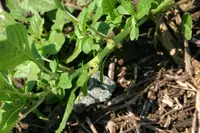
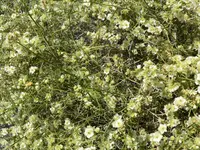
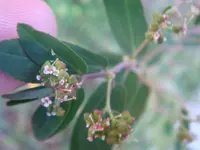
Prostrate pigweed, Amaranthus blitoides, is a low, mat-forming annual often found along sidewalks, driveways, fields, and disturbed ground. It spreads outward rather than growing tall, forming dense, ground-hugging patches with small, oval leaves and tiny, greenish flowers close to the stems. Native to North America but now widespread, it thrives in full sun, compacted soils, and dry, hot conditions, which makes it highly resilient and sometimes weedy. Its toughness and tolerance of poor soil mean it is very easy to grow but can be invasive if not controlled, so anyone wanting to learn how to care for prostate pigweed should also plan for regular management.

Care Difficulty
Easy Care

Light Preference
Full Sun

Water Requirements
Low Water

Temperature Preference
Warm Climate

Hardiness Zone
5–9

Soil Texture
Sandy, Loamy, Rocky

Soil pH
Slightly acidic (6.5–7.0), Slightly alkaline (7.0–7.5)

Soil Drainage
Well-drained

Fertilization
Minimal (feed rarely)
Scan your plant to receive care tips personalized for your specific plant
Available on iOS and Android
Amaranthus blitoides thrives in strong light and handles open, exposed sites well.
This species prefers dry to moderately moist conditions and copes well with short droughts once established.
This warm-season annual grows best in stable, mild to hot conditions without frost.
This species is adapted to relatively dry conditions and usually does not need special humidity management.
Amaranthus blitoides grows best in loose, fast-draining mineral soils that do not stay wet for long.
This species can be grown in containers if the pot is managed to stay free-draining and stable for its spreading habit.
Amaranthus blitoides is a tough annual that benefits from light feeding in poor soils but often manages without fertilizer in richer ground.
Amaranthus blitoides rarely needs heavy pruning, but light trimming helps maintain a low, even mat and reduce self-seeding.
This species is usually grown in the ground; transplanting seedlings of Amaranthus blitoides is more relevant than repotting mature plants.
New plants of Amaranthus blitoides are most commonly raised from seed, which germinates well under warm conditions.
Amaranthus blitoides is a warm-season annual and does not require complex winter care, as individual plants die after hard frost.

Plant Health Check
Not sure what's wrong with your plant? Check your plant's health inside the app.
This species grows as a very low, prostrate annual, forming dense mats that can root at stem nodes, allowing it to spread across disturbed ground, roadsides, and compacted soils.
Prostate pigweed tolerates dry, nutrient-poor, and moderately saline soils, which helps it colonize urban cracks, hard-packed paths, and agricultural field edges where many other annuals struggle.
A single plant can produce large numbers of small, long-lived seeds that persist in the soil seed bank, contributing to its persistence in disturbed habitats and cropped fields.

Genetic studies show that this North American species has contributed to the complex evolutionary history of weedy amaranths, helping researchers understand how disturbance-adapted annual plants spread and diversify across continents.
This species has a low, mat-forming habit and produces many seeds, so it can spread quickly in open soil. Frequent weeding and removing seed heads before they mature helps limit unwanted expansion in managed beds.
Keep your plants happy and healthy with plant identification, disease detection, and easy care guidance.