

Black Poplar Identification (Populus nigra)

To recognize Black Poplar, check for triangular to diamond-shaped leaves with a pointed tip, finely toothed edges, and an alternate arrangement along the twigs.

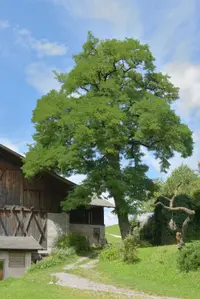
It also forms a tall tree with a broad, irregular crown and a dark gray to blackish trunk that becomes deeply furrowed with age.

Populus nigra Identification

Is This Black Poplar?

Upload a plant photo and check the identification in seconds.

Clear images work best. Avoid photos taken too close or too far away

Check the tree’s outline, trunk, and leaves first.

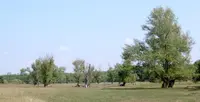
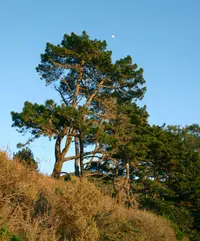
  • Tall, narrow-crowned tree, often reaching 65-100 feet (20-30 m), with ascending main branches.
  • Trunk is usually stout and deeply furrowed, with dark gray to blackish bark broken into rough ridges.
  • Leaves are alternate, triangular to diamond-shaped, often with a drawn-out tip and fine toothed edges.
  • Most leaves are about 2-4 inches (5-10 cm) long, on flattened stalks that let them hang and tremble.

If visible, look for drooping catkins and small capsule fruits along the twigs.

Black Poplar shows clear visual differences between young shoots, mature crowns, catkins, and capsules.

  • Young plant: Young plants often carry vigorous upright shoots with smoother gray bark and larger, strongly triangular leaves, sometimes 2-4 inches (5-10 cm) long.
  • Mature plant: Mature trees develop a broad trunk with dark, deeply fissured bark and a taller crown; short side shoots make leaves appear denser along older branches.
  • Flowering stage: Flowers appear as hanging catkins before full leaf expansion, making branch tips look fringed rather than leafy; male and female catkins occur on separate trees.
  • Fruiting stage: Female trees later show drooping clusters of capsules that split open, replacing catkins with sparse dangling fruiting strands and then conspicuous cottony seed masses.

Black Poplar has several named forms that can be separated by crown shape or foliage color.

  • Populus nigra 'Italica': Lombardy poplar has a very narrow, columnar crown, often only 10 to 15 feet (3 to 4.5 m) wide while growing 50 to 80 feet (15 to 24 m) tall.
  • Populus nigra 'Plantierensis': This form is also upright but broader than 'Italica', with a more open, less tightly fastigiate crown.
  • Populus nigra 'Thevestina': Leaves are more distinctly triangular and often slightly smaller than the typical form, giving the canopy a sharper-textured look.
  • Populus nigra 'Variegata': Leaves show irregular creamy white variegation, with pale sectors or margins that stand out against the normal green foliage.

In spring, Populus nigra shows dangling catkins before or with the first leaves, making flowering trees easier to spot from a distance. Soon after, fresh leaves expand glossy green and triangular to diamond-shaped. By fall, the foliage turns yellow before dropping. In winter, the bare crown reveals its upright branching and dark, ridged bark, which can stand out clearly on older trees.

Several poplars can be mistaken for Populus nigra at a glance.

eastern cottonwood(Populus deltoides)

Often confused because both are tall poplars with triangular leaves. Eastern cottonwood usually has broader, more coarsely toothed leaves and thicker twigs. Black poplar more often shows a narrower leaf outline.

Canadian poplar(Populus × canadensis)

This hybrid is commonly confused because it combines traits of P. nigra and P. deltoides. It is often more upright, with larger, broader leaves and less of the neat diamond-shaped outline typical of P. nigra.

Populus nigra is native across much of Europe, western Asia, and parts of North Africa. It naturally occurs along large rivers, floodplains, streambanks, and other lowland alluvial areas, often in open, disturbed ground shaped by periodic flooding. That setting helps with identification because true wild trees are usually tied to riparian corridors rather than dry uplands or closed forest. Finding a large poplar on river edges within its native range makes Populus nigra more plausible than many similar planted poplars.

Confirm the Species with Botan

Upload a photo to compare key features and get help identifying the plant or confirming a likely match.

FAQ

It is often confused with Lombardy poplar and cottonwoods such as eastern cottonwood. For Black Poplar identification, check the broad triangular leaves, long flattened leaf stalks, and deeply furrowed dark bark on older trees.

More Plant Identification Guides

Identify the Plant and Get Its Profile

Use Botan to identify a plant from a photo, then review plant details, care information, and common problems.

Botan app identifying a plant from a photo
Top 15 Plants That Don’t Need Sunlight

8 min read · 17 Sept 2026

Top 15 Plants That Don’t Need Sunlight

Some plants thrive in dim rooms, shaded corners, and places with indirect light. In this guide, you’ll explore the top 15 species best suited to low-light conditions and how to care for them.

Plant Recommendations
Top 15 Plants That Don’t Need Sunlight
Best Time to Mow Lawn – A Complete Guide

5 min read · 10 Aug 2026

Best Time to Mow Lawn – A Complete Guide

Explore when to mow your lawn for its health and a pleasant green color. Find out the best time for this task during the summer heat, and follow practical tips for correctly cutting the grass, and learn common mistakes to avoid.

Plant Care
Best Time to Mow Lawn – A Complete Guide
How to Use a Moisture Meter for Plants

5 min read · 4 Sept 2026

How to Use a Moisture Meter for Plants

Watering by feel kills plenty of houseplants. A moisture meter checks the soil for you, and takes the guesswork out of it. This guide will show you how to use it correctly, from the first touch to the final reading.

Beginner Guides
How to Use a Moisture Meter for Plants