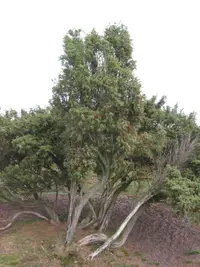
locust tree Identification (Robinia pseudoacacia)

To recognize Robinia pseudoacacia, check for alternate compound leaves with 7-19 oval leaflets, paired short spines at each leaf base, and hanging clusters of pea-like white flowers.

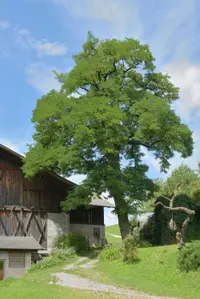
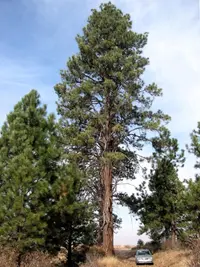
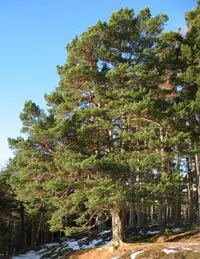
It typically forms a medium to large tree with deeply furrowed gray-brown bark and an open, irregular crown.

Robinia pseudoacacia Identification

Identify a Plant by Photo

Take or upload a photo to confirm your plant ID with Botan.

Clear images work best. Avoid photos taken too close or too far away

Check Robinia pseudoacacia for its leaf pattern, paired spines, bark, flowers, and pods.

  • Leaves are alternate and pinnate, usually 8-14 inches (20-35 cm) long with 7-19 oval leaflets.
  • A short pair of stiff spines sits at each leaf base on young twigs.
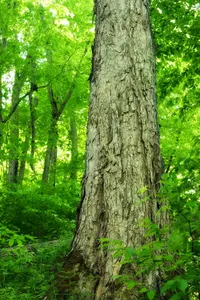
  • Trunks show dark gray to brown bark broken into deep, rope-like ridges.
  • Flowers hang in drooping clusters; each pea-like flower is white and about 3/4-1 inch (2-2.5 cm) long.
  • Seed pods are flat, smooth, and narrow, about 2-4 inches (5-10 cm) long.

Use several traits together, especially leaves, spines, and bark.

Robinia pseudoacacia shows clear stage-based changes in stems, crown form, flowers, and pods.

  • Seedling: Seedlings show a thin green stem with alternate compound leaves; paired spines at the nodes are often already visible and help separate them from later shoots.
  • Young plant: Young plants form fast, upright shoots with smooth bark, widely spaced branches, and larger compound leaves bearing roughly 7-19 oval leaflets.
  • Flowering stage: Flowering branches carry hanging clusters of white, pea-like blossoms, shifting the outline from leafy to distinctly pendant and making the crown look lighter.
  • Mature plant: Mature locust tree develops a broad, irregular crown, deeply furrowed dark bark, stout thorny shoots, and often hanging flat pods that remain visible after flowers.

Several selections of Robinia pseudoacacia are easy to tell apart by canopy shape, leaf color, or branch structure.

  • 'Frisia': Leaves emerge bright yellow to yellow-green and usually stay much lighter than the typical green form through the season.
  • 'Purple Robe': New leaves and young shoots are flushed bronze-purple, and the flower clusters are pink to rose-purple instead of white.
  • 'Lace Lady': Branches are strongly contorted and twisted, giving the crown a gnarled outline even in winter.
  • 'Umbraculifera': Forms a dense, rounded crown, often nearly globe-shaped, rather than the typical open, irregular canopy.

In late spring, Robinia pseudoacacia becomes easier to spot when long, drooping clusters of fragrant white flowers hang below the new leaves. The leaves are pinnate, meaning divided into many small leaflets, and they cast light shade. By late summer into fall, flat seed pods are visible and often persist after leaf drop. In winter, the bare, furrowed bark and paired spines at the nodes stand out clearly.

A few pinnate-leaved trees can be mistaken for locust tree at a quick glance.

honey locust(Gleditsia triacanthos)

Both have compound leaves and furrowed bark. Honey locust usually has many small leaflets and often large branched thorns on trunk and branches; Robinia pseudoacacia has fewer, broader leaflets and paired short spines at the leaf base.

Kentucky coffeetree(Gymnocladus dioicus)

It can resemble it by its coarse, pinnate foliage. Kentucky coffeetree has much larger leaves, often twice-compound, with fewer but bigger leaflets, and thick, stout pods; black locust has simpler pinnate leaves and flatter pods.

Robinia pseudoacacia is native to parts of the eastern and southeastern United States, especially the Appalachian and Ozark regions, with scattered native populations beyond that core range. In the wild it is often found in open woods, forest edges, old fields, disturbed ground, and rocky slopes. Habitat can help narrow identification because this species commonly appears in sunny, broken landscapes rather than deep forest or wetland settings.

  • Toxic parts: Bark, leaves, seeds, and young shoots contain toxic compounds. The main concern is ingestion by humans and pets.
  • Pods and seeds: Seed pods can attract attention, but the seeds are poisonous if eaten by people, dogs, cats, or livestock.
  • Spines: Twigs and young branches often have paired spines. This is a physical injury risk from handling or contact for both humans and pets.

Check Your Plant ID

Use Botan to compare a photo and help confirm the plant, which can prevent mix-ups with similar species.

FAQ

A strong clue in locust tree identification is the paired spines at each leaf node, often short but sharp, along with pinnate leaves carrying many oval leaflets and hanging clusters of white pea-like flowers.

More Plant Identification Guides

Identify Your Plant with Botan

Snap a photo to identify it, then get species-specific care information, plant details, and common problems.

Botan app identifying a plant from a photo
How to Winterize Your Garden in 6 Steps

5 min read · 28 Sept 2026

How to Winterize Your Garden in 6 Steps

Learn how to prepare your garden for winter with a practical six-step checklist covering cleanup, tender plant care, watering, mulching, winter protection, and winterizing equipment and containers.

Plant Care
How to Winterize Your Garden in 6 Steps
Best Bedroom Plants – Top 10 to Grow in Your Space

8 min read · 8 Jul 2026

Best Bedroom Plants – Top 10 to Grow in Your Space

Discover the top 10 houseplants that are suitable for growing in your bedroom. Compare their light and water needs, pet safety, and benefits. Find out where best to place greenery in your relaxation space and what species to avoid.

Plant Recommendations
Best Bedroom Plants – Top 10 to Grow in Your Space
20 Most Popular Fruits Around the World

7 min read · 22 Jul 2026

20 Most Popular Fruits Around the World

Curious which fruits the world actually eats the most? Here's the top-20 by production volume, an overview of what people choose in each region, and a few figures that defy common assumptions.

Plant Recommendations
20 Most Popular Fruits Around the World