Anchor With Gravel
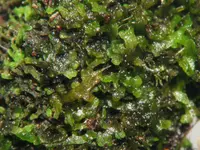
Place the rhizomes under a flat stone or a small mound of coarse gravel at the pond bottom so the stems root firmly and are not uprooted by fish or water movement.

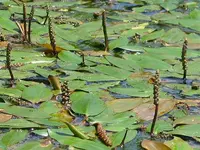
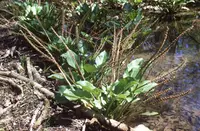
Loddon pondweed, Potamogeton nodosus, is a submerged and floating-leaved aquatic plant commonly found in slow-moving rivers, ponds, and lakes. It forms long, trailing stems that root in the sediment and reach the water surface.
Its flexible stems carry narrow underwater leaves and larger, glossy floating leaves that create patches of cover for fish and aquatic invertebrates. The plant also produces small, upright flower spikes that emerge above the water.
Native to parts of North America and beyond, it adapts well to calm, nutrient-rich freshwater. For those who want to care for Loddon Pondweed in garden ponds, it generally prefers full sun to light shade and stable, clean water conditions.

Care Difficulty
Moderate Care

Light Preference
Full Sun

Water Requirements
Aquatic

Temperature Preference
Cold Hardy

Hardiness Zone
4–10

Soil Texture
Sandy, Loamy, Silty

Soil pH
Slightly acidic (6.5–7.0), Neutral (7.0)

Soil Drainage
Waterlogged tolerant

Fertilization
Minimal (feed rarely)
Scan your plant to receive care tips personalized for your specific plant
Available on iOS and Android
This aquatic plant prefers stable, bright conditions over shallow to moderately deep water.
Potamogeton nodosus is a fully aquatic species that must remain continuously submerged.
This pondweed is adapted to temperate climates with cool to warm water and distinct seasons.
This aquatic species relies on water rather than air humidity, so ambient humidity is rarely a concern.
Potamogeton nodosus grows best rooted in stable, submerged substrates rather than typical garden soil.
This species is suitable for container growing in ponds or large water features.
This aquatic species usually grows well without added fertilizer when rooted in natural pond or lake substrates.
Pruning Potamogeton nodosus helps manage spread, maintain water circulation, and keep the pond surface open to light.
This pond plant is usually grown in lakes or naturalized ponds, so management focuses on careful transplanting rather than frequent repotting.
Propagation of Potamogeton nodosus is usually done by vegetative division rather than from seed in garden or restoration settings.
This hardy aquatic species generally overwinters in ponds without special intervention in most temperate climates.

Plant Health Check
Not sure what's wrong with your plant? Check your plant's health inside the app.
This species naturally produces both floating oval blades at the surface and long ribbon-like submerged leaves, an adaptation that lets it capture light efficiently in turbid or fluctuating water levels.
It forms creeping rhizomes that anchor securely in sand or fine gravel of slow to moderately flowing rivers and ponds, helping stabilize sediments and reduce erosion in shallow freshwater habitats.
Its dense underwater foliage and surface leaf mats provide shelter, spawning substrate, and feeding sites for many aquatic invertebrates, small fish, and amphibians in North American and Eurasian waterways.

This species is remarkably tolerant of a wide range of water conditions and is often one of the few native pondweeds that can persist in moderately disturbed or nutrient-enriched lowland rivers, making it an important indicator of partially degraded yet still recoverable freshwater ecosystems.
This species spreads by creeping rhizomes and stem fragments and can form dense patches in still or slow-moving water. Regular thinning and removal of excess shoots help prevent it from shading out other aquatic plants and clogging small ponds.
Keep your plants happy and healthy with plant identification, disease detection, and easy care guidance.