Alpine-style placement
Position pots on a slightly sloped gravel bed or in a rock garden pocket so excess water drains quickly away from the crown, mimicking the plant’s natural alpine habitat and reducing crown rot risk.

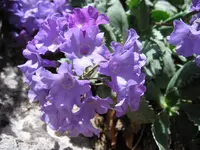
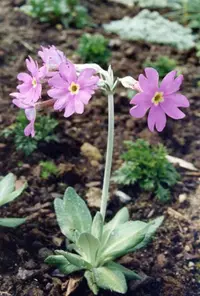
Silver-edged primrose (Primula marginata) is a compact, evergreen alpine perennial grown mainly for its neat rosettes of toothed, silver-edged leaves. In spring, it produces clusters of violet, lavender, or blue flowers held above the foliage, giving a delicate but tidy appearance.
This species is native to limestone cliffs and rocky slopes in the Alps, so it naturally prefers cool conditions and sharp drainage. Its alpine origin makes it moderately easy to grow if kept in well-drained, gritty soil and protected from extreme heat and wetness. Understanding how to care for silver-edged primrose begins with providing bright light, cool roots, and steady but not excessive moisture.

Care Difficulty
Moderate Care

Light Preference
Partial Shade

Water Requirements
Moderate Water

Temperature Preference
Cold Hardy

Hardiness Zone
4–8

Soil Texture
Loamy, Rocky, Organic-rich

Soil pH
Acidic (5.5–6.5), Slightly acidic (6.5–7.0)

Soil Drainage
Moist but well-drained

Fertilization
Light (every 4–6 weeks)
Scan your plant to receive care tips personalized for your specific plant
Available on iOS and Android
This alpine primrose prefers bright, cool conditions with protection from harsh midday sun.
This species needs consistently moist but not waterlogged soil, especially during active growth.
This alpine plant thrives in cool to mild temperatures and dislikes prolonged heat.
This alpine species prefers moderate humidity but dislikes prolonged damp air around the foliage.
Primula marginata prefers a sharply drained yet moisture-retentive mineral-rich substrate.
This species grows reliably in containers when drainage and crown protection are prioritized.
Primula marginata benefits from light, targeted feeding to support compact growth and flowering.
Primula marginata needs minimal pruning, focused on cleanliness and maintaining a neat rosette.
This species prefers stable conditions, so repotting or transplanting Primula marginata should be done only when clearly needed.
Primula marginata is commonly propagated by division or seed under cool, moist conditions.
Primula marginata is fairly cold hardy but benefits from simple winter care, especially in containers.

Plant Health Check
Not sure what's wrong with your plant? Check your plant's health inside the app.
Primula marginata occurs naturally on steep limestone cliffs and rocky slopes in the southwestern Alps, often rooted in very shallow crevices where many other species cannot survive.
The leaves are covered with a dense white powdery coating called farinose bloom, which helps reduce water loss and reflects strong alpine sunlight.
In the wild this species typically forms tight rosettes anchored deep in rock fissures, an adaptation that helps it resist frost, wind, and snow movement at high elevations.

Some wild populations of Primula marginata are considered local endemics of restricted valleys in the southwestern Alps, meaning they occur naturally in only a very small geographic area and nowhere else in the world.
This alpine species usually blooms in spring, often from mid to late spring depending on climate. Individual flowers last about 1–3 weeks, but staggered buds can extend the overall display for several weeks.
Keep your plants happy and healthy with plant identification, disease detection, and easy care guidance.