Dung Roundhead Care (Protostropharia semiglobata)

Dung Roundhead

About Dung Roundhead

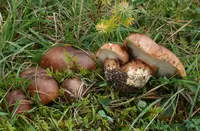
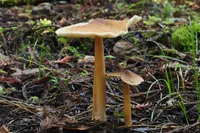
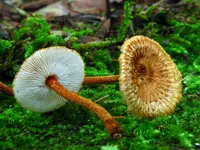
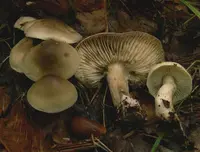
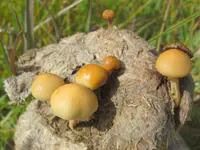
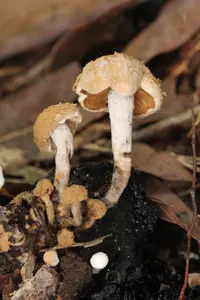
Protostropharia semiglobata, commonly called dung roundhead, is a small saprophytic fungus, not a typical houseplant. It grows on dung and very rich organic matter. The caps are smooth, yellow to tan, and hemispherical, often with a slimy surface when moist. Slender, pale stems support the caps and occur in scattered clusters. This species is widespread in temperate regions, especially in pastures and fields where livestock graze. It is not suited to decorative indoor culture, and conditions that favor it are hard to reproduce in a clean home setting. For this reason, most guides do not explain how to care for Dung Roundhead as a cultivated species.

Main Plant Requirements

Care Difficulty

Hard Care

Light Preference

Partial Shade

Water Requirements

Keep Soil Moist

Temperature Preference

Cool Climate

Hardiness Zone

Unknown

Soil Texture

Loamy, Silty, Organic-rich

Soil pH

Acidic (5.5–6.5), Slightly acidic (6.5–7.0)

Soil Drainage

Moist but well-drained

Fertilization

Minimal (feed rarely)

Get Personalized Care Plan

Scan your plant to receive care tips personalized for your specific plant

Available on iOS and Android

How to Care for the Dung Roundhead

This dung-loving mushroom prefers low to moderate light similar to a shaded pasture edge rather than open, exposed sites.

  • Aim for bright shade or dappled light with only 1–3 hours of gentle morning sun and no direct harsh midday or afternoon sun.
  • Protostropharia semiglobata fruiting bodies develop best where taller grasses or low vegetation filter sunlight, reducing drying and UV stress.
  • In summer, choose east-facing or lightly shaded northern exposures; in cooler months, slightly more open light is acceptable if substrates do not dry out.

Moisture management focuses on keeping the substrate consistently damp without becoming stagnant or waterlogged.

  • Before adding water, check that the top 2–3 cm of manure-rich substrate feels just slightly less moist but never fully dry or dusty.
  • Increase moisture in warm, windy, or low-humidity conditions by gently soaking the substrate until evenly damp, then allowing excess water to drain or percolate away.
  • Reduce additions in cool weather to avoid sour, anaerobic smells or slimy patches, which indicate poor aeration and excessive saturation for Protostropharia semiglobata.

This species fruits best in cool to mild conditions typical of temperate pastures rather than in extreme heat or hard frost.

  • Optimal fruiting usually occurs around 50–68°F (10–20°C), with steady soil moisture and moderate humidity supporting reliable flushes.
  • Growth slows noticeably above 75°F (24°C) and caps may dry or deform if combined with full sun or drying winds.
  • Dung Roundhead is sensitive to freezing; short dips near 32°F (0°C) may halt fruiting, while prolonged hard frosts can destroy developing mushrooms.

This dung-loving mushroom requires consistently high humidity to fruit well.

  • Aim for 80–95% humidity around developing caps and stems, especially during pin formation.
  • Low humidity causes caps to crack, edges to dry, and pins to abort before maturing.
  • Boost moisture by misting the substrate surface, using a humidity tent, or placing trays of water near the Dung Roundhead bed.

This species fruits on very rich organic substrate rather than typical garden soil.

  • Use a loose, organic-rich mix such as well-rotted manure blended with straw or coarse compost for structure.
  • Ensure excess water can drain away so the substrate stays moist but not waterlogged, preventing anaerobic (oxygen-poor) conditions.
  • A slightly acidic to neutral reaction (pH 6.0–7.0) suits Protostropharia semiglobata for reliable fruiting.
  • Avoid heavy clay, compacted ground, or sterile potting mixes; incorporate coarse material to keep the substrate airy and open.

This mushroom is only marginally suitable for container growing and performs better in open manure-rich beds.

  • Use a broad, low container to provide wide surface area for fruiting while keeping the manure-based substrate shallow.
  • Select a rigid container that will not flex when the moist substrate is heavy, preventing cracks that disturb the mycelium network.
  • Raise the container on blocks so drainage holes stay clear and leachate can run off without pooling under the substrate.

This dung-loving mushroom usually finds enough nutrients in its substrate and does not need extra fertilizer in typical cultivation.

Protostropharia semiglobata does not require pruning in the way vascular plants do, since mushrooms are temporary fruiting bodies.

In cultivation, focus on renewing or moving the substrate rather than traditional repotting, since this species is managed as a fungus, not a leafy plant.

  • Transplant or refresh substrate when fruiting declines, contamination appears, or the container is fully colonized by mycelium.
  • Time any move for a lull between flushes, allowing the mycelium to recover before the next fruiting cycle.
  • Shift colonized material with as little disturbance as possible, keeping clumps intact to limit mycelial damage.
  • Maintain the same moisture level and temperature range before and after transplanting to reduce stress on the fungal network.

Propagation of this fungus is usually done by spore or mycelium handling rather than standard plant techniques, and is not recommended for casual home growers.

This species is naturally cold hardy in temperate climates and usually needs no special winter care beyond normal site conditions.

Care Tips

Manure Substrate Rotation

Rotate and lightly turn manure or dung-based substrate every 2–3 flushes to redistribute nutrients and oxygen, which helps maintain even fruiting and reduces anaerobic rot pockets.

Controlled Moisture Shield

Use a low, clear humidity tent or perforated plastic cover above outdoor beds during dry or windy spells to keep pins from aborting while still allowing adequate air exchange.

Targeted Spore Management

Harvest caps just as the veil breaks and place them in a shallow tray away from the main bed if heavy spore deposits are undesirable, since excessive spore load can encourage opportunistic molds on the substrate surface.

Hygienic Tool Handling

Disinfect knives, scissors, and hands with 70% isopropyl alcohol before harvesting clusters to reduce the spread of competing fungi and bacteria through the bed.

Seasonal Bed Renewal

Plan to rebuild or heavily top-dress outdoor beds with fresh, well-aged manure at least once per season in temperate climates, since nutrient depletion and microbial shifts will otherwise reduce the reliability of growing Dung Roundhead.

Common Pests and Diseases

Fungivorous fly larvae

This pest targets developing fruiting bodies and mycelium, feeding within caps and stems and causing deformation or collapse. Symptoms include small entry holes, soft tissue, and premature decay of mushrooms.

Solution

Use fine mesh or insect-proof netting over outdoor beds or containers to reduce egg-laying on the substrate, and promptly remove and discard infested mushrooms to break the life cycle. Keep the dung-based substrate covered with a breathable layer of straw or similar material to reduce access, and maintain good hygiene by removing spent, rotting material before new flushes form when caring for Dung Roundhead.

Mite infestation

These insects feed on mycelium and young pins, leaving pitted, scarred, or aborted fruiting bodies and thinning patches in the colonized substrate. This pest is often introduced with contaminated manure, compost, or nearby decaying organic matter.

Solution

Discard heavily infested trays or patches and start with fresh, pasteurized or well-aged manure to reduce mite load at the source. For mild issues, physically remove and destroy affected fruiting bodies, reduce excess moisture, and keep the area clean of spilled manure or compost to limit hiding places and food sources.

Bacterial blotch

This disease causes greasy, water-soaked spots or streaks on caps and stems that darken and can lead to soft, slimy tissue. Symptoms include localized yellowing or brown patches and rapid breakdown of affected mushrooms, especially under high humidity with surface condensation.

Solution

Increase air movement to keep mushroom surfaces dry between misting or rainfall, and avoid direct overhead watering that leaves standing droplets. Remove and discard all blotched fruiting bodies, clean tools and containers with a mild disinfectant, and reduce overcrowding so caps dry more quickly after moisture events.

Green mold contamination

This disease appears as fast-spreading, bright green patches on dung or surrounding organic substrate, competing with and suppressing the fungal mycelium. Symptoms include stalled or patchy colonization and reduced or absent mushroom production in areas overrun by the mold.

Solution

Carefully cut out and discard contaminated substrate sections along with any affected mushrooms, and do not compost them near active growing areas. Improve cleanliness by using well-aged, pre-composted manure, avoiding overwatering, and ensuring good aeration so the intended mycelium can outcompete contaminant molds.

Interesting Facts

Dung-specialist fungus

This mushroom is a classic coprophilous fungus, meaning it specializes in growing on the dung of herbivores such as horses, cows, and sheep, playing a key role in breaking down manure in pastures.

Distinctive blue-black spores

It produces dark purple-brown to almost black spores that often stain the ring zone on the stem, which helps mycologists distinguish it from similar yellowish pasture mushrooms.

Slimy yellow cap

Fresh fruiting bodies often show a smooth, strongly viscid (slimy) yellow to yellow-brown cap that is hemispherical and usually retains a distinctly rounded, button-like shape even when mature.

Botan icon

Did you know?

This species is commonly cited in ecological and forensic studies that track spore dispersal through animal digestion, because its spores survive passage through the guts of grazing mammals and then germinate on their dung, making it a useful model for understanding how fungi use animals for long-distance dispersal.

FAQs about Dung Roundhead

This mushroom is not recommended for consumption. It is considered inedible or of no culinary value, and misidentification with toxic look-alikes is possible. For safety, treat it as non-edible and avoid eating it.

Grow Healthy Plants with Botan Care

Keep your plants happy and healthy with plant identification, disease detection, and easy care guidance.

Botan plant care app — identify plants on mobile

Explore More Plants