Wind-firm training
In the first 2–3 years, selectively head back the leader by 10–15 cm and retain 3–4 well-spaced lateral branches to create a low, sturdy framework that resists wind damage as the tree matures.

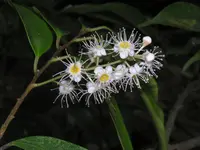
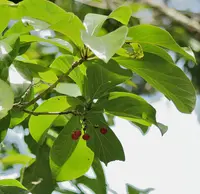
Prunus phaeosticta, commonly called dark-spotted cherry, is an evergreen shrub or small tree from subtropical and tropical Asia. It is usually grown outdoors rather than as a houseplant. The plant forms a dense crown with simple, glossy leaves and small white flowers, followed by dark, berry-like drupes. Bark and leaves may show characteristic dark spotting, which gives the species its common name. In gardens, it is mainly valued for wildlife support, hedging, or as a background evergreen rather than for showy blooms. It prefers mild, frost-free climates, consistent moisture, and reasonably fertile, well-drained soil. These traits mean care for dark-spotted cherry is moderate in difficulty, best suited to gardeners who already manage shrubs or small trees.

Care Difficulty
Moderate Care

Light Preference
Partial Sun

Water Requirements
Moderate Water

Temperature Preference
Warm Climate

Hardiness Zone
9–11

Soil Texture
Loamy, Sandy, Organic-rich

Soil pH
Acidic (5.5–6.5), Slightly acidic (6.5–7.0)

Soil Drainage
Moist but well-drained

Fertilization
Minimal (feed rarely)
Scan your plant to receive care tips personalized for your specific plant
Available on iOS and Android
This evergreen shrub or small tree prefers bright, gentle light for balanced growth.
Prunus phaeosticta prefers steadily moist but not waterlogged soil.
This species prefers mild, frost-free conditions for reliable growth.
Humidity influences leaf health but this species adapts reasonably well in most home and outdoor conditions.
Soil should be moderately fertile, well‑structured, and free-draining to support steady growth and root health.
This species can be grown in containers for several years if the pot and medium are chosen to manage its woody root system effectively.
Prunus phaeosticta benefits from light, balanced feeding but often grows adequately in moderately fertile soil.
Prunus phaeosticta benefits from light structural pruning to maintain a healthy canopy and clear framework.
This species is most often grown in the ground, so focus on careful transplanting rather than frequent repotting.
Prunus phaeosticta is usually propagated by seed or semi-hardwood cuttings under controlled conditions.
This species is moderately frost tolerant in mild climates but benefits from some root-zone protection in colder areas.

Plant Health Check
Not sure what's wrong with your plant? Check your plant's health inside the app.
This species is an evergreen tree or large shrub that can keep its leaves year-round in warm subtropical to tropical climates, unlike many temperate Prunus species that are deciduous.
The species name phaeosticta refers to the distinctive dark spots on the leaves, which are natural pigmentation patterns rather than disease symptoms and help distinguish it from other cherry relatives.
It occurs naturally from the eastern Himalayas through southern China and Taiwan to parts of Southeast Asia, where it typically grows in forest edges and montane slopes rather than in cold temperate regions.

In parts of East and Southeast Asia, birds and other wildlife often eat the small dark drupes of this species and disperse its seeds, making it an important component of natural forest regeneration in some mid-elevation habitats.
This species is typically evergreen in mild, frost-free climates and holds its leaves year-round. In cooler regions it may become semi-evergreen, dropping some foliage in winter, especially during cold, drying winds or prolonged low temperatures.
Keep your plants happy and healthy with plant identification, disease detection, and easy care guidance.