


black cherry Identification (Prunus serotina)

Recognize black cherry by its simple, alternate leaves, usually 2 to 5 inches (5 to 13 cm) long, narrow-oval with fine teeth, plus long, hanging flower clusters along the twigs.

Mature trees also show dark, broken bark that forms rough, scaly plates on a straight trunk.

Prunus serotina Identification

Check Your Plant ID

Check your plant ID by uploading a clear photo to Botan.

Clear images work best. Avoid photos taken too close or too far away

  • 1 free identification
  • No sign-up
  • 30,000+ plants in database

Check black cherry for leaf shape, flower clusters, bark, and fruit.

  • Leaves are alternate, simple, and narrow oval to lance-shaped, usually 2 to 5 inches (5 to 13 cm) long, with fine toothed edges.
  • Small white 5-petaled flowers hang in long, slender drooping clusters.
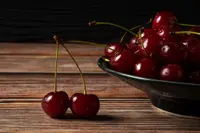
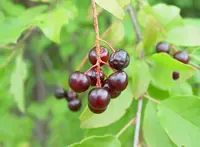
  • Fruits are round, about 1/3 inch (8 mm) wide, turning very dark purple to black when mature.
  • Bark on older trunks is dark and broken into rough, scaly plates that resemble burnt potato chips.

Use several traits together, especially leaves, bark, and hanging flower or fruit clusters.

Prunus serotina shows clear visual shifts from sapling form to flowering and fruiting branches.

  • Young plant: Young plants are narrow and upright, with slender reddish-brown twigs and alternate leaves that are thinner and less pendulous than on older trees.
  • Mature plant: Mature trees develop a straighter trunk, broader crown, and dark bark broken into rough plates; leaves commonly reach 2 to 5 inches (5 to 13 cm).
  • Flowering stage: Flowering branches carry many small white flowers in long, drooping racemes, making the crown look finely textured and more open than in leafy nonflowering stages.
  • Fruiting stage: After flowering, the same hanging clusters hold small dark drupes, so branch tips look beaded and heavier than during the flower stage.

In spring, Prunus serotina leafs out with shiny green leaves, and drooping clusters of small white flowers become visible. Flowering is typically in spring, and the long, narrow flower clusters can stand out from a distance. By late summer, the fruit ripens from red to dark purple-black. After leaf drop in fall, the dark, flaky bark and slender twigs are easier to see, which helps with winter identification.

Several small tree species can be mistaken for Prunus serotina at a glance.

chokecherry(Prunus virginiana)

Both have elongated leaves and drooping fruit clusters. Chokecherry is usually a thicket-forming shrub or small tree, and its leaves are broader with a more rounded base.

pin cherry(Prunus pensylvanica)

Both are native cherries with fine-toothed leaves and dark fruit. Pin cherry has brighter, shiny red twigs and smoother bark, not the dark, scaly plates of mature black cherry.

Carolina laurelcherry(Prunus caroliniana)

Its evergreen, glossy leaves can resemble cherry foliage from a distance. It keeps leaves year-round and usually has entire or only faintly toothed margins, unlike black cherry.

Prunus serotina is native to eastern and central North America, from southern Canada through much of the eastern United States and into parts of Mexico and Central America. That range helps when separating it from similar cherries outside those regions. It occurs in varied habitats, especially woodland edges, open forests, old fields, and disturbed sites. Finding it in secondary woods or fencerows is a useful clue, since this species commonly appears in sunny to partly shaded, regenerating landscapes.

  • Toxic leaves and twigs: Leaves, wilted leaves, bark, and young twigs contain cyanogenic compounds. Ingestion is toxic to humans and pets, especially grazing animals.
  • Pits and seeds: The stone inside the fruit contains the same compounds. Risk relates to ingestion by humans and pets, not normal skin contact.

Confirm It from a Photo

Use Botan to identify or verify the plant from an image, helping rule out lookalikes before you label or buy it.

FAQ

Look for long, narrow flower or fruit clusters, shiny dark green leaves with fine teeth, and mature bark broken into small flaky plates. These combined traits are central to Prunus serotina identification in the field.

More Plant Identification Guides

From Plant ID to Plant Info

Identify a plant from a photo with Botan, then get species-specific care information, safety notes, and common problems.

Botan app identifying a plant from a photo
How Often to Water Fruit Trees

7 min read · 11 Aug 2026

How Often to Water Fruit Trees

Irrigation needs change as roots establish and weather shifts. This guide gives practical starting intervals, explains how soil and tree type change them, and shows how to recognize both excess moisture and drought stress.

Plant Care
How Often to Water Fruit Trees
15 Best Scary Halloween Plants and Fungi for a Spooky Garden

8 min read · 9 Oct 2026

15 Best Scary Halloween Plants and Fungi for a Spooky Garden

Want a garden that looks eerie in October? Here are 15 Halloween plants and fungi, from carnivorous traps to bleeding mushrooms. For each species, we cover its appearance, care requirements, and potential uses in your landscape.

Plant Recommendations
15 Best Scary Halloween Plants and Fungi for a Spooky Garden
When to Harvest Tomatillos: How to Tell When They're Ripe

4 min read · 20 Oct 2026

When to Harvest Tomatillos: How to Tell When They're Ripe

Tomatillos grow inside papery husks, making it hard to judge ripeness at a glance. This guide explains how to know when tomatillos are ripe and offers practical advice on harvesting and storage.

Plant Recommendations
When to Harvest Tomatillos: How to Tell When They're Ripe