Bleedwood tree Care (Pterocarpus angolensis)

Also known as: Kiaat, Mukwa, Kiaat Bloodwood, Wild Teak, Paddlewood, Sealing Wax Tree, Bloodwood, Matabeleland Deal, Prickly-Pod Bloodwood, Tati Bloodwood, Transvaal Teak
Bleedwood tree

About Bleedwood tree

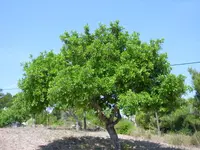
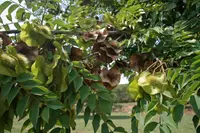
Pterocarpus angolensis, commonly called bleedwood tree or kiaat, is a medium to large deciduous tree valued for its attractive wood and shade. It typically develops a broad, rounded crown with deeply fissured bark and fine, feathery foliage that turns sparse in the dry season.

This species is native to southern Africa, where it grows in open woodland and savanna with pronounced dry periods. It is generally considered hardy in warm climates, but its size, strong light demand, and need for space make it more suitable for outdoor landscapes than small gardens.

Those planning to care for Bleedwood tree should note its preference for full sun, well-drained soil, and a climate with a distinct dry season to support its natural growth rhythm.

Main Plant Requirements

Care Difficulty

Moderate Care

Light Preference

Full Sun

Water Requirements

Moderate Water

Temperature Preference

Tropical / Frost Sensitive

Hardiness Zone

10–12

Soil Texture

Sandy, Loamy, Organic-rich

Soil pH

Slightly acidic (6.5–7.0), Neutral (7.0)

Soil Drainage

Well-drained

Fertilization

Minimal (feed rarely)

Get Personalized Care Plan

Scan your plant to receive care tips personalized for your specific plant

Available on iOS and Android

How to Care for the Bleedwood tree

This species prefers strong light similar to open woodland edges in its native range.

  • Provide 6–8 hours of full sun daily; morning and early afternoon sun are ideal for steady growth.
  • Young Bleedwood tree plants tolerate light partial shade, but too much shade causes sparse branching and slower trunk thickening.
  • In very hot regions, protect from intense late-afternoon sun with slight shade to reduce leaf scorch and moisture stress, especially in dry seasons.

This tree is adapted to seasonal dryness and performs best with deep but infrequent watering.

  • Water only when the top 5–8 cm of soil are dry, then soak the root zone thoroughly so moisture reaches deeper layers.
  • Use freely draining, sandy or loamy soil; standing water, sour smell, or blackened roots indicate overwatering and poor aeration.
  • In hot growing seasons, watch for dull, folding leaves as a sign it needs a deep drink; in cooler months reduce watering as growth slows.

This warm-climate tree needs consistently mild to hot conditions for reliable growth.

  • Ideal growing temperatures are 70–90°F (21–32°C), which support active shoot and trunk development.
  • It is very sensitive to frost; growth stops below about 55°F (13°C) and tissue damage can occur near 32°F (0°C).
  • Mature trees tolerate short heat spikes up to about 100–104°F (38–40°C) if soil moisture is adequate, but young plants need extra watering and mulch in extreme heat.

This species tolerates a wide humidity range and usually does well in 30–50% indoor air.

  • Bleedwood tree generally handles dry central-heated rooms but benefits from 40–60% humidity for stronger foliage.
  • Crisping leaf edges, slow new growth, and repeated spider mite issues indicate air that is too dry.
  • Use a nearby open tray of water or group plants together rather than misting, which adds little lasting humidity.

This tree prefers freely draining, sandy to loamy soil that does not stay wet.

  • Use a mix of roughly 50% sandy or loamy topsoil, 30–40% coarse sand, and 10–20% compost for Pterocarpus angolensis.
  • Aim for slightly acidic to neutral pH, around 6.0–7.0, avoiding strongly acidic or alkaline substrates.
  • Add coarse sand, fine gravel, or perlite to increase aeration and prevent water from pooling around the roots.
  • Avoid heavy clay, compacted ground, or peat-heavy mixes that hold water for long periods and reduce oxygen at the root zone.

This species can be grown in containers while young, provided the pot supports its eventual size and weight.

  • Choose a deep, wide container that allows a strong taproot and lateral roots to develop without circling tightly.
  • Use a heavier material such as terracotta or ceramic to stabilize the trunk as the woody stem thickens and crown enlarges.
  • Ensure generous drainage holes and keep a gap between pot base and saucer so water can escape quickly after irrigation.

Pterocarpus angolensis grows well on modest fertility but benefits from light feeding in containers or poor soils.

  • Use a balanced slow-release fertilizer (such as 10-10-10) or well-rotted compost at the start of the warm growing season.
  • Feed container or nursery plants every 6–8 weeks during active growth at half the label rate to avoid salt buildup.
  • Reduce or stop fertilizing in winter or cool dormant periods, when growth naturally slows.
  • Water before and after applying fertilizer to limit root burn and help nutrients move into the root zone.

Pruning Pterocarpus angolensis is mainly used to maintain a safe, open crown and remove weak growth.

  • Carry out structural pruning in late winter or early spring, before vigorous new growth begins.
  • Remove dead, diseased, crossing, or storm-damaged branches first to improve canopy health and airflow.
  • Thin crowded interior shoots rather than shortening all branch tips, which preserves a natural form.
  • Use sharp, clean loppers or a pruning saw, making smooth cuts just outside the branch collar.

This species is usually grown in the ground, so focus on moving young plants from containers into a permanent site at the right time.

  • Look for roots circling the pot drainage holes, pot-bound soil, or slowed growth as signals a young Bleedwood tree needs transplanting.
  • Transplant in late spring or early summer, once soil is warm and frost risk is past, to encourage rapid establishment.
  • Shift container plants only every 2–3 years, stepping up 1 pot size and using a free-draining, slightly sandy mix.
  • Hydrate the root ball well, tease apart circling roots gently, plant at the same depth, then water deeply and shade lightly for 1–2 weeks.

Pterocarpus angolensis is typically propagated from seed, with cuttings used less often and with lower success.

  • Collect ripe pods, remove seeds, and sow in late spring to early summer in a warm, well-drained seed mix.
  • Scarify hard seed coats lightly with sandpaper and soak seeds for 12–24 hours to improve germination.
  • Maintain 75–85°F, bright light, and evenly moist (not waterlogged) medium until seedlings establish.
  • Semi-hardwood cuttings can be attempted in warm weather using rooting hormone and high humidity, though results are variable.

This warm-climate tree is frost sensitive and needs protection in regions with cold winters, especially when young or container-grown.

  • In-ground trees in marginal climates benefit from a 5–10 cm layer of mulch over the root zone, kept away from the trunk.
  • Wrap young trunks with breathable tree wrap during light frosts to limit bark damage.
  • Move container plants indoors or into a frost-free greenhouse before temperatures drop near 40°F.

Care Tips

Early form training

In the first 3–5 years, select a single strong leader stem and remove competing upright shoots gradually to build a straight trunk and good scaffold branches for long-term structure when growing Bleedwood tree.

Root flare protection

Keep the root flare slightly exposed and maintain a mulch-free ring 5–10 cm around the base to reduce risk of trunk rot and improve stability in wind.

Dry-season mulching

Before the dry season, apply a 5–8 cm layer of coarse organic mulch over the root zone (but not touching the trunk) to buffer soil temperature and reduce moisture stress during prolonged drought.

Wind exposure management

On exposed sites, use temporary windbreaks or plant on the leeward side of existing structures so young trees develop strong but not wind-battered shoots and roots.

Trunk borer monitoring

Inspect the lower trunk and major branches 2–3 times per year for small holes, frass (sawdust-like material), or oozing sap, and remove and destroy affected twigs promptly to limit borer and other wood-boring insect damage.

Common Pests and Diseases

Bark-boring beetles

This pest attacks stressed or injured trees, tunneling into the trunk and branches and disrupting water and nutrient flow. Symptoms include fine bore dust at the base, small round exit holes, and progressive branch dieback.

Solution

Improve tree vigor with proper watering and avoiding mechanical damage, since healthy Pterocarpus angolensis trees are more resistant. Prune and destroy heavily infested branches, avoid stacking firewood near trees, and where legal and available use a targeted systemic insecticide applied by a certified professional for serious infestations.

Wood-boring larvae

These insects (often longhorn beetle or moth larvae) develop inside larger branches and stems, creating galleries that weaken the wood. Symptoms include oozing sap, frass (chewed wood dust), and sudden breakage of affected limbs in wind.

Solution

Inspect branches regularly and remove and destroy infested wood as soon as tunneling is detected. Maintain good stand spacing and airflow, avoid overfertilizing with high nitrogen, and in high-value trees consider preventative trunk or branch treatments recommended for local borers by a forestry or arboriculture specialist.

Leaf-feeding caterpillars

These insects feed on the foliage, causing irregular holes or complete defoliation on young trees or coppice regrowth. Symptoms include ragged leaves, visible caterpillars on the undersides, and frass pellets on lower foliage or the ground.

Solution

Hand-pick caterpillars where practical and prune small, heavily infested shoots. Encourage natural predators, avoid unnecessary broad-spectrum insecticides, and if feeding is severe use a selective biological product containing Bacillus thuringiensis (Bt) according to label directions.

Powdery mildew

This disease appears as white, powdery patches on young leaves and shoots, particularly in crowded plantings or sheltered nursery conditions. Symptoms include distorted new growth and reduced vigor in saplings.

Solution

Improve air circulation by correct spacing and pruning of dense inner shoots, and avoid overhead watering late in the day. Remove and discard the most affected leaves, and where needed apply a sulfur-based or potassium bicarbonate fungicide labeled for powdery mildew, following local guidelines for Pterocarpus angolensis plant care in nursery or landscape settings.

Heartwood staining fungi

This disease colonizes the inner wood, sometimes entering through pruning wounds or mechanical damage, and can cause discolored heartwood and internal decay over time. Symptoms include localized cankers, poor wound closure, and reduced timber quality rather than immediate canopy decline.

Solution

Make all pruning cuts clean and at the correct branch collar, and avoid wounding the trunk or major roots during construction or cultivation. Remove and safely dispose of severely cankered branches, and in production or amenity trees schedule inspections by a trained arborist to identify and remove compromised stems before structural failure occurs.

Interesting Facts

Blood-like sap

When the wood is cut, it exudes a dark reddish resin that looks like blood, which is why the tree is commonly called bleedwood or bloodwood in southern Africa.

Important timber species

Its wood is moderately dense, durable, and naturally termite-resistant, making it a traditional choice for furniture, flooring, and carved objects across its native range.

Fire-adapted growth

In savanna habitats, it often survives grass fires thanks to thick bark and the ability to resprout from protected buds after damage.

Botan icon

Did you know?

In parts of southern Africa, the heartwood of this species is so valued for high-quality carving and joinery that large, old trees have become locally scarce in some regions, leading to increased conservation attention and restrictions on harvesting from the wild.

FAQs about Bleedwood tree

Growth is moderately fast in warm climates, often 60–100 cm per year in the ground once established. Poor soil, drought stress, and cool temperatures slow extension growth and trunk thickening significantly.

Grow Healthy Plants with Botan Care

Keep your plants happy and healthy with plant identification, disease detection, and easy care guidance.

Botan plant care app — identify plants on mobile

Explore More Plants