Stake Young Trunks
Install 1–2 sturdy stakes on the windward side of young trees and tie the trunk loosely with a soft, wide tree tie to reduce wind rock while still allowing slight movement that strengthens the wood.

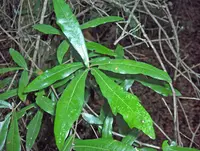
Darlington oak, Quercus hemisphaerica, is an evergreen to semi-evergreen oak tree native to the southeastern United States. It typically grows with a straight trunk and a rounded to oval crown.
Leaves are small, narrow, and glossy green, giving the canopy a fine texture compared to many other oaks. Acorns are relatively small and serve as an important wildlife food source.
This species naturally occurs on well-drained coastal plains and uplands, showing good tolerance to heat, humidity, and periodic drought once established. These traits make it relatively forgiving to care for Darlington oak in suitable outdoor conditions with sun and moderately moist, well-drained soil.

Care Difficulty
Moderate Care

Light Preference
Full Sun

Water Requirements
Moderate Water

Temperature Preference
Warm Climate

Hardiness Zone
8–10

Soil Texture
Sandy, Loamy, Clay

Soil pH
Acidic (5.5–6.5), Slightly acidic (6.5–7.0)

Soil Drainage
Moist but well-drained

Fertilization
Minimal (feed rarely)
Scan your plant to receive care tips personalized for your specific plant
Available on iOS and Android
This oak prefers full sun but accepts light shade in hotter regions.
Quercus hemisphaerica prefers evenly moist, well-drained soil once established.
This species suits warm-temperate to subtropical climates with mild winters.
This oak tolerates a wide humidity range and usually needs no special adjustment outdoors.
Quercus hemisphaerica prefers aerated, slightly acidic, well-drained mineral soils.
This species can be grown in containers only for the short to medium term, mainly for young specimens.
Quercus hemisphaerica needs modest feeding when young but usually manages well in reasonably fertile soil.
Pruning for this oak focuses on structural strength and removal of problem wood rather than frequent shaping.
This species is usually field-grown, so care focuses on proper transplanting rather than repeated repotting.
Propagation of this oak is typically done from seed and is considered slow but reliable with the right conditions.
This oak is cold hardy in much of its range and typically needs minimal winter care once established.

Plant Health Check
Not sure what's wrong with your plant? Check your plant's health inside the app.
This oak often keeps its leaves through winter in the warm coastal plain of the southeastern US, functioning as an evergreen where freezes are brief or light, but can behave more semi-evergreen in cooler parts of its range.
It is naturally concentrated on the Atlantic and Gulf Coastal Plain, where it thrives on sandy, well-drained soils that may be too dry or nutrient-poor for many other tree species.
This species can hybridize with other southern oaks, including live oak (Quercus virginiana), which sometimes makes field identification difficult because leaf shape and growth habit can appear intermediate.

This oak plays a notable role in wildlife food webs along the southeastern US coastal plain, as its relatively small but regularly produced acorns are eaten by many birds and mammals, including wild turkey, quail, squirrels, and white-tailed deer.
This species is usually evergreen to semi-evergreen in mild climates, holding most foliage through winter. In colder areas it can act more semi-evergreen, dropping more leaves after hard freezes but refoliating reliably in spring.
Keep your plants happy and healthy with plant identification, disease detection, and easy care guidance.