Deep root establishment
During the first 2–3 years, irrigate less often but deeply enough to moisten soil 30–45 cm down, encouraging a taproot that improves drought resilience when growing bluejack oak.

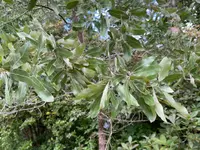
Bluejack oak, Quercus incana, is a small to medium oak native to the sandy, well-drained soils of the southeastern United States. It is typically found in dry pine barrens, sandhills, and coastal plains. This species forms a shrubby to small-tree habit with crooked branches, blue-green leaves, and a naturally irregular, wind-tolerant shape. Its deep root system and drought resistance make it well adapted to hot, dry sites, though it grows slowly and can be difficult to transplant. For those who want to care for bluejack oak, it generally favors full sun, low to moderate moisture, and acidic, sandy soil with good drainage.

Care Difficulty
Easy Care

Light Preference
Full Sun

Water Requirements
Low Water

Temperature Preference
Cold Hardy

Hardiness Zone
7–9

Soil Texture
Sandy, Loamy, Rocky

Soil pH
Slightly acidic (6.5–7.0), Neutral (7.0)

Soil Drainage
Well-drained

Fertilization
Minimal (feed rarely)
Scan your plant to receive care tips personalized for your specific plant
Available on iOS and Android
This oak prefers full sun but tolerates some light shade, especially in hotter regions.
This drought-adapted oak prefers deep, infrequent watering once established.
This species is adapted to warm, dry climates with notable cold tolerance in winter.
Humidity is rarely a concern for Quercus incana, which is adapted to dry, exposed sites.
Quercus incana prefers dry, sandy, low-fertility soils and suffers in compact, wet conditions.
This species is generally unsuited to long-term container growing, except as a short-term seedling or experimental specimen.
Quercus incana is adapted to poor soils and usually needs little to no fertilizer once established in the ground.
Pruning Quercus incana focuses on structural strength and removal of unhealthy wood rather than frequent shaping.
This species is usually grown in the ground, so management centers on careful transplanting of young bluejack oak trees rather than long-term container culture.
Quercus incana is mainly propagated from seed, and vegetative methods are rarely used outside specialist settings.
Mature Quercus incana is cold hardy in its native range and usually needs minimal winter care in the landscape.

Plant Health Check
Not sure what's wrong with your plant? Check your plant's health inside the app.
Quercus incana naturally occurs on very deep, drought-prone sands in the southeastern United States, where many other tree species struggle to survive. Its root system and relatively small stature allow it to persist in these nutrient-poor, xeric habitats.
This species is adapted to frequent, low-intensity fires that historically shaped its sandhill and scrub habitats. It can resprout from the base after burning, which helps it maintain populations in fire-managed landscapes.
Although its acorns are relatively small, they provide food for many animals, including scrub-jays, quail, and small mammals in dry upland ecosystems. The tree’s dense branching also offers cover and nesting sites for birds and other wildlife.

Quercus incana often forms part of a low, shrubby oak layer that helps stabilize open sand ridges, reducing erosion and creating microhabitats that allow other specialized sandhill plants and insects to establish.
This species is generally slow-growing, adding about 15–30 cm per year once established. Growth is faster in deep, well-drained sandy soils and full sun, and slower in compacted or poorly drained sites.
Keep your plants happy and healthy with plant identification, disease detection, and easy care guidance.