


wild radish Identification (Raphanus raphanistrum)

Recognize wild radish by its rough, bristly stems, a basal rosette of deeply lobed leaves, and four-petaled flowers with dark veins.

Plants usually grow upright to about 3 feet (0.9 m), with alternate upper leaves that are smaller and less divided than the lower leaves.

Raphanus raphanistrum Identification

Scan to Confirm wild radish

Use a clear photo to confirm what plant you have.

Clear images work best. Avoid photos taken too close or too far away

Check the plant’s flower, leaves, and seed pods first on Raphanus raphanistrum.

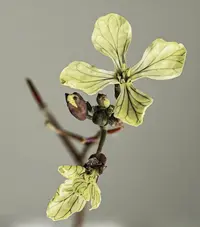
  • Flowers have 4 petals in a cross shape, usually pale yellow or white with darker veins.
  • Lower leaves form a rough-looking basal rosette and are deeply lobed, often 4-12 inches (10-30 cm) long.
  • Upper leaves are smaller, less divided, and attach alternately along the stem.
  • Stems are upright, branched, and bristly, giving the whole plant a coarse texture.
  • Seed pods are narrow and beadlike, pinched between the seeds, with a pointed tip.

The pod shape is one of the most useful visible checks when flowers are absent.

Wild radish shows clear, useful changes from low rosettes to branched flowering and fruiting stems.

  • Seedling: First leaves are simple and small, then early true leaves become rough and slightly lobed, forming a low basal rosette close to the ground.
  • Young plant: The rosette expands with coarser, deeply lobed leaves, while an upright central stem begins rising above the basal foliage and starts sparse branching.
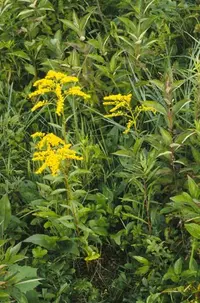
  • Flowering stage: Plants stand about 1-3 feet (30-90 cm) tall, with branched stems bearing four-petaled flowers, often pale yellow, white, or purple-veined, above reduced upper leaves.
  • Fruiting stage: After flowering, slender beaked seed pods replace blooms along the branching stems, making the plant look more open and distinctly pod-bearing than earlier stages.

In spring, Raphanus raphanistrum appears first as a low rosette of rough, lobed leaves. By late spring into summer, taller branching stems make the plant look looser and more upright. The clearest seasonal clue comes with flowering and fruiting in late spring through summer. Four-petaled flowers become obvious, followed by distinctive beaded seed pods that often persist after many flowers fade.

Several mustard-family weeds can be mistaken for Raphanus raphanistrum.

charlock mustard(Sinapis arvensis)

Similar rough leaves and four-petaled yellow flowers. Best check the fruit: charlock has straight, smooth pods, while wild radish has strongly constricted, beadlike pods.

white mustard(Sinapis alba)

Also an upright annual with coarse lobed leaves and yellow flowers. It differs by having bristly pods with a long flat beak; wild radish fruits are segmented and pinched between seeds.

hedge mustard(Sisymbrium officinale)

Can resemble it before flowering because both form leafy, lobed stems. Hedge mustard has much smaller pale yellow flowers and thin pods held close against the stem.

Raphanus raphanistrum is native to Europe, North Africa, and parts of western Asia. It is typically found in disturbed open ground, including field margins, roadsides, coastal grassland, and waste places. That setting helps with identification because this species often appears as a weed of cultivated or recently disturbed sites rather than a woodland or wetland plant. Finding it in sunny, open, often dry ground can help narrow it from similar mustard-family species.

Check Your Plant ID

Upload a photo to Botan for a quick second opinion and clearer identification before you label or compare it further.

FAQ

The flowers have four petals in a cross shape, typical of the mustard family. Petals are often pale yellow, white, or cream with visible purple veins. This is a useful feature when identifying wild radish.

More Plant Identification Guides

Identify Your Plant and Learn More

Use a photo to identify it with Botan, then see plant details, care information, and common problems for that species.

Botan app identifying a plant from a photo
How Fast Does Bamboo Grow Per Day, Month, and Year

10 min read · 7 Jul 2026

How Fast Does Bamboo Grow Per Day, Month, and Year

Bamboo grows extremely fast: some species can reach 5-6 m in just 3-4 months under the right conditions. This guide explains how much bamboo can grow per day, week, and year, and what affects its growth rate.

Plant Recommendations
How Fast Does Bamboo Grow Per Day, Month, and Year
Best Time to Mow Lawn – A Complete Guide

5 min read · 10 Aug 2026

Best Time to Mow Lawn – A Complete Guide

Explore when to mow your lawn for its health and a pleasant green color. Find out the best time for this task during the summer heat, and follow practical tips for correctly cutting the grass, and learn common mistakes to avoid.

Plant Care
Best Time to Mow Lawn – A Complete Guide
Top 15 Plants That Don’t Need Sunlight

8 min read · 17 Sept 2026

Top 15 Plants That Don’t Need Sunlight

Some plants thrive in dim rooms, shaded corners, and places with indirect light. In this guide, you’ll explore the top 15 species best suited to low-light conditions and how to care for them.

Plant Recommendations
Top 15 Plants That Don’t Need Sunlight