Staggered Succession Sowing
Sow small batches every 2–3 weeks from early spring to midsummer so plants come into bloom in rotation and you keep a steady supply of fragrant flowers rather than one brief flush.

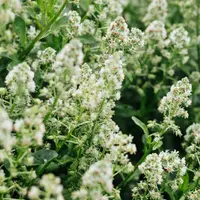
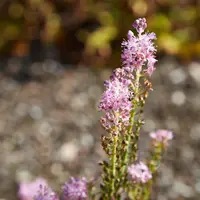
Garden mignonette (Reseda odorata) is a small, short-lived perennial often grown as an annual for its strongly scented flowers. It forms loose, upright clumps with narrow leaves and short spikes of tiny cream to greenish flowers.
This species is native to the Mediterranean region but has been widely cultivated in cottage gardens and old-fashioned flower borders. The main attraction is its fragrance rather than showy blooms.
The plant is generally easy to grow if given full sun, good air movement, and well-drained soil. Once established, it tolerates moderate neglect, so it suits gardeners who want to learn how to care for garden mignonette without complex routines.

Care Difficulty
Moderate Care

Light Preference
Full Sun

Water Requirements
Moderate Water

Temperature Preference
Warm Climate

Hardiness Zone
8–11

Soil Texture
Sandy, Loamy, Organic-rich

Soil pH
Slightly acidic (6.5–7.0), Neutral (7.0)

Soil Drainage
Well-drained

Fertilization
Light (every 4–6 weeks)
Scan your plant to receive care tips personalized for your specific plant
Available on iOS and Android
Reseda odorata prefers bright conditions but not intense all-day sun.
This species prefers evenly moist, well-drained soil without staying soggy.
This plant favors mild conditions and dislikes temperature extremes.
Reseda odorata prefers moderately dry air and usually does well in typical outdoor conditions.
Reseda odorata grows best in loose, freely draining soil that never stays waterlogged.
This species is suitable for container growing when drainage and root space are managed carefully.
Reseda odorata benefits from modest feeding to support flowering without promoting soft, weak growth.
Thoughtful pruning helps Reseda odorata stay compact and channel energy into continuous flowering.
Garden mignonette is short-lived and usually grown as a bedding or border annual, so transplanting is more relevant than long-term repotting.
Reseda odorata is most commonly propagated from seed rather than by vegetative methods.
In most climates Reseda odorata is treated as an annual and usually does not require elaborate winter care.

Plant Health Check
Not sure what's wrong with your plant? Check your plant's health inside the app.
The flowers produce a chemically rich fragrance dominated by aromatic aldehydes and esters, which is especially strong at dusk and is highly attractive to night-active moths and other pollinating insects.
Since at least the 18th–19th centuries, perfumers in Europe and the Mediterranean region cultivated this species as a key source of a sweet, warm floral note, even though the extracted absolute is relatively low-yield and costly to obtain.
Despite having small, visually modest greenish-white flowers, the plant invests heavily in scent rather than showy petals, an evolutionary strategy that favors olfactory cues over visual ones for pollinator attraction.

In Victorian floriography, garden mignonette became a symbol of unnoticed or modest merit, reflecting how its unassuming appearance hides a powerful fragrance that was highly prized in gardens and perfumery.
This species usually flowers from late spring or early summer through early fall, depending on climate. Regular deadheading extends the season, so plants can produce new, fragrant flower spikes continuously for several months.
Keep your plants happy and healthy with plant identification, disease detection, and easy care guidance.