Mimic alpine drainage
Top-dress the planting area with a 1–2 in layer of coarse grit or pea gravel to keep the crown dry and reduce the risk of rot at the base of the rosette.

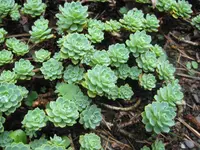
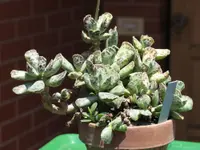
Rhodiola pachyclados is a small, mat-forming succulent perennial from rocky, high-altitude regions of the Middle East and Central Asia. It belongs to the Crassulaceae family, which includes many drought-tolerant rock garden plants.
The plant forms tight cushions of fleshy blue-green leaves and produces small, starry flowers that sit just above the foliage. Its compact, spreading growth makes it suitable for rock gardens, troughs, and shallow containers.
This species is adapted to harsh, exposed conditions, so it prefers full sun, sharp drainage, and relatively poor, gritty soil. These traits make it generally low-maintenance, but proper drainage is essential to care for Rhodiola pachyclados in wetter climates.

Care Difficulty
Moderate Care

Light Preference
Full Sun

Water Requirements
Low Water

Temperature Preference
Cold Hardy

Hardiness Zone
4–7

Soil Texture
Sandy, Loamy, Rocky

Soil pH
Slightly acidic (6.5–7.0), Neutral (7.0)

Soil Drainage
Well-drained

Fertilization
Minimal (feed rarely)
Scan your plant to receive care tips personalized for your specific plant
Available on iOS and Android
This alpine succulent thrives in bright, cool conditions with plenty of direct light.
This drought-tolerant succulent prefers infrequent, deep watering in fast-draining soil.
This hardy alpine species is adapted to cold climates and tolerates a wide temperature range.
This alpine succulent prefers dry, low-humidity air and rarely needs special humidity management indoors.
This species needs very fast-draining, mineral-rich soil that mimics a rocky alpine slope.
This small, clumping succulent is well suited to container growing outdoors on sunny patios or rock gardens.
This alpine succulent needs only light feeding, as it is adapted to nutrient-poor soils.
Pruning needs are minimal and mainly focus on cleanliness and maintaining a compact cushion.
This species is usually best left undisturbed, but occasional transplanting is manageable with care.
Propagation is typically done by division or seed, with cuttings used less often.
This cold-hardy alpine generally needs little special winter care in the ground.

Plant Health Check
Not sure what's wrong with your plant? Check your plant's health inside the app.
This species forms low, dense cushions that hug the ground on windswept rocky slopes in the mountains of Afghanistan and Pakistan, an adaptation that reduces heat loss and protects buds from cold, desiccating winds.
Its small, blue-green leaves are notably fleshy and store water, which helps the plant survive in shallow, fast-draining alpine scree and rock crevices with limited and irregular moisture.
In suitable conditions it produces many small pink to reddish star-shaped flowers in summer that can nearly cover the foliage, creating a colorful nectar source for high-altitude pollinating insects.

R. pachyclados is valued by rock gardeners because it tolerates severe cold when kept dry in winter, making it one of the more reliable rhodiolas for long-term cultivation in exposed alpine and rock garden settings.
This alpine succulent performs best outdoors in cool, sunny, well-drained conditions. Indoors, light levels and airflow are often insufficient long term, so containers are better kept outside on a bright, sheltered balcony, patio, or rock garden.
Keep your plants happy and healthy with plant identification, disease detection, and easy care guidance.