flame azalea Care (Rhododendron calendulaceum)

flame azalea

About flame azalea

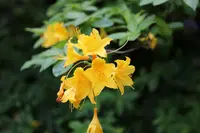
Flame azalea, Rhododendron calendulaceum, is a deciduous shrub known for its bright orange to red funnel-shaped flowers that appear before or with the leaves. It typically grows with an open, multi-stemmed habit and adds strong seasonal color to woodland edges and naturalistic gardens.

This species is native to the Appalachian Mountains in the eastern United States, where it thrives in cool, moist, acidic forest soils. It can be moderately challenging for beginners, as it dislikes heavy, waterlogged, or very alkaline soils and needs consistent moisture without saturation. Those who learn how to care for flame azalea often focus on matching its woodland light and soil conditions.

Main Plant Requirements

Care Difficulty

Moderate Care

Light Preference

Partial Shade

Water Requirements

Regular Water

Temperature Preference

Cold Hardy

Hardiness Zone

5–7

Soil Texture

Loamy, Sandy, Organic-rich

Soil pH

Strongly acidic (4.5–5.5), Acidic (5.5–6.5)

Soil Drainage

Moist but well-drained

Fertilization

Minimal (feed rarely)

Get Personalized Care Plan

Scan your plant to receive care tips personalized for your specific plant

Available on iOS and Android

How to Care for the flame azalea

Rhododendron calendulaceum prefers bright but gentle outdoor light that mimics open woodland edges.

  • Provide 3–5 hours of direct morning sun with light or dappled shade from late morning through afternoon to prevent leaf scorch.
  • Tolerates partial shade, but dense shade reduces flowering and leads to leggy, stretched growth in flame azalea shrubs.
  • In hotter regions, prioritize filtered light or afternoon shade in summer, while allowing more direct sun in cool spring and fall for better bud set.

Rhododendron calendulaceum needs consistently moist, never soggy, acidic soil with excellent drainage.

  • Water when the top 3–5 cm of soil feels slightly dry, applying a slow, deep soak so moisture reaches the full root zone without pooling.
  • Increase monitoring in late spring and summer; drooping leaves that recover by evening suggest mild drought stress, while yellowing, limp foliage can indicate overwatering or poor drainage.
  • Plant in well-drained, organic-rich soil and use 5–8 cm of mulch to reduce evaporation, buffer moisture swings, and protect shallow roots.

This species thrives in cool to mild outdoor climates with marked seasonal change.

  • Active growth is strongest around 60–75°F (16–24°C), with buds and foliage forming best in cool springs and mild summers.
  • Mature plants tolerate winter lows near -10°F (-23°C) when hardened, but young shrubs benefit from protection from drying winds and rapid freeze–thaw cycles.
  • Extended heat above 85°F (29°C), especially with dry soil, stresses plants, so provide mulch, afternoon shade, and consistent moisture during hot spells.

This species prefers moderate air moisture and may show stress in very dry conditions.

  • Maintain 40–60% humidity outdoors or in sheltered spots, avoiding prolonged exposure to hot, drying winds.
  • Leaf edges browning, curling, or rapid bud drop indicate humidity stress combined with drought in flame azalea.
  • Increase local humidity by using organic mulch over the root zone and grouping shrubs near other plants to reduce moisture loss.

This shrub needs acidic, well-drained yet consistently moist soil with high organic content.

  • Use a loose, airy mix such as 50–70% pine bark fines or shredded bark, 20–30% peat or coco coir, and 10–20% perlite or coarse sand.
  • Aim for an acidic pH of 4.5–5.5 for Rhododendron calendulaceum, avoiding liming agents or alkaline tap water when possible.
  • Ensure rapid drainage; raised beds or sloped sites help prevent waterlogging around shallow, fibrous roots.
  • Avoid heavy clay, compacted areas, or mixes with high mineral topsoil content that stay wet and exclude air.

This species can be grown in containers with careful attention to root space and moisture balance.

  • Choose a wide, relatively shallow pot that accommodates the shallow root system and reduces tipping in windy conditions.
  • Use a heavier pot material such as ceramic to stabilize the plant’s bushy top growth and limit rapid drying in hot weather.
  • Elevate the container on pot feet or bricks so drainage holes stay clear and excess water escapes quickly after heavy rain or irrigation.

Rhododendron calendulaceum benefits from light, targeted feeding rather than heavy fertilization.

  • Use an acid-forming, slow-release fertilizer or compost formulated for rhododendrons, not general garden lime-based feeds.
  • Apply a balanced or rhododendron-specific NPK at half-strength once in early spring and again after flowering.
  • Keep fertilizer off leaves and trunk; water thoroughly before and after feeding to prevent root burn.
  • Avoid feeding in late summer and winter so growth can harden and the plant can enter dormancy naturally.

Pruning Rhododendron calendulaceum is mainly corrective, aimed at maintaining health and a natural shape.

  • Time any pruning for right after flowering so next year’s flower buds are not removed.
  • Cut out dead, diseased, or storm-damaged wood first, using clean, sharp bypass pruners or loppers.
  • Thin crowded interior branches to improve light and air movement without shearing the outer surface.
  • Shorten overly long shoots back to a side branch to control size and keep a balanced, open form.

This species is usually grown in the ground, so attention focuses on careful transplanting rather than frequent repotting.

  • Plan transplanting for early spring or early fall when conditions are cool and soil moisture is steady.
  • Move plants only when growth is poor, roots circle a container, or the site is clearly unsuitable.
  • Dig a wide, shallow root ball, disturbing roots as little as possible, and replant at the same soil depth in acidic, well-drained soil.
  • Water deeply after transplanting, then keep soil evenly moist and shaded for several weeks to limit transplant shock.

Propagation of Rhododendron calendulaceum is possible but somewhat specialized for home growers.

  • Semi-ripe stem cuttings in mid to late summer root under high humidity, bottom warmth, and bright shade.
  • Use a sterile, very well-drained medium such as 1:1 peat or coir and perlite, and apply rooting hormone to the cut base.
  • Simple layering of flexible lower branches in spring or early summer gives higher success with minimal disturbance.
  • Seed propagation is slow; surface-sow in a sterile acidic mix, keep evenly moist, and provide bright, indirect light.

This deciduous flame azalea is cold hardy in much of its native range but benefits from some winter root protection.

  • In regions colder than its usual hardiness zone, site plants out of strong winter winds and intense afternoon sun.
  • Apply 5–8 cm of pine bark or pine needle mulch over the root zone in late fall, keeping it slightly away from stems.
  • Container-grown plants are more exposed; move pots into an unheated but sheltered space or heel them into the ground for insulation.

Care Tips

Mulch Root Zone

Apply a 5–8 cm layer of pine bark or pine needle mulch over the root zone each spring, keeping it a few cm away from the stems to stabilize soil temperature and protect the shallow roots from drying out or freezing.

Staggered Bud Protection

In late winter, drape frost cloth or an old sheet over the shrub on nights forecast below 25°F, removing it in the morning, to protect flower buds from cold snaps and keep bloom displays consistent from year to year.

Targeted Iron Management

If leaves turn pale with green veins on otherwise suitable soil, use a chelated iron drench formulated for acid-loving shrubs and lightly top-dress with elemental sulfur to correct and prevent iron chlorosis without overfertilizing.

Root Disturbance Control

Keep digging, edging, and foot traffic away from an area at least 60–90 cm beyond the drip line, since this species has fine, surface roots that are easily damaged by compaction or repeated disturbance.

Understory Companion Planting

Plant shallow-rooted, woodland companions like ferns or hostas nearby instead of turfgrass, which reduces competition for moisture and nutrients and creates a cooler, more stable microclimate for growing flame azalea.

Common Pests and Diseases

Azalea lace bug

This pest feeds on the underside of leaves, causing stippled, bleached patches and a dull, grayish appearance to the foliage. Symptoms include tiny dark tar spots on the leaf undersides and reduced plant vigor, especially in full-sun sites.

Solution

Inspect leaf undersides regularly in late spring and summer and hose them off with a strong stream of water to reduce nymphs and eggs. If damage is recurring, use insecticidal soap or a horticultural oil labeled for azaleas, and, where possible, provide partial shade and maintain good plant health to reduce susceptibility.

Azalea bark scale

This pest appears as white, cottony clusters in branch crotches and along stems, leading to honeydew, sooty mold, and branch dieback in severe cases. This scale is often overlooked until black sooty mold on leaves becomes obvious.

Solution

Prune out and dispose of heavily infested twigs and scrub accessible stems with a soft brush and soapy water to remove scales. During the crawler stage, apply horticultural oil or insecticidal soap thoroughly to stems and branches, and avoid high-nitrogen fertilization that can encourage heavy infestations.

Petal blight

This disease causes water-soaked, pale or brown spots on flower petals that quickly expand, turning blossoms mushy and brown. Symptoms include rapid collapse of flowers during wet, mild weather, often with shriveled petals remaining on the plant or ground.

Solution

Remove and discard all affected flowers and spent blooms from the plant and ground to limit spores. In areas with a history of petal blight, avoid overhead watering during bloom, improve air movement, and, if needed, use a preventive fungicide labeled for azalea petal blight at the start of flowering according to label directions.

Phytophthora root and collar rot

This disease attacks the roots and lower stem in poorly drained or waterlogged soil, leading to wilt, off-color leaves, and gradual decline despite moist soil. Symptoms include sparse new growth, dieback, and dark, discolored tissue at the root collar when bark is scraped.

Solution

Improve drainage immediately by reducing watering, redirecting runoff, or replanting on a raised mound, and remove severely affected plants including as much root system as possible. For valuable specimens, consider fungicides labeled for Phytophthora in woody ornamentals as a supplement to drainage correction, and avoid planting flame azalea in heavy, compacted, or poorly drained soils.

Leaf spot (Cercospora and related fungi)

This disease causes small purple, brown, or tan spots on leaves that may merge, leading to premature leaf drop and a thin canopy. Symptoms include more severe spotting on older foliage, often during warm, humid weather or in dense shade with poor air movement.

Solution

Rake and discard fallen leaves, thin crowded branches to increase airflow, and avoid wetting the foliage when watering. If leaf spot recurs yearly and defoliation is heavy, use a fungicide labeled for azalea leaf spot in early summer, repeating as directed, and maintain balanced nutrition to support new healthy foliage.

Interesting Facts

Appalachian flame zones

This species is native almost exclusively to the Appalachian Mountains, where it forms striking orange to reddish flowering thickets on mid- to high-elevation slopes and ridges.

Late-spring bloomer

It typically flowers in late spring to early summer, often after the leaves have fully expanded, creating a vivid display when many other native azaleas in the region have already finished blooming.

Hybridization hotspot

In the wild, it can naturally hybridize with nearby native azalea species, which contributes to the wide range of flower colors and patterns seen in some Appalachian rhododendron populations and complicates field identification.

Botan icon

Did you know?

This species is considered one of the showiest native azaleas in eastern North America and played a significant role in early American and European rhododendron breeding, valued for its intense flame-colored flowers and cold hardiness.

FAQs about flame azalea

Lack of blooms is often due to too much shade, heavy pruning after flower buds form, or nutrient imbalance from high-nitrogen fertilizer. Late spring frosts can also damage buds, preventing flowers the following season.

Grow Healthy Plants with Botan Care

Keep your plants happy and healthy with plant identification, disease detection, and easy care guidance.

Botan plant care app — identify plants on mobile

Explore More Plants