American snoutbean Care (Rhynchosia americana)

American snoutbean

About American snoutbean

American snoutbean, Rhynchosia americana, is a small, twining legume native to dry, rocky habitats in the southern United States and northern Mexico. It often grows among scrub, open woodlands, and desert margins.

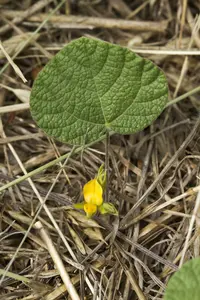
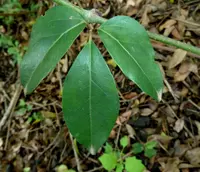
The plant has slender stems, small trifoliate leaves, and yellow pea-like flowers followed by small pods. Its growth habit is relatively delicate, so it suits low, informal trellises or naturalistic plantings rather than heavy structures.

This species is adapted to heat, full sun, and lean, well-drained soils, which makes it suitable for xeric or water-wise gardens. Gardeners who learn how to care for American snoutbean usually find it undemanding if kept dry and not overwatered.

Main Plant Requirements

Care Difficulty

Easy Care

Light Preference

Full Sun

Water Requirements

Low Water

Temperature Preference

Warm Climate

Hardiness Zone

7–10

Soil Texture

Sandy, Loamy, Rocky

Soil pH

Slightly acidic (6.5–7.0), Neutral (7.0)

Soil Drainage

Well-drained

Fertilization

Minimal (feed rarely)

Get Personalized Care Plan

Scan your plant to receive care tips personalized for your specific plant

Available on iOS and Android

How to Care for the American snoutbean

This drought-tolerant native vine performs best in bright, open sites with strong sun exposure.

  • Provide 6–10 hours of direct sun daily; full sun is ideal in most climates for compact growth and flowering of American snoutbean.
  • Allow light afternoon shade in very hot regions to reduce leaf scorch, especially on reflective sites such as gravel or south-facing walls.
  • In cooler seasons or coastal areas, choose the sunniest spot available, since prolonged shade leads to weak, stretched stems and few flowers.

This species prefers dry to moderately dry conditions and is sensitive to prolonged soil saturation.

  • Water only when the top 3–5 cm of soil are completely dry; in established in-ground plants this may mean long gaps between waterings.
  • Use fast-draining, sandy or rocky soil so water runs through within seconds; avoid spots where puddles stand for more than 10–15 minutes to reduce root rot risk.
  • In hot, dry spells, watch for limp or slightly folding leaves as a cue to water, and avoid yellowing, soft stems that indicate overwatering in Rhynchosia americana.

This warm-season perennial is adapted to hot, arid to semi-arid climates with mild winters.

  • Support active growth at 70–95°F (21–35°C); plants tolerate brief heat up to about 105°F (40°C) if soil is well-drained and roots are not waterlogged.
  • Protect from frost; damage typically occurs below 30°F (−1°C) and plants may die back or be killed with extended exposure below 25°F (−4°C).
  • In cooler regions, treat as a warm-season plant, planting after frost danger has passed and expecting slower growth when temperatures stay under 65°F (18°C).

This drought-adapted species tolerates low humidity and usually needs no special humidity management.

Rhynchosia americana prefers lean, fast-draining soil that mimics dry, rocky native habitats.

  • Use a gritty, sandy or gravelly mix with minimal organic matter to prevent water retention around the roots.
  • Combine roughly 50–60% coarse sand or fine gravel with 30–40% loam and 10–20% compost for structure and nutrients.
  • Aim for slightly acidic to neutral pH around 6.0–7.2, avoiding strongly alkaline or saline substrates.
  • Avoid dense, clay-heavy or peat-dominant mixes that stay wet for more than 1 day after watering, since this promotes root rot.

This species can grow in containers if the pot mimics its dry, well-drained native conditions.

  • Choose a wide, relatively shallow, heavy container so the spreading, vining growth does not tip the pot in wind.
  • Select unglazed clay to allow faster evaporation, which helps keep the root zone dry between waterings.
  • Elevate the pot on feet or bricks so drainage holes never sit in a saucer of water, preventing chronic root moisture.

This drought-adapted native legume needs only light feeding in most garden soils.

  • Use a thin layer of compost or a low-rate, slow-release balanced NPK (around 10-10-10) once in spring if growth seems weak.
  • Apply fertilizer at half the label strength to avoid lush, floppy growth and salt buildup in dry soils.
  • Skip feeding in late fall and winter when growth slows or plants are dormant.
  • In very poor soils, focus on improving soil organic matter rather than frequent fertilizer applications for American snoutbean.

Pruning Rhynchosia americana is mainly about light shaping and removing damaged growth.

  • Time any structural pruning for late winter or very early spring before vigorous new growth begins.
  • Remove dead, diseased, or storm-damaged stems first, then thin crowded or tangled shoots to improve air flow.
  • Use clean, sharp hand pruners to make angled cuts just above a leaf node or branching point.
  • Light tip-trimming after flowering can maintain a compact form without reducing the next season’s blooms.

This species is usually grown in the ground, so focus on careful transplanting rather than frequent repotting.

  • Move young plants in spring after frost when soil is warming and new growth begins.
  • Transplant if growth stalls, plants are crowded, or roots circle the container and emerge from drainage holes.
  • Choose a sunny, well-drained site and plant at the same depth, disturbing roots as little as possible.
  • Water deeply after transplanting, then keep soil slightly moist for 1–2 weeks to limit transplant shock before returning to deep, infrequent watering.

Rhynchosia americana is most commonly propagated from seed, with cuttings used less often.

  • Collect mature pods when they turn brown and dry, then shell and store seeds in a cool, dry place.
  • Sow seeds in late spring in a well-drained, sandy mix kept lightly moist and warm at 70–80°F.
  • Scarify seeds gently with sandpaper or a brief soak in warm water to improve germination.
  • For cuttings, take semi-ripe stems in early summer, use rooting hormone, and maintain high humidity with bright, indirect light.

This warm-climate perennial has limited frost tolerance and benefits from simple winter precautions in colder areas.

  • In mild climates, plants often overwinter with minimal damage if soils are well drained.
  • In regions below about 20°F, apply a 5–8 cm mulch layer around the root zone after the first light frost.
  • Cut back blackened or mushy stems in late winter, leaving any live basal growth intact.
  • Container plants in cold zones should be moved to a bright, cool, frost-free space until spring.

Care Tips

Provide climbing support

Install a low trellis, wire mesh, or taut string 30–60 cm above the ground so the twining stems can climb loosely, which keeps foliage off hot soil and reduces fungal issues in humid periods.

Encourage bushier growth

Pinch back the soft stem tips of young plants once or twice in early growth to promote branching and a denser habit, which results in more flowering sites over the season.

Plan for deep rooting

Use a deep container (at least 25–30 cm) or plant in open ground with loosened subsoil so the naturally deep root system can access stable moisture and better tolerate heat and short dry periods.

Rotate for even flowering

In containers, rotate the pot a quarter turn every 1–2 weeks during active growth so all sides receive similar light, leading to more uniform flowering and foliage density.

Time seed collection

For growing American snoutbean from saved seed, allow pods to dry and turn brown on the plant, then harvest before they shatter, dry them fully in a paper bag indoors, and store in a cool, dry place until sowing.

Common Pests and Diseases

Bean leaf beetles

These insects chew rounded or irregular holes in the foliage and may skeletonize the trifoliate leaves of American snoutbean, especially in sunny, open sites.

Solution

Handpick adults where feasible and shake plants over a light-colored tray to remove beetles, then crush or discard them; encourage natural predators by avoiding broad-spectrum insecticides. If damage is extensive, use a targeted pyrethrin or spinosad spray in the evening, coating both leaf surfaces and repeating only as needed according to label directions.

Fungal leaf spots

This disease causes tan to dark brown spots with possible yellow halos on leaves, often appearing after warm, humid, or rainy periods in late spring or summer.

Solution

Remove and discard heavily spotted leaves to reduce spore spread and avoid overhead watering so foliage dries quickly. Improve air movement by spacing plants properly, and if spotting continues to expand, apply a labeled copper or chlorothalonil fungicide at the first signs of new lesions, following product instructions carefully.

Aphids

These pests cluster on young stems and leaf undersides, sucking sap and causing curling, distortion, and sticky honeydew that can attract sooty mold on American snoutbean.

Solution

Spray plants thoroughly with a strong stream of water to dislodge aphids, focusing on shoot tips and undersides of leaves. For persistent infestations, use insecticidal soap or a light horticultural oil, repeating every 5–7 days until populations decline, and avoid overfertilizing with nitrogen, which encourages soft, aphid-prone growth.

Spider mites

These pests thrive in hot, dry conditions, causing fine stippling, bronzing, and eventual leaf drop, often accompanied by very fine webbing on foliage and stems.

Solution

Increase humidity around plants by occasional overhead rinsing in the morning and wash foliage with a firm spray of water to knock mites off the plant. For heavy infestations, apply insecticidal soap or a miticide labeled for spider mites, making sure to cover leaf undersides and repeating at 5–7 day intervals until new damage slows.

Interesting Facts

Drought-adapted legume

This species is native to arid and semi-arid regions of the southern US and northern Mexico and is strongly adapted to drought, surviving in rocky and sandy soils with very low water availability.

Nitrogen-fixing partner

As a member of the pea family (Fabaceae), it forms root nodules with nitrogen-fixing bacteria, which convert atmospheric nitrogen into forms usable by plants and can improve nutrient levels in poor soils.

Host for native insects

The foliage serves as a food source for larvae of several native moth and butterfly species in dry habitats, making it ecologically important in desert and shrubland food webs.

Botan icon

Did you know?

The species produces distinctive small, often curved seed pods that can twist as they dry, a trait common in many legumes that helps scatter seeds away from the parent plant in its open, desert-influenced habitats.

FAQs about American snoutbean

This species is attractive to many native bees and small butterflies, which visit its yellow flowers for nectar and pollen. It can support local pollinator populations when planted in sunny, low-input, wildlife-friendly landscapes.

Grow Healthy Plants with Botan Care

Keep your plants happy and healthy with plant identification, disease detection, and easy care guidance.

Botan plant care app — identify plants on mobile

Explore More Plants