sand blackberry Care (Rubus cuneifolius)

Also known as: American Bramble, Gazzard's curse, Gozard's Curse, Sand Bramble
sand blackberry

About sand blackberry

Sand blackberry (Rubus cuneifolius) is a low, thicket-forming shrub in the rose family, known for its arching, often spiny canes and edible dark fruits. It typically grows in dry, sandy soils, especially in coastal plains and open pine or scrub habitats in the southeastern United States. Plants spread by roots and seeds, forming dense patches that can work as informal wildlife hedges. It is generally tough and adaptable, but can be vigorous, so site choice and space planning matter when you care for sand blackberry. This species prefers full sun, well-drained soil, and moderate moisture for best flowering and fruiting.

Main Plant Requirements

Care Difficulty

Easy Care

Light Preference

Full Sun

Water Requirements

Moderate Water

Temperature Preference

Cold Hardy

Hardiness Zone

6–9

Soil Texture

Sandy, Loamy, Organic-rich

Soil pH

Acidic (5.5–6.5), Slightly acidic (6.5–7.0)

Soil Drainage

Well-drained

Fertilization

Minimal (feed rarely)

Get Personalized Care Plan

Scan your plant to receive care tips personalized for your specific plant

Available on iOS and Android

How to Care for the sand blackberry

Rubus cuneifolius fruits best with abundant direct sun while tolerating some light shade.

  • Provide 6–8 hours of direct sun daily; 4–6 hours is acceptable but may reduce flowering and fruiting for sand blackberry.
  • Prioritize morning sun with light afternoon shade in hotter regions to limit leaf scorch, especially on young canes.
  • In spring and fall, full sun is ideal; in mid-summer, use light filtered sun or nearby taller plants to buffer harsh afternoon exposure.

Rubus cuneifolius prefers evenly moist, well-drained soil rather than constant wetness.

  • Water when the top 3–5 cm of soil feels dry, then soak the root zone thoroughly, allowing excess to drain away.
  • During hot active growth, monitor every few days; in cooler seasons reduce watering as growth slows and rainfall often meets needs.
  • Watch for yellowing, soft canes and soggy soil as signs of overwatering, and for drooping leaves, dry crumbly soil, and small berries as signs of underwatering.

This species is adapted to warm temperate climates with cold winters and hot summers.

  • Aim for active growth in 65–80°F (18–27°C); plants still perform well from about 55–85°F (13–29°C).
  • Established plants tolerate winter lows near 0°F (−18°C) when fully dormant, though young canes benefit from mulch for root insulation.
  • Short periods above 90°F (32°C) are tolerated if soil moisture is stable; extended extreme heat or sudden hard frosts can damage flowers and new shoots.

Humidity is not a major factor for Rubus cuneifolius when grown outdoors in typical garden conditions.

Rubus cuneifolius prefers light, well-drained soils that mimic its native sandy habitats.

  • Use a sandy or sandy-loam mix with 30–50% coarse sand to keep the root zone airy and prevent compaction.
  • Incorporate 20–30% mature compost or leaf mold to add organic matter without making the mix heavy or waterlogged.
  • Aim for slightly acidic soil, around pH 5.5–6.5, and avoid strongly alkaline conditions that can reduce nutrient availability.
  • On heavier native soils, form raised rows or mounded beds to improve drainage and root aeration.

This species can be grown in containers if the pot is chosen and managed to support its spreading root system and arching canes.

  • Select a deep, heavy container that resists tipping as canes arch outward and fruits develop weight.
  • Use a wide surface area pot to allow lateral root spread and easier placement of support structures for canes.
  • Choose thick-walled or clay containers in hot regions to moderate root temperature and reduce rapid moisture swings.

This native shrub fruits well in average soil and only benefits from light, targeted feeding.

  • Apply a balanced NPK fertilizer at half strength once in early spring as new growth starts.
  • Use a thin top-dressing of compost around the root zone to support soil life and steady nutrient release.
  • Skip additional feeding if growth and fruiting are strong; excess nitrogen can reduce berry quality.
  • Stop fertilizing sand blackberry by midsummer and do not feed during winter dormancy.

Thoughtful pruning keeps Rubus cuneifolius productive, accessible, and less prone to disease.

  • Prune in late winter to early spring before buds break, when canes are easy to see and handle.
  • Remove dead, diseased, or damaged canes at the base and thin crowded stems for better light and airflow.
  • Cut out 2-year-old fruited canes after harvest to promote vigorous new fruiting canes.
  • Use clean, sharp bypass pruners and make cuts just above healthy buds or at cane bases.

This species is usually grown in-ground, so care focuses on site transplanting rather than frequent repotting.

  • Transplant young plants in early spring or fall, when soil is moist and air temperatures are mild.
  • Choose a sunny, well-drained site and set the crown at soil level, spreading roots outward in the planting hole.
  • Water deeply after planting, then keep soil evenly moist for several weeks to limit transplant shock.
  • For container plants, shift to a slightly larger pot only when roots circle the container or growth slows.

New Rubus cuneifolius plants are most often produced through simple layering and division.

  • Use tip layering in late summer by pegging a cane tip into moist soil until roots form, then sever from the parent.
  • Divide established clumps in early spring, replanting vigorous root sections with several healthy buds.
  • Softwood or semi-ripe cuttings root best in late spring to early summer under high humidity and bright, indirect light.
  • Seeds need stratification, meaning a cold, moist period, to germinate reliably and may produce variable offspring.

This shrub is generally cold hardy in much of its range and needs minimal winter care once established.

  • Apply a 5–8 cm layer of mulch around the root zone in late fall, keeping it slightly away from the stems.
  • Allow top growth to harden naturally in autumn; avoid late-season nitrogen that can trigger tender shoots.
  • In very cold or exposed sites, loosely tie canes and use a breathable fabric windbreak to limit desiccation.

Care Tips

Install sturdy support

Use strong T-posts or wooden stakes with 2–3 horizontal wires at 45–90 cm height to keep canes upright, improve airflow, and make harvesting safer and cleaner.

Rotate and thin canes

Each late winter, remove the weakest new canes at ground level and keep only 4–6 robust canes per plant, spacing them along the wire to reduce disease and improve berry size.

Mulch for runner control

Apply a 5–8 cm layer of coarse wood chips or pine bark over a defined bed and pull any new suckers that emerge beyond this mulched zone to keep the patch from spreading aggressively.

Targeted disease hygiene

During and after wet, warm periods, remove any canes with lesions, wilt, or gray mold and dispose of them in the trash, then avoid overhead watering to limit fungal spread when growing sand blackberry.

Bird and wildlife protection

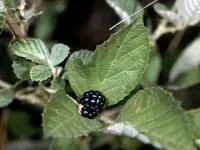
Before berries turn fully black, drape bird netting over a simple frame above the row so fruits ripen inside the barrier without birds stripping the crop.

Common Pests and Diseases

Orange rust

This disease causes bright orange, powdery spores on the undersides of leaves and leads to weak, spindly canes that do not fruit well.

Solution

Remove and destroy all infected canes and entire plants that show systemic symptoms, since orange rust is not curable once inside the plant. Avoid overhead watering, improve spacing for airflow, and choose rust-resistant planting stock when planning long-term Rubus cuneifolius care.

Cane blight

This disease leads to dark, sunken lesions on canes, often starting at pruning wounds, and can cause wilting or dieback above the infected area.

Solution

Prune out and destroy diseased canes back to healthy tissue during dry weather, and disinfect pruning tools between cuts. Reduce cane injury, avoid heavy nitrogen fertilization, and keep plant rows well spaced to improve drying after rain when growing sand blackberry.

Anthracnose

This disease produces small purplish spots that enlarge into gray, sunken lesions on canes and sometimes on leaves and fruit, leading to poor vigor and yield.

Solution

Cut out and remove infected canes at ground level during dormant season and dispose of them away from the planting. Maintain good airflow, avoid overhead irrigation, and apply a labeled caneberry fungicide as a preventive spray in early spring if the disease has been a recurring problem.

Raspberry crown borer

This pest tunnels into the lower canes and crown, causing wilting, weak shoot growth, and eventual cane death, often with swollen or cracked crown tissue.

Solution

Cut and destroy wilted canes that show tunneling, and dig out and discard heavily infested crowns. Maintain vigorous plants, keep weeds down around the base, and use targeted soil or stem treatments with a labeled crown borer product at the recommended timing if infestations persist.

Spider mites

These pests feed on the undersides of leaves, causing fine stippling, bronzing, and sometimes webbing, especially during hot, dry weather.

Solution

Spray leaf undersides with a firm stream of water to dislodge mites and lower numbers, and raise humidity around plants if possible. If populations remain high, use an insecticidal soap or horticultural oil labeled for brambles, applying thoroughly to leaf undersides while avoiding spraying during high heat above about 85°F.

Interesting Facts

Coastal sand specialist

This blackberry species naturally occurs on dry, nutrient-poor coastal sands and pine barrens in the southeastern United States, where its deep, fibrous root system helps stabilize loose soil.

Distinctively wedge-shaped leaves

Its specific epithet cuneifolius means wedge-leaved and refers to the characteristic narrow, wedge-shaped leaf bases that help separate it from many other North American blackberry species.

Wildlife food resource

The late-summer berries are an important seasonal food source for birds, small mammals, and many insect species, especially in coastal dune and scrub communities where other fleshy fruits can be scarce.

Botan icon

Did you know?

Genetic and morphological studies have shown that this species is part of a complex and regionally distinct group of native blackberries in eastern North America, and its clear, stable characteristics make it a useful reference taxon when botanists work to untangle the taxonomy of the Rubus genus in that region.

FAQs about sand blackberry

This species spreads by arching canes that root at the tips and by suckering from the base. It can form dense thickets if not pruned and contained, especially in light, sandy soils.

Grow Healthy Plants with Botan Care

Keep your plants happy and healthy with plant identification, disease detection, and easy care guidance.

Botan plant care app — identify plants on mobile

Explore More Plants