


Encourage Dense Clumps
Cut back spent flower stems by 1/3 after the main bloom flush to encourage a denser mound and a lighter second flowering rather than allowing the plant to sprawl and exhaust itself on seed production.

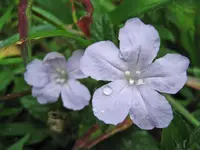
Carolina wild petunia, Ruellia caroliniensis, is a low-growing perennial wildflower native to the southeastern United States. It belongs to the acanthus family and is often found in open woods, roadsides, and dry meadows.
Plants form loose clumps of slender, branching stems with simple green leaves and soft, funnel-shaped lavender to pale purple flowers. Blooms appear mainly in warm months and attract bees and butterflies.
This species adapts well to average garden conditions and is considered easy to establish in suitable climates. It prefers sun to light shade, with well-drained soils and moderate moisture.
Gardeners who want to care for Carolina wild petunia should note its self-seeding habit, which helps it naturalize but may require occasional thinning in small beds.

Care Difficulty
Easy Care

Light Preference
Partial Sun

Water Requirements
Moderate Water

Temperature Preference
Cold Hardy

Hardiness Zone
6–9

Soil Texture
Sandy, Loamy, Clay

Soil pH
Acidic (5.5–6.5), Slightly acidic (6.5–7.0)

Soil Drainage
Moist but well-drained

Fertilization
Minimal (feed rarely)
Scan your plant to receive care tips personalized for your specific plant
Available on iOS and Android
This species prefers bright conditions similar to open woodland edges and prairies.
Ruellia caroliniensis prefers moderately moist, well-drained soil and tolerates short dry spells once established.
This perennial handles a wide temperature range but grows best in mild to warm conditions.
Humidity is not a major concern for Ruellia caroliniensis in typical outdoor conditions.
Ruellia caroliniensis prefers loose, moist, well-drained soil that does not stay waterlogged.
This species adapts reasonably well to container growing outdoors when moisture and drainage are managed carefully.
This native perennial grows well in average soil and needs only light, targeted feeding.
Thoughtful pruning keeps Ruellia caroliniensis compact, tidy, and flowering well.
This species is most often grown in the ground, where it forms stable clumps that rarely need moving.
Ruellia caroliniensis is commonly propagated by seed, division, or soft stem cuttings.
This perennial is generally cold hardy in its native range and needs minimal winter attention in the ground.

Plant Health Check
Not sure what's wrong with your plant? Check your plant's health inside the app.
This species is native to the southeastern US, where it typically flowers from late spring into summer, often starting earlier than many other native Ruellia species in the same habitats.
Its funnel-shaped flowers are a distinctive soft blue to lavender, a relatively uncommon color range among eastern North American understory wildflowers and a key trait for field identification.
In the wild it is often found in open pine woodlands, sandhills, and well-drained woodland edges, showing clear adaptation to relatively dry, sandy or loamy soils with partial sun.
The flowers are rich in nectar and strongly attract native bees, small butterflies, and some moths. Planting several together increases visibility to pollinators and supports local ecosystems in naturalized beds, meadows, and wildlife-friendly gardens.
Keep your plants happy and healthy with plant identification, disease detection, and easy care guidance.

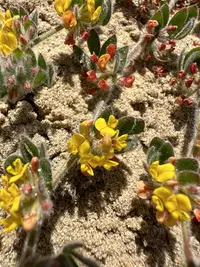
Acmispon tomentosus
Acmispon tomentosus
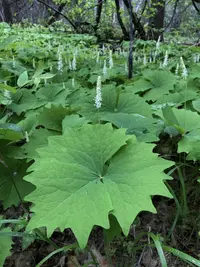
deer's foot
Achlys californica
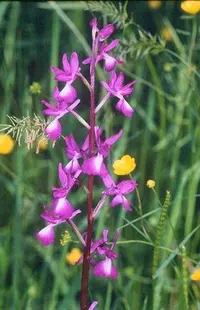
Loose-flowered orchid
Anacamptis laxiflora
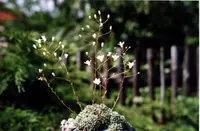
Saxifraga valdensis
Saxifraga valdensis
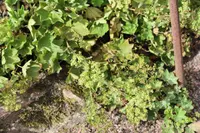
Alchemilla murbeckiana
Alchemilla murbeckiana
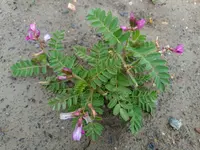
Astragalus longidentatus
Astragalus longidentatus
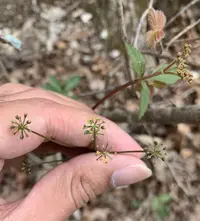
meadow alexanders
Zizia trifoliata
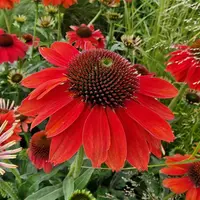
Coneflower
Echinacea 'Tomato Soup'