Spanish Butcher's-broom Care (Ruscus hypophyllum)

Spanish Butcher's-broom

About Spanish Butcher's-broom

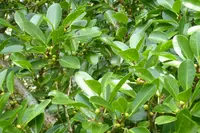
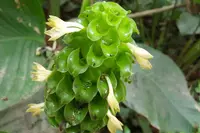
Spanish butcher's-broom (Ruscus hypophyllum) is an evergreen shrub-like plant with flattened, leaf-like stems that carry small flowers and bright red berries. It stays compact and tidy, making it suitable for containers and shaded garden corners.

This species is native to the Mediterranean region, where it grows in woodlands and rocky, shaded areas. Its slow growth and tolerance of low light and dry spells generally make it an easy plant to maintain.

Those traits help simplify how to care for Spanish Butcher's-broom, especially for growers who cannot water frequently. It usually prefers partial shade, moderate moisture, and well-drained soil.

Main Plant Requirements

Care Difficulty

Easy Care

Light Preference

Partial Shade

Water Requirements

Moderate Water

Temperature Preference

Warm Climate

Hardiness Zone

8–10

Soil Texture

Loamy, Clay, Organic-rich

Soil pH

Acidic (5.5–6.5), Slightly acidic (6.5–7.0)

Soil Drainage

Moist but well-drained

Fertilization

Minimal (feed rarely)

Get Personalized Care Plan

Scan your plant to receive care tips personalized for your specific plant

Available on iOS and Android

How to Care for the Spanish Butcher's-broom

This shade-tolerant evergreen prefers soft, indirect light rather than strong sun.

  • Provide bright shade or dappled light, such as under trees or on an east-facing side, with at most 2–3 hours of gentle morning sun.
  • Avoid harsh midday or afternoon sun, which can scorch cladodes and cause yellow or brown patches on Spanish Butcher's-broom.
  • In deep shade, growth becomes sparse; allow 4–6 hours of filtered light, especially from spring to early autumn, for denser stems.

This species prefers evenly moist but never waterlogged soil.

  • Allow the top 3–5 cm of soil to dry before watering again, then soak the root zone thoroughly and let excess drain away.
  • In spring and summer, monitor more often during warm, dry weather; in autumn and winter, reduce watering as growth slows.
  • Watch for yellowing, mushy stems as a sign of overwatering, and for limp, curling cladodes as an indicator that Ruscus hypophyllum is too dry.

This plant is adapted to mild climates with cool to warm, not extreme, temperatures.

  • Aim for 50–75°F (10–24°C) for steady growth, with slightly cooler nights promoting a natural seasonal rhythm.
  • Mature plants tolerate brief drops to about 20–25°F (-6 to -4°C), but repeated hard frosts can damage stems and young shoots.
  • In hot spells above 86°F (30°C), provide shade and consistent soil moisture, and avoid planting against heat-reflective walls or paving.

This species handles a wide humidity range and rarely needs special humidity management indoors.

  • Comfortable around 35–60% humidity, matching most heated or air-conditioned homes.
  • Tolerates dry air well; humidity stress is uncommon unless combined with heat and strong sun.
  • Mild humidity stress shows as browning tips or edges, which usually improves by moving the plant away from hot drafts rather than adding misting.

This plant prefers loose, humus-rich, well-drained soil that stays lightly moist but not saturated.

  • Use a mix of 2 parts peat or coco coir, 1 part compost, and 1 part perlite or fine bark for structure and air spaces.
  • Aim for slightly acidic to neutral pH, around 6.0–7.0, which supports nutrient uptake for Ruscus hypophyllum.
  • Ensure water drains freely from the pot or bed within a few minutes to avoid root suffocation and rot.
  • Avoid heavy clay or soil with a high fine-silt content unless amended with coarse sand and perlite to improve aeration and drainage.

This species is well suited to container growing for shaded patios and sheltered outdoor spots.

  • Choose a pot that is deeper than it is wide so the rhizomes and roots can anchor and support upright stems.
  • Use a heavier material such as ceramic or clay outdoors to prevent the container tipping in wind as the plant fills out.
  • Maintain a drainage layer only by using a free-draining mix and unobstructed holes, never by adding stones that raise the water table inside the pot.

Ruscus hypophyllum has modest nutrient needs but benefits from light, consistent feeding in containers or poor soils.

  • Use a balanced, diluted liquid fertilizer (e.g., 10-10-10 at 1/2 strength) or a mild slow-release formula in spring.
  • Feed container plants every 6–8 weeks during active growth; in-ground plants in lean soil can receive 1–2 light applications.
  • Reduce feeding to 1 weak application or none at all in winter, when growth slows.
  • Supplement with a thin layer of compost over the root zone once a year to maintain soil fertility for Spanish Butcher's-broom.

Ruscus hypophyllum needs only light, strategic pruning to maintain a neat, healthy clump.

  • Carry out pruning in late winter or early spring before new growth starts.
  • Remove dead, yellowing, or physically damaged stems at the base using clean, sharp hand pruners.
  • Thin out a few of the oldest, most crowded stems to improve air flow and maintain an open, arching form.
  • Avoid heavy cutting; modest selective removal supports steady growth and preserves flowering shoots.

Ruscus hypophyllum grows slowly and prefers to stay slightly pot-bound or undisturbed in the ground.

  • Look for roots circling the pot, pushing through drainage holes, or noticeably slowed growth as cues to repot.
  • Plan repotting or transplanting for early spring, aiming for every 3–5 years in containers at most.
  • Move into a pot only 2–5 cm wider, using a free-draining, humus-rich mix to limit waterlogging stress.
  • Water thoroughly after moving, keep in bright shade for 1–2 weeks, and avoid heavy feeding until new growth resumes.

Ruscus hypophyllum is usually propagated by division or rhizome segments rather than by seeds.

  • Divide established clumps in early spring, when new shoots start to emerge but before hot weather.
  • Lift the plant, then cut rhizomes into sections, each with several shoots or buds and healthy roots.
  • Replant divisions at the same depth in moist, well-drained soil and firm gently to eliminate large air pockets.
  • Keep newly divided plants in shaded, wind-sheltered conditions with evenly moist soil until vigorous new growth appears.

Ruscus hypophyllum is moderately cold hardy and usually needs minimal winter attention in mild to cool climates.

  • Tolerates light frost once established but benefits from shelter in areas with prolonged freezes below about 20°F.
  • Apply a 5–8 cm layer of mulch over the root zone in late fall, keeping it slightly away from stems.
  • In very cold regions, grow in containers and move indoors to a cool, bright, frost-free space until spring.

Care Tips

Divide old clumps

Every 4–6 years, lift and divide congested rhizomes in late winter or very early spring to renew vigor and create extra plants for other shaded spots when growing Spanish Butcher's-broom.

Use shaded containers

In warm climates, place containers inside a larger cachepot or behind a solid barrier to shade the root zone and reduce heat stress on the rhizomes.

Harvest stems carefully

If cutting stems for arrangements, always leave at least half of the shoots on each clump and cut low and clean at the base to avoid weakening the plant.

Mulch for root protection

Apply a 3–5 cm layer of fine bark or leaf mold around the plant each year to buffer soil temperature, suppress weeds, and protect the shallow root system from disturbance.

Monitor slow changes

Because growth is slow, mark planting spots with discreet tags and check them a few times a year for subtle decline or damage, which allows timely correction before the clump thins out permanently.

Common Pests and Diseases

Scale insects

This pest appears as small, dome-shaped bumps on stems and cladodes, often leading to yellowing and general decline. Symptoms include sticky honeydew and possible sooty mold growth on affected surfaces.

Solution

Remove light infestations by gently scraping scales off with a cotton swab dipped in 70% isopropyl alcohol, or by washing stems with a mild soap solution. For heavier infestations, use a horticultural oil spray labeled for indoor ornamentals, applied thoroughly to all plant surfaces and repeated as directed to target newly hatched crawlers.

Mealybugs

These insects form white, cottony clusters in stem joints and at the base of cladodes, where they suck sap and weaken the plant. Symptoms include distorted new growth and sticky honeydew deposits.

Solution

Isolate the plant, then wipe or dab visible mealybugs with cotton swabs dipped in 70% isopropyl alcohol and rinse the plant with lukewarm water. For persistent problems, apply an insecticidal soap or light horticultural oil, making sure to reach hidden crevices, and repeat at 7–10 day intervals until no new insects appear.

Spider mites

This pest thrives in warm, dry indoor air and feeds on the undersides of cladodes, causing pale stippling and dull, dusty-looking foliage. Symptoms include very fine webbing between stems and at leaf joints in advanced cases.

Solution

Increase humidity around the plant and rinse stems and cladodes thoroughly under a gentle shower or with a handheld sprayer, focusing on undersides. If activity continues, use an insecticidal soap or a miticide specifically labeled for spider mites, repeating applications as directed and keeping the plant away from hot, direct sun during treatment.

Sooty mold

This disease is a dark, powdery fungal growth that develops on honeydew excreted by sap-sucking insects such as scale or mealybugs. Symptoms include blackened, dirty-looking surfaces that can reduce photosynthesis and make the plant look dull and unhealthy.

Solution

Control the underlying insect infestation first, then gently wipe affected cladodes and stems with a damp cloth or mild soap solution to remove the mold layer. Improve air circulation around the plant and avoid overhead watering to keep surfaces drier and less favorable for fungal growth.

Interesting Facts

Flattened leaf-like shoots

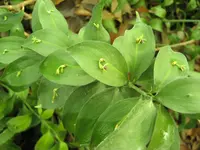
What appear to be leaves are actually flattened stem segments called cladodes, with the true leaves reduced to tiny scales at their base, an adaptation that reduces water loss in its dry Mediterranean habitats.

Fruits on the cladodes

The red berry-like fruits develop directly on the surface of the cladodes rather than on separate stalks, giving the impression that the leaf itself is bearing fruit.

Shade-tolerant evergreen shrub

This species naturally grows as an understory shrub in Mediterranean woodlands, staying evergreen and photosynthesizing efficiently even in low, filtered light.

Botan icon

Did you know?

Ruscus hypophyllum has historically been used in some parts of southern Europe and the Mediterranean as long-lasting greenery in floral work and decorations, because its stiff cladodes and persistent red fruits remain visually attractive and structurally firm for extended periods after cutting.

FAQs about Spanish Butcher's-broom

This species is evergreen, keeping its stiff, glossy cladodes year-round. Foliage color may dull slightly in low light or drought, but it normally retains a stable structure and provides consistent cover through all seasons in mild to cool climates.

Grow Healthy Plants with Botan Care

Keep your plants happy and healthy with plant identification, disease detection, and easy care guidance.

Botan plant care app — identify plants on mobile

Explore More Plants