green brittlegill Care (Russula aeruginea)

Also known as: grass green russula, Grasgrüner Täubling
green brittlegill

About green brittlegill

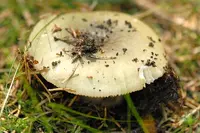
The green brittlegill, Russula aeruginea, is a woodland mushroom, not a leafy houseplant. It forms fleshy caps with a pale to bright green top and white, brittle gills underneath. The cap often appears smooth and slightly sticky when fresh.

This species typically grows on the ground in association with birch trees in temperate forests, especially in Europe and parts of North America. It forms mycorrhiza, a symbiotic relationship with tree roots, so it cannot be grown like a normal potted plant.

Because of this dependence on host trees and soil fungi, it is considered difficult to cultivate deliberately. For anyone wanting to understand how to care for green brittlegill, the focus is mainly on conserving suitable woodland habitat rather than indoor culture.

Main Plant Requirements

Care Difficulty

Hard Care

Light Preference

Partial Shade

Water Requirements

Keep Soil Moist

Temperature Preference

Cool Climate

Hardiness Zone

3–8

Soil Texture

Loamy, Sandy, Organic-rich

Soil pH

Strongly acidic (4.5–5.5), Acidic (5.5–6.5)

Soil Drainage

Moist but well-drained

Fertilization

Minimal (feed rarely)

Get Personalized Care Plan

Scan your plant to receive care tips personalized for your specific plant

Available on iOS and Android

How to Care for the green brittlegill

This woodland fungus grows best in cool, lightly shaded conditions beneath trees.

  • Provide dappled or filtered light under birch or mixed woodland canopy, avoiding direct midday sun that can dry fruiting bodies quickly.
  • Tolerates partial shade to deep shade; 1–3 hours of gentle morning sun at the woodland edge is acceptable, but full afternoon sun often desiccates caps and gills.
  • In summer, favor thicker canopy cover; in early spring and late autumn, slightly more open light is helpful as the sun is weaker and soil stays moist.

This ectomycorrhizal fungus depends on consistently moist, not saturated, forest soil.

  • Aim for soil that feels evenly moist 2–5 cm below the surface; if the top layer is dusty, crumbly, and pale, conditions are too dry for stable fruiting.
  • Good drainage is essential; standing water, sour odor, or slimy litter indicate excess moisture, which encourages decay organisms that outcompete Russula aeruginea.
  • In hot, dry weather, natural flushes decline as soil dries; in contrast, prolonged heavy rain can cause caps to split, waterlog, or rot at the base.

This species fruits best in cool to mild woodland temperatures with moderate seasonal variation.

  • Optimal fruiting typically occurs around 50–68°F (10–20°C), common in late summer to autumn in temperate forests with regular rainfall.
  • Mycelium in soil can tolerate down to about 23–28°F (-5–-2°C), but repeated hard freezes at the surface reduce visible fruiting bodies and shorten their lifespan.
  • Sustained heat above 77–82°F (25–28°C) dries leaf litter and upper soil, so flushes become sparse until cooler, moist conditions return in late season.

Humidity is not a significant controllable factor for this wild, ectomycorrhizal mushroom species and is best managed by appropriate outdoor site selection rather than household adjustment when caring for green brittlegill.

Russula aeruginea relies on a natural partnership with tree roots and does not adapt well to artificial potting mixes, but understanding its soil preferences helps when assessing or restoring its woodland habitat.

  • This fungus favors moist, well-drained, humus-rich sandy or loamy soils that stay evenly damp but never waterlogged.
  • It typically occurs in slightly acidic soils around pH 4.5–6.0, common in birch and mixed conifer woodland leaf litter.
  • Maintaining a deep layer of decomposing leaves, fine roots, and twigs supports its mycorrhizal association and improves soil structure and aeration.
  • Avoid compacted, heavily fertilized, limed, or very clay-heavy ground, which disrupts the tree–fungus relationship and can prevent fruiting.

This species is not realistically suitable for container growing, as it depends on mycorrhizal associations with living tree roots in undisturbed soil rather than confined pot culture.

Russula aeruginea is a wild mycorrhizal fungus that does not need direct fertilization, but soil health around its host trees matters.

  • Avoid applying synthetic balanced NPK directly for green brittlegill; instead, support host trees with modest, slow-release nutrition if truly necessary.
  • Maintain a light layer of leaf litter or well-rotted compost in autumn to sustain soil organisms, not to feed the fungus directly.
  • Do not feed during winter dormancy; allow natural nutrient cycling from decomposing organic matter to dominate.
  • Keep any fertilizer inputs dilute and infrequent to avoid disrupting the tree–fungus partnership in the upper root zone.

Russula aeruginea does not require pruning because the mushroom fruiting bodies are seasonal and short-lived.

  • If desired, remove old or decaying caps with clean hands or a knife after spore release to keep the area tidy.
  • Avoid disturbing surrounding leaf litter or fine tree roots when collecting mushrooms near the base of host trees.
  • Do not cut or damage nearby roots and mycelium; the underground network supports future fruiting.
  • Any cutting should be minimal and focused only on individual fruiting bodies, as shaping or growth control is not relevant for fungi.

This mycorrhizal fungus is not suited to typical container culture, so repotting is rarely relevant and transplanting focuses on host trees and soil.

  • Transplant only young host trees that already show association with Russula aeruginea, moving a generous soil root ball with visible mycorrhizal roots.
  • Best timing is early spring or early autumn, during mild temperatures and stable moisture.
  • Transplant infrequently; aim for a permanent site with suitable tree species and undisturbed, slightly acidic, well-drained soil.
  • Reduce root stress by watering the root ball thoroughly before and after transplant, keeping soil evenly moist and avoiding compaction of the surrounding area.

Propagation of Russula aeruginea is indirect and relies on encouraging natural spore spread and stable mycorrhizal relationships rather than active home methods.

  • Allow mature caps to release spores under suitable host trees instead of harvesting all fruiting bodies.
  • Establish or plant compatible host species, such as birch, in slightly acidic, well-drained soil to encourage colonization.
  • Maintain undisturbed leaf litter and minimal soil cultivation so mycelium can expand gradually through the root zone.

This fungus is naturally cold hardy in temperate climates and usually needs no special winter care beyond stable woodland conditions.

  • Avoid disturbing frozen soil around host tree roots where mycelium persists through winter.
  • If managing a planted host tree, keep a 5–8 cm mulch of leaf litter or bark around the root zone, without covering the trunk flare.

Care Tips

Host tree pairing

Establish this mycorrhizal fungus in mixed birch or conifer woodland or near compatible street or yard trees, since it relies on living roots rather than organic substrates or wood chips alone.

Minimal site disturbance

Once a patch appears, avoid deep raking, digging, or heavy foot traffic in a 1–2 m radius so the underground mycelium network remains intact and fruiting continues in following seasons.

Leaf litter management

Maintain a thin, natural layer of leaf litter over the soil to protect the mycelium from drying while still allowing emerging mushrooms to push through; avoid thick mulch or plastic weed barriers that block gas exchange.

Targeted moisture support

During extended dry periods in late summer to autumn, apply a gentle, low-pressure soak to the root zone of host trees in the evening rather than spraying caps directly, which helps stabilize conditions for growing green brittlegill.

Clean harvest practice

When collecting fruiting bodies, cut the stems cleanly at soil level with a knife instead of pulling, which reduces disturbance to the subterranean mycelium and helps maintain future flushes.

Common Pests and Diseases

mycophagous slugs

This pest feeds on the caps and gills, leaving irregular holes and ragged edges on fruiting bodies. Symptoms include slime trails on or near the mushrooms and missing tissue, especially in moist weather.

Solution

Hand-pick slugs during damp evenings, use slug collars or copper barriers around the fruiting area, and reduce nearby debris or dense groundcover that shelters them. If pressure is high, place shallow beer traps or iron phosphate slug baits around, not on, the mushroom patch to limit contact with fruiting bodies.

fungus gnats

These insects lay eggs in moist organic matter, and their larvae tunnel through developing mushroom tissue. Symptoms include distorted or tunneled caps, small exit holes, and tiny black adults hovering near the fruiting site.

Solution

Improve surface drainage and avoid overwatering the surrounding litter layer to make the habitat less attractive. Use yellow sticky traps to reduce adult numbers and lightly disturb the upper leaf litter or mulch to expose larvae to predators without damaging the mycelium.

maggot infestation

This pest results from fly larvae developing inside the caps, often unnoticed until the mushroom softens or shows tunnels. Symptoms include spongy or waterlogged flesh, internal galleries, and small larvae visible when the cap is cut open.

Solution

Regularly check developing fruiting bodies and remove and discard any that appear soft, riddled, or off-color to break the life cycle. Maintain slightly better air movement around the fruiting area and harvest young, firm mushrooms promptly if they are being monitored for study or identification.

bacterial blotch

This disease causes greasy, sunken, or brown spots on caps, especially in persistently wet conditions. Symptoms include localized slimy patches and faster decay of affected mushrooms.

Solution

Avoid overhead watering of nearby plants that splashes directly onto mushrooms and reduce prolonged wetness by improving airflow at ground level. Remove and discard affected fruiting bodies promptly and keep surrounding leaf litter clean of decomposing debris to reduce bacterial load.

saprobic mold overgrowth

This disease occurs when fast-growing molds colonize the cap or gills, appearing as white, gray, or green fuzzy patches. Symptoms include rapid softening, discoloration, and collapse of the affected mushrooms.

Solution

Carefully remove and dispose of mold-covered mushrooms and any heavily contaminated surface litter. Improve air circulation and avoid piling thick, wet mulch where the fungus fruits, as slightly drier, well-aerated conditions help the native Russula aeruginea mycelium outcompete aggressive molds.

Interesting Facts

Color from birch roots

This species often forms mycorrhizal partnerships with birch trees, and its cap color ranges from yellow‑green to olive tones that can be influenced by soil chemistry and the specific birch associates.

Mild, fragile flesh

Unlike many other greenish Russula species with acrid taste, this mushroom has mild-tasting, friable flesh that breaks like chalk, a typical but especially clear trait in this species.

Late summer specialist

Fruit bodies are most often recorded from late summer into autumn in temperate Europe and North America, aligning with peak fine-root growth and carbohydrate flow in associated birch trees.

Botan icon

Did you know?

Russula aeruginea has been used by field mycologists as a teaching example of how subtle cap colors, combined with its strict birch association and mild taste, help separate it from similar but inedible or acrid Russula species in identification keys.

FAQs about green brittlegill

This mushroom is considered edible but of modest culinary value. It must be correctly identified, as many Russula species are confusingly similar and some cause gastrointestinal upset. Only experienced foragers should collect and eat it, always cooked thoroughly.

Grow Healthy Plants with Botan Care

Keep your plants happy and healthy with plant identification, disease detection, and easy care guidance.

Botan plant care app — identify plants on mobile

Explore More Plants