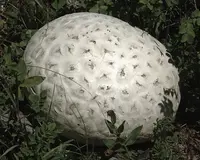
entire russula Care (Russula integra)

entire russula

About entire russula

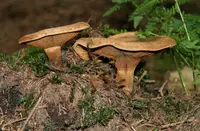
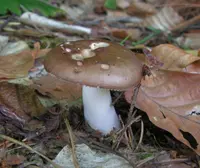
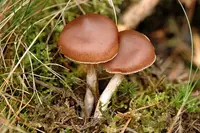
Entire russula (Russula integra) is a wild mushroom species, not a houseplant, typically found in forests rather than in cultivation. It forms stout, often yellow-brown to reddish caps with pale, brittle gills and a firm, white stem, growing directly from soil in symbiosis with trees. This species occurs mainly in temperate woodlands of Europe and North America, usually associated with conifers or mixed forests. It is not suited to ordinary home growing, since it depends on complex root partnerships with trees and specific soil fungi. Most interest focuses on identification and ecology rather than how to care for entire russula in a garden or indoor setting.

Main Plant Requirements

Care Difficulty

Hard Care

Light Preference

Partial Shade

Water Requirements

Regular Water

Temperature Preference

Cool Climate

Hardiness Zone

Unknown

Soil Texture

Loamy, Sandy, Organic-rich

Soil pH

Acidic (5.5–6.5)

Soil Drainage

Moist but well-drained

Fertilization

Minimal (feed rarely)

Get Personalized Care Plan

Scan your plant to receive care tips personalized for your specific plant

Available on iOS and Android

How to Care for the entire russula

This woodland mushroom relies on dappled forest light rather than direct sun.

  • Provide bright, filtered light under trees or shrubs, similar to open woodland with 2–4 hours of gentle morning sun and full shade by afternoon.
  • Avoid strong midday or afternoon sun, which can dry leaf litter and mycelium, reducing fruiting of entire russula and stressing the fungal network.
  • Maintain partial shade through the year; in summer, denser canopy or shade cloth helps, while in late fall thinner canopy still supplies enough indirect light.

This mycorrhizal fungus depends on stable, evenly moist forest soil rather than direct watering of the mushrooms.

  • Aim for soil that stays consistently moist 5–8 cm down, never waterlogged; allow only the top 1–2 cm of leaf litter to dry slightly between natural rains or supplemental watering.
  • Provide excellent drainage with loose, organic-rich soil so excess water runs off; soggy, compacted ground and standing water quickly rot mycelium of Russula integra.
  • Watch for signs of stress: long dry spells reduce fruiting, while frequent pooling, sour odors, or moldy litter suggest overwatering or poor drainage and require adjustment.

This species prefers cool to mild forest temperatures with protection from extremes.

  • Support growth in a range of 55–70°F (13–21°C), which favors stable mycelium and reliable mushroom formation in suitable host tree areas.
  • Protect from hard frost; short dips near 30°F (−1°C) may be tolerated in leaf litter, but repeated freezing and thawing can damage fruiting bodies and reduce future flushes.
  • Limit heat stress by keeping the habitat shaded and mulched when temperatures exceed 80°F (27°C), since hot, dry soil slows fungal activity and can halt fruiting.

Humidity is not a meaningful factor for Russula integra, which fruits in natural outdoor forest conditions.

Russula integra is a mycorrhizal forest mushroom that relies on native mineral soil and cannot be meaningfully managed with typical potting mixes.

  • Fruiting bodies appear in well-drained, aerated forest soils, often sandy to loamy, with abundant leaf litter and fine roots from nearby trees.
  • The fungus associates with tree roots, so the effective substrate is the living root zone rather than a standalone mushroom-growing mix.
  • It typically occurs in slightly acidic soil, roughly pH 4.5–6.5, where conifer or mixed woodland leaf litter is decomposing.
  • Avoid compacted, waterlogged, or heavily fertilized soils, which disrupt the fine root environment needed for mycorrhizal development and fruiting.

This species is not suitable for container growing because it depends on complex mycorrhizal relationships with tree roots in undisturbed soil.

Russula integra is a wild ectomycorrhizal mushroom that does not benefit from targeted fertilization in garden or forest settings.

Russula integra does not require pruning, since it is a wild mushroom rather than a garden plant with persistent stems or foliage.

This fungus grows in symbiosis with tree roots and is not suited to conventional repotting or transplanting like a potted plant.

  • Avoid disturbing soil around host trees, since the fine fungal network (mycelium) is sensitive to disruption.
  • If moving soil with known fruiting bodies, transfer a generous volume of surrounding soil to keep mycelium intact.
  • Time any soil disturbance for cool, moist periods to reduce desiccation stress on the mycelium.
  • After disturbance, maintain even soil moisture so the underground fungal network can recover.

Propagation of Russula integra is not typically managed by gardeners because it spreads through microscopic spores and underground mycelium.

This species is naturally cold hardy in its native range and does not need active winter care in typical outdoor conditions.

Care Tips

Site hygiene

Collect and remove old mushroom caps and debris around host trees to reduce spore loads of competing fungi and potential pathogens in the area where you plan on growing entire russula.

Host tree focus

Select and maintain healthy compatible host trees (often pines, spruces, or birches) with minimal soil disturbance around their root zone, since the fungus depends on stable ectomycorrhizal associations with these roots.

Limit soil disturbance

Avoid deep digging, rototilling, or heavy foot traffic in the fruiting zone, as disruption of fine feeder roots and fungal mycelium can sharply reduce future mushroom production.

Moderate organic inputs

If adding organic matter, use a thin surface layer of well-decomposed leaf litter rather than fresh manure or thick compost, which can favor aggressive saprophytic fungi that outcompete Russula integra.

Careful harvest technique

Cut mature caps at the base with a clean knife instead of pulling them up, leaving most of the underground mycelium and fine roots intact to support future flushes.

Common Pests and Diseases

Mycophagous springtails

These insects feed on fungal tissues, including caps and gills, and can scar or tunnel into fruiting bodies. This pest is favored by consistently wet, organic-rich substrates around the mushroom base.

Solution

Reduce excess surface moisture by improving drainage and avoiding over‑saturation of the forest floor microhabitat if cultivating, and remove heavily infested mushrooms promptly. For small‑scale outdoor culture, gently flood-rinse the immediate area with clean water to dislodge springtails, then allow the substrate surface to dry slightly between waterings.

Slugs and snails

These pests rasp away at caps and stems, leaving irregular holes, slime trails, and sometimes consuming entire young fruiting bodies. This pest is most active in cool, damp conditions typical of coniferous and mixed woodland where the fungus grows.

Solution

Hand-remove slugs and snails during evening or early morning and use physical barriers such as copper tape or rough mineral grit around defined cultivation beds. In small culture plots, limit dense groundcover and debris that offers daytime shelter, while maintaining enough leaf litter for normal mushroom development.

Fungal parasitism by Hypomyces

This disease is caused by parasitic fungi such as Hypomyces species that overgrow russula caps and gills, leading to discolored, felt-like or crusty surfaces and distorted fruiting bodies. Symptoms include loss of normal gill structure and reduction in spore production.

Solution

Remove and discard parasitized mushrooms immediately to reduce local spore load and prevent spread to nearby fruiting bodies. Avoid disturbing infected specimens in place; instead, cut them out carefully and minimize handling of surrounding soil and litter to protect healthy Russula integra colonies.

Larval fly infestation

These insects, often fungus gnat or sciarid fly larvae, tunnel within caps and stems, causing soft, water-soaked spots, internal browning, and rapid decomposition. This pest is encouraged by still, humid air and dense leaf litter that shelters adult flies.

Solution

Harvest fruiting bodies promptly once mature to limit the window for egg-laying, and remove badly infested mushrooms to reduce breeding sites. In small cultivation setups, use fine mesh over fruiting areas to exclude adult flies and maintain moderate airflow without letting the substrate dry out, supporting more stable Russula integra care instructions.

Interesting Facts

Stable cap coloration

The cap of this species typically shows a uniform brownish to yellow-brown color without the bright reds or greens seen in many related Russula species, which helps distinguish it in the field when combined with other features.

Mild, nutty taste

Among brittlegills, this species is known for its mild, slightly nutty flavor and lack of acrid or peppery taste, a characteristic used by experienced foragers to help separate it from inedible or unpleasant relatives.

Specific tree associations

This ectomycorrhizal fungus most often forms symbiotic root partnerships with conifers such as spruce and fir in temperate forests, exchanging mineral nutrients for sugars produced by the host tree.

FAQs about entire russula

This mushroom is generally considered edible but is not a top culinary species. Identification must be absolutely certain, since similar red-capped Russula species can be acrid or unsafe. Always consult a local expert before consuming wild specimens.

Grow Healthy Plants with Botan Care

Keep your plants happy and healthy with plant identification, disease detection, and easy care guidance.

Botan plant care app — identify plants on mobile

Explore More Plants