


Host tree selection
Establish this ectomycorrhizal fungus under compatible host trees such as birch, pine, or oak, and avoid isolated lawn areas with no woody hosts, since the mycelium depends on tree roots for long‑term survival.

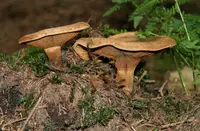
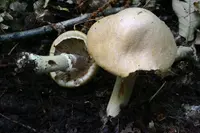
Brown roll-rim, Paxillus involutus, is a gilled mushroom rather than a traditional leafy plant, forming clusters or arcs on soil near trees. It has a brown, rolled cap edge, yellow-brown gills that run down the stem, and often appears in mixed woodlands, parks, and sometimes lawns across temperate regions. This species forms mycorrhizal associations, meaning it grows in partnership with tree roots, which strongly influences where it can establish. Because it depends on these root partnerships, it is not an easy species to cultivate intentionally, and practical guidance on how to care for Brown Roll-Rim at home is limited.

Care Difficulty
Hard Care

Light Preference
Partial Shade

Water Requirements
Keep Soil Moist

Temperature Preference
Cool Climate

Hardiness Zone
Unknown

Soil Texture
Loamy, Silty, Organic-rich

Soil pH
Acidic (5.5–6.5)

Soil Drainage
Moist but well-drained

Fertilization
Minimal (feed rarely)
Scan your plant to receive care tips personalized for your specific plant
Available on iOS and Android
This ectomycorrhizal fungus prefers cool, shaded woodland light rather than open, direct sun.
This fungus develops best in consistently moist, not waterlogged, forest soils.
This species is adapted to temperate climates with cool to mild conditions.
Humidity control is not a meaningful factor for this outdoor ectomycorrhizal fungus and does not require targeted adjustment beyond normal local climate conditions.
This ectomycorrhizal fungus thrives in undisturbed, natural ground rather than prepared potting mixes.
This species is not suitable for typical container growing because it relies on ectomycorrhizal partnerships with tree roots in open soil.
This ectomycorrhizal fungus grows best with minimal intervention, so direct feeding is usually unnecessary for Brown Roll-Rim in the ground.
Pruning is not part of normal care for Paxillus involutus, since it is a wild ectomycorrhizal fungus rather than a garden shrub or tree.
This fungus is rarely grown in containers; in gardens it is usually left undisturbed around suitable host trees.
Propagation of Paxillus involutus is specialized and not typically attempted by home gardeners.
No specific winter care is required, as this fungus is naturally cold hardy in temperate climates and persists as mycelium in the soil.

Plant Health Check
Not sure what's wrong with your plant? Check your plant's health inside the app.
This species can cause a rare but often fatal immune reaction called Paxillus syndrome, where repeated consumption leads the immune system to destroy red blood cells and can result in kidney failure and shock.
Its gills are actually decurrent, widely spaced lamellae that often fork and form a maze-like pattern, and they bruise brown when handled, which is an important diagnostic feature for distinguishing it from some edible look-alikes.
Paxillus involutus forms ectomycorrhizal associations with many trees, especially birch, pine, and spruce, where its fungal threads wrap around fine roots and trade mineral nutrients for sugars from the host plant.

This fungus is considered a pioneer ectomycorrhizal species and can colonize harsh, disturbed, or polluted soils, including mine tailings, where it helps host trees tolerate metal contamination by binding and immobilizing toxic metals in its tissues.
This mushroom is dangerously poisonous and must never be eaten, even if thoroughly cooked. It contains toxins that damage red blood cells and can trigger severe, sometimes delayed, immune reactions. Consumption has caused fatal poisonings in humans.
Keep your plants happy and healthy with plant identification, disease detection, and easy care guidance.

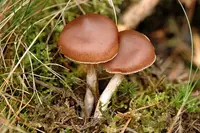
Cortinarius brunneus
Cortinarius brunneus
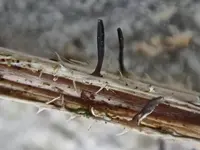
Acrospermum compressum
Acrospermum compressum
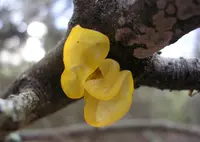
witch's butter
Tremella mesenterica
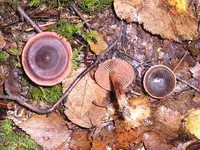
Cortinarius anthracinus
Cortinarius anthracinus
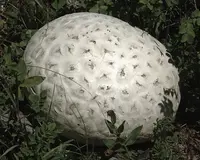
Western Giant Puffball
Calvatia booniana
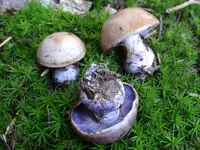
blushing webcap
Cortinarius cyanites
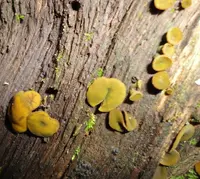
olive-brown cup
Chlorencoelia versiformis
Wrinkled Cortinaria
Cortinarius caperatus