


white willow Identification (Salix alba)

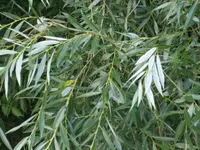
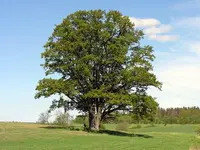
Recognize white willow by its long, narrow leaves, usually 2-4 inches (5-10 cm) long, arranged alternately on slender twigs, and by its tall tree form with an open crown.

The trunk is often thick and furrowed, with many upright to arching branches.

Salix alba Identification

Check Your Plant ID

Upload a plant photo and check the identification in seconds.

Clear images work best. Avoid photos taken too close or too far away

  • 1 free identification
  • No sign-up
  • 30,000+ plants in database

Use these visible traits to check for Salix alba.

  • A medium to large tree with a broad, rounded crown and many upright to spreading branches.
  • Leaves are narrow and lance-shaped, usually 2-4 inches (5-10 cm) long, with fine toothed edges.
  • Leaf undersides look distinctly pale or silvery, giving the canopy a light, two-toned look.
  • Twigs are slender and flexible, often yellowish to olive-brown rather than thick or stiff.
  • Bark on older trunks is gray-brown and deeply furrowed into long vertical ridges.

Check several leaves and the bark together, since the pale leaf undersides are especially helpful.

Salix alba shows clear visual shifts from sapling form to flowering and fruiting branches.

  • Young plant: Young plants are narrow and upright, with slender shoots and noticeably long, lance-shaped leaves, often around 2-4 inches (5-10 cm) long.
  • Mature plant: Mature trees develop a broad, rounded crown, heavier scaffold branches, and a deeply furrowed trunk; lower branches often arch outward or slightly downward.
  • Flowering stage: Flowering branches carry catkins before full leaf expansion; male and female trees differ, but both show many short, silky, cylindrical clusters along twigs.
  • Fruiting stage: On female trees, the spent catkins lengthen into looser fruiting spikes that release masses of cottony seed, making branch tips look pale and fuzzy.

Several named forms of white willow are identifiable by foliage color or crown shape.

  • Salix alba 'Vitellina': Young stems are bright golden yellow in winter, far more vivid than the olive to gray-brown twigs of the typical form.
  • Salix alba 'Tristis': Branches hang strongly downward, creating a broad weeping crown unlike the usual upright to spreading canopy.
  • Salix alba var. caerulea: Leaves are broader and more blue-green, with a less silky, less whitened underside than the standard species.
  • Salix alba 'Sericea': Leaves are densely silky and silver-gray on both surfaces, giving the whole crown a paler look than typical trees.

In spring, white willow leafs out with narrow, silvery-gray young leaves. Flowering catkins appear around the same time, before or with the leaves, adding a soft yellow-green look that can briefly make the crown look hazy. By late fall and winter, leaves drop and the tree shows its upright twigs, yellowish to olive-brown young stems, and deeply fissured gray bark on older trunks.

Several other willows can be mistaken for Salix alba at a glance.

crack willow(Salix fragilis)

Shares a tall, narrow crown and lance-shaped leaves. Crack willow usually has shinier, brighter green leaves and twigs that snap cleanly at the base.

golden weeping willow(Salix × sepulcralis 'Chrysocoma')

Often confused when young because both have narrow leaves. This hybrid has a strongly pendulous, weeping crown; white willow is typically upright or broadly spreading.

white poplar(Populus alba)

Can resemble it from a distance because foliage flashes pale in wind. White poplar has broader, often lobed leaves; willow leaves are much narrower and not lobed.

Salix alba is native across much of Europe, western and central Asia, and parts of North Africa. It naturally occurs along rivers, streams, floodplains, lake margins, and other wet lowland ground. That setting is useful for identification because a large willow growing beside fresh water or on seasonally flooded alluvial ground is more likely to be Salix alba than a dry-site tree. Habitat alone is not decisive, but it helps narrow the field.

Scan. Check. Confirm.

Use Botan to identify a plant from a photo or verify your result when similar species make the match less certain.

FAQ

Flowers are borne in catkins, which are slim, elongated clusters. Male and female catkins occur on separate trees. They appear with or just before the leaves, an important detail for white willow identification.

More Plant Identification Guides

Find Out What Plant It Is

Identify a plant from a photo, then review plant details, care information, and common problems matched to the result.

Botan app identifying a plant from a photo
12 Best Plants for Bathroom That Thrive in Humid Conditions

9 min read · 29 Sept 2026

12 Best Plants for Bathroom That Thrive in Humid Conditions

Discover the 12 best plants for bathroom spaces. Each pick comes with its own advantages, plus light, humidity, watering, and placement tips. Take a look and match the plant to your specific bathroom.

Plant Recommendations
12 Best Plants for Bathroom That Thrive in Humid Conditions
How to Plant Pumpkin Seeds for a Fall Harvest and Grow Your Own Patch

7 min read · 4 Nov 2026

How to Plant Pumpkin Seeds for a Fall Harvest and Grow Your Own Patch

A backyard pumpkin patch starts months before the first leaves turn: the harvest that ends up on the porch in October is decided by what a gardener does in late spring.

Beginner Guides
How to Plant Pumpkin Seeds for a Fall Harvest and Grow Your Own Patch
Thorny Plants: A Comprehensive Guide

10 min read · 25 Aug 2026

Thorny Plants: A Comprehensive Guide

Many plants defend themselves with sharp thorns. This guide explores over 20 examples among flowers, shrubs, trees, and vines. You'll learn what each plant looks like, why it grows thorns, and how to quickly identify them.

Plant Recommendations
Thorny Plants: A Comprehensive Guide