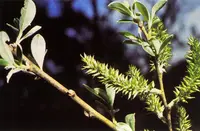
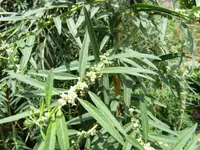
Missouri River willow Care (Salix eriocephala)

Also known as: heart-leaved willow, yellow willow, graybark willow
Missouri River willow

About Missouri River willow

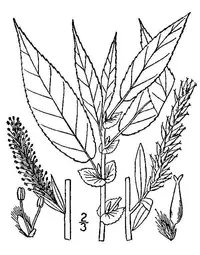
Missouri River willow (Salix eriocephala) is a hardy, fast-growing deciduous shrub or small tree from the willow family. It typically forms dense thickets with narrow, pointed leaves and flexible stems.

This species occurs naturally along rivers, streams, and wet lowlands across parts of North America, especially in cool to cold climates. It is adapted to moist, well-drained soils and full sun, and tolerates periodic flooding.

The plant is vigorous and resilient but can be demanding in its need for consistent moisture and space to spread. Understanding how to care for Missouri River willow starts with providing enough water and room for its strong root system.

Main Plant Requirements

Care Difficulty

Moderate Care

Light Preference

Full Sun

Water Requirements

Keep Soil Moist

Temperature Preference

Cold Hardy

Hardiness Zone

3–7

Soil Texture

Sandy, Loamy, Clay

Soil pH

Acidic (5.5–6.5), Slightly acidic (6.5–7.0)

Soil Drainage

Waterlogged tolerant

Fertilization

Minimal (feed rarely)

Get Personalized Care Plan

Scan your plant to receive care tips personalized for your specific plant

Available on iOS and Android

How to Care for the Missouri River willow

Salix eriocephala is a sun-loving willow that thrives in open, bright sites.

  • Provide 6–8 hours of direct sun daily; full sun promotes dense growth and strong stems for Missouri River willow hedges or screens.
  • Tolerates light partial shade, especially with morning sun and dappled afternoon light, but growth may be looser and shoots more elongated.
  • In hot summers, protect young plants from intense late-afternoon sun to reduce leaf scorch and excessive moisture loss, especially on dry, exposed sites.

Salix eriocephala prefers consistently moist soil but not stagnant water.

  • For in-ground plants, aim for soil that stays evenly damp; allow only the top 2–3 cm to begin drying before the next thorough soak.
  • Increase watering during hot, windy periods and the first 1–2 growing seasons, then reduce slightly once roots are established and reach deeper moisture.
  • Yellowing leaves and soft stems suggest overwatering or poor drainage; limp, browning leaf edges and curling shoots indicate underwatering or extended dryness.

This willow is cold-hardy and adapted to climates with distinct seasons.

  • Active growth is strongest around 60–75°F (16–24°C), with shoots elongating rapidly in cool to mild spring and early summer conditions.
  • Mature plants tolerate winter lows near -30°F (-34°C) when fully dormant, but late spring frosts can nip new shoots, which usually resprout.
  • Handles summer heat up to about 90–95°F (32–35°C) if soil moisture is ample; prolonged heat with dry soil causes leaf scorch and reduced growth.

This willow prefers moderate to high humidity but usually adapts to typical outdoor levels.

  • Aim for 40–70% humidity in garden or riverside plantings, similar to naturally moist habitats for Missouri River willow.
  • Dry, hot winds can desiccate leaves; provide windbreaks or nearby plantings to maintain a slightly moister microclimate.
  • Watch for crisp leaf edges and early leaf drop as signs of low-humidity stress, and use mulch to conserve surface moisture.

Salix eriocephala thrives in moist, well-structured mineral soils that never stay waterlogged for long periods.

  • Use a loamy or silty soil with high organic matter, which holds moisture yet still allows oxygen to reach roots.
  • Ensure slow but steady drainage; the soil should feel damp but not anaerobic or soupy 24 hours after heavy rain or irrigation.
  • Target a slightly acidic to neutral pH around 6.0–7.0, amending with composted leaf mold or well-rotted manure if soil is very poor.
  • Avoid dense, unamended clay or very coarse sand; improve structure with compost and fine bark to increase both aeration and moisture retention.

This species can grow in large outdoor containers for a limited time if moisture and stability are carefully managed.

  • Choose a deep, heavyweight container to prevent tipping as the fast-growing canopy and flexible stems catch wind.
  • Fill the pot with a loam-based mix enriched with compost and a small amount of sand to retain moisture while avoiding stagnation.
  • Elevate the container slightly on feet or bricks so drainage holes stay clear and excess water exits quickly after heavy rain or watering.

Salix eriocephala benefits from modest feeding in poor soils, while established plants in fertile ground often need little added fertilizer.

  • Use a balanced, slow-release granular fertilizer or well-rotted compost in early spring to support new growth.
  • Apply a light dose once in spring and, if growth is weak, once again in midsummer for caring for Missouri River willow.
  • Use half-strength products on young or recently planted trees to avoid root burn and excessive, weak shoots.
  • Stop feeding in late summer so shoots harden before frost and do not fertilize during winter dormancy.

Pruning manages size, structure, and health in Salix eriocephala without being overly intensive.

  • Carry out main pruning in late winter to very early spring, before buds break.
  • Remove dead, diseased, crossing, or storm-damaged wood first to reduce stress and pest entry points.
  • Thin crowded interior branches to improve light penetration and airflow, encouraging sturdy new shoots.
  • Use clean, sharp bypass pruners or loppers, making angled cuts just above outward-facing buds.

This willow is usually grown in-ground, so care focuses on transplanting young trees rather than frequent repotting.

  • Transplant in late fall after leaf drop or very early spring while still dormant to limit stress.
  • Look for signs such as roots circling the container, slow growth, or frequent wilting in nursery stock before moving.
  • Loosen or gently tease circling roots, set the root flare at soil level, and backfill with existing soil, not rich potting mix.
  • Water deeply after planting, then keep soil evenly moist for the first growing season, using mulch to stabilize moisture.

New Salix eriocephala plants are most often produced from hardwood or softwood cuttings rather than seed.

  • Take dormant hardwood cuttings in late winter, 15–25 cm long, from healthy 1-year shoots.
  • Insert cuttings with at least 2 buds below soil in moist, well-drained sand or sandy loam, keeping them consistently damp.
  • Softwood cuttings in late spring to early summer also root well under high humidity and bright, indirect light.
  • Seed propagation is possible but slower and less predictable; surface-sow fresh seed and keep evenly moist until germination.

This willow is naturally cold hardy and usually needs minimal winter care in the ground.

  • Tolerates typical freezes in temperate climates once established, with buds adapted to winter dormancy.
  • Apply 5–8 cm of organic mulch over the root zone in late fall, keeping it slightly back from the trunk.
  • For container plants, move pots to a sheltered, unheated space or heel them into the ground to prevent root freezing.

Care Tips

Encourage multiple stems

Cut back the central leader in late winter on young plants to 20–40 cm above ground to encourage a dense, multi-stemmed shrub that resprouts vigorously from the base.

Renewal coppicing cycle

Every 3–5 years in late winter, coppice older shrubs to 10–20 cm stubs to reset plant vigor, improve stem quality for weaving or screening, and reduce risk of wind damage.

Manage suckering spread

Install a root barrier 45–60 cm deep or regularly mow a 1–2 m strip around the planting to confine suckers and keep the plant from creeping into lawn or beds.

Streambank stabilization use

Plant dormant hardwood cuttings on a slight diagonal into moist banks, leaving 2–3 buds above soil, to create a living root mat that helps stabilize erosion-prone sites.

Integrated pest monitoring

From spring to midsummer, inspect undersides of leaves weekly for sawfly larvae, aphids, and rust spots, and remove heavily infested shoots promptly to reduce the need for chemical control when caring for Missouri River willow.

Common Pests and Diseases

Willow leaf beetle

This pest feeds heavily on young willow leaves, causing skeletonization, browning, and early leaf drop. Symptoms include clusters of metallic blue-green adults and dark, slug-like larvae on foliage in late spring and summer.

Solution

Hand-pick adults and larvae where practical and drop them into soapy water, and prune out heavily infested twigs to reduce populations. Encourage insectivorous birds, avoid excess nitrogen fertilizer that promotes soft new growth, and if defoliation is severe use a targeted insecticide such as spinosad or a pyrethroid, applied according to label directions when larvae are active.

Willow sawfly

These insects resemble small wasps as adults, but their greenish, caterpillar-like larvae feed in groups and can strip leaves quickly. Symptoms include notched or missing leaf tissue and clusters of larvae along midribs and shoot tips.

Solution

Blast larvae off foliage with a firm stream of water, then prune and dispose of infested shoots to break the life cycle. For larger plantings, monitor regularly and use horticultural soap or spinosad sprays timed to the first appearance of young larvae, making sure to coat the undersides of leaves.

Willow scab

This disease is caused by a fungus that attacks young leaves and shoots, leading to olive-brown spots, leaf blight, and dieback of current-season twigs. Symptoms include rapid browning and curling of young foliage, especially in cool, wet spring weather.

Solution

Prune out and dispose of blighted shoots during dry weather, cutting back into healthy wood, and avoid overhead irrigation that keeps foliage wet. Improve air circulation by thinning dense growth, and in areas with a history of disease consider a preventive fungicide labeled for willow applied at bud break and repeated as directed during prolonged wet periods.

Black canker

This disease often follows willow scab infections, producing elongated black cankers on stems and branches that can girdle and kill affected parts. Symptoms include sunken, dark lesions along twigs, sometimes with cracked bark and dead shoots beyond the canker.

Solution

Inspect plants regularly and remove cankered branches several inches below visible symptoms, disinfecting pruning tools between cuts with 70% alcohol or a 10% bleach solution. Maintain plant vigor through proper watering and mulching, avoid wounding bark, and where black canker recurs, integrate sanitation with any local recommendations for fungicide use on willows as part of broader Salix eriocephala care instructions.

Willow rust

This disease is caused by rust fungi that produce bright orange or yellow pustules on the undersides of leaves, leading to premature defoliation in late summer. Symptoms include yellowing leaves, powdery spore masses, and early leaf drop, especially in warm, humid conditions.

Solution

Rake and destroy fallen leaves in autumn to reduce overwintering spores, and avoid overhead watering that keeps foliage wet. Where rust appears yearly and causes significant defoliation, improve spacing for airflow and consider a preventive fungicide labeled for rust diseases on ornamental trees, applied early in the season and repeated as needed according to label guidance.

Interesting Facts

Woolly catkin hairs

This willow produces male and female catkins covered in dense, silky hairs that give the flower clusters a woolly appearance, which helps protect the developing reproductive structures from early spring cold and drying winds.

Cold-hardy riparian native

The species is native to cold riparian zones across central and eastern North America and tolerates harsh winters, fast-flowing rivers, and seasonal flooding better than many other willow species.

High-value wildlife browse

Its young shoots and leaves are a preferred browse for deer, moose, and beavers, and the dense thickets it forms provide important cover and nesting habitat for birds along river corridors.

Botan icon

Did you know?

This willow is one of the North American species investigated for short-rotation coppice systems, because its rapid growth and ability to resprout vigorously after cutting make it a promising candidate for renewable biomass production in cool climates.

FAQs about Missouri River willow

This species is considered fast-growing, often adding 60–120 cm of new growth per year in favorable conditions. Growth is quickest in consistently moist soil with full sun exposure and slows in dry or compacted sites.

Grow Healthy Plants with Botan Care

Keep your plants happy and healthy with plant identification, disease detection, and easy care guidance.


Botan plant care app — identify plants on mobile

Explore More Plants