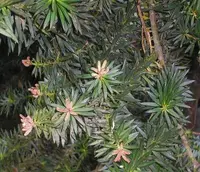
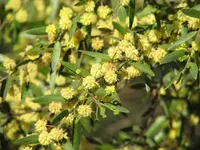
shining willow Care (Salix lucida)

Also known as: Pacific willow, whiplash willow
shining willow

About shining willow

Shining willow, Salix lucida, is a hardy deciduous shrub or small tree from wet regions of North America, especially stream banks and lakeshores. It forms dense thickets or narrow, upright stems with glossy green leaves that give it a bright, reflective look.

This willow grows quickly and is adapted to cold climates and moist to wet soils, including periodically flooded ground. It prefers full sun and naturally colonizes open, sunny, damp sites.

For gardeners, its fast growth and strong root system make it useful for erosion control and naturalistic plantings, but it needs space and regular moisture. Understanding how to care for shining willow helps keep its vigorous growth manageable and healthy.

Main Plant Requirements

Care Difficulty

Moderate Care

Light Preference

Full Sun

Water Requirements

Aquatic

Temperature Preference

Cold Hardy

Hardiness Zone

2–6

Soil Texture

Loamy, Silty, Organic-rich

Soil pH

Acidic (5.5–6.5), Slightly acidic (6.5–7.0)

Soil Drainage

Waterlogged tolerant

Fertilization

Minimal (feed rarely)

Get Personalized Care Plan

Scan your plant to receive care tips personalized for your specific plant

Available on iOS and Android

How to Care for the shining willow

This willow species thrives in high light and performs best in open, unshaded sites.

  • Provide 6–8 hours of direct sun daily; full sun promotes dense growth and strong stems in shining willow.
  • Accepts light partial shade, especially with morning sun and light afternoon shade, but growth may be looser and less vigorous.
  • In hot, exposed sites, protect young plants from reflected heat; in autumn and winter, ensure canopy is not shaded by buildings or evergreen trees.

This species is adapted to moist habitats and prefers consistently damp soil.

  • Aim for soil that stays evenly moist to wet; in the top 2–5 cm, dryness indicates the plant is under stress, especially on sandy or fast-draining sites.
  • In spring and summer, use nearby vegetation wilt, drooping new shoots, or curling leaves as cues to increase moisture; allow no prolonged drying between soakings.
  • Watch for yellowing leaves and dieback in very dry soil as signs of underwatering, and sour smell or black, soft roots in poorly drained sites as signs of overwatering.

This cold-hardy willow tolerates a wide temperature range in temperate climates.

  • Active growth is strongest around 60–75°F (16–24°C), with vigorous shoot extension in late spring and early summer.
  • Dormant wood can survive winter lows near -30°F (-34°C) or slightly lower, provided roots are established and soil is not compacted ice for long periods.
  • Mature plants tolerate short heat waves to about 90–95°F (32–35°C) if soil remains moist; prolonged heat with dry soil increases scorch and shoot dieback risk.

This species thrives in moist air but adapts to most outdoor humidity levels if soil moisture stays consistent.

  • Aim for ambient humidity around 50–70% in cultivation, matching its natural riparian habitats.
  • Dry, hot winds combined with low humidity can crisp leaf edges and cause marginal browning even when soil is moist.
  • Increase local humidity by planting near other shrubs, using mulch to retain soil moisture, or situating it close to a water feature when caring for shining willow.

Salix lucida prefers consistently moist, deep soil that stays aerated but never fully dries out.

  • Use a loamy, organic-rich soil with fine texture that holds water yet does not become concrete-like when dry.
  • Maintain soil pH around 6.0–7.5; slightly acidic to neutral conditions support root health and nutrient uptake.
  • In heavy clay, improve structure and drainage by mixing in compost and coarse sand, creating a friable, oxygenated root zone.
  • Avoid shallow, drought-prone sandy soils or compacted ground where water either runs off quickly or stands for long periods without oxygen.

This species can be grown in large containers for short to medium term use, provided root space and moisture are carefully managed.

  • Choose a deep, heavy container that resists tipping as the woody stems elongate and catch wind.
  • Use a moisture-retentive mix over a drainage layer so the lower profile stays evenly damp without water stagnation at the base.
  • Position the pot where it can be watered very frequently in hot weather, since container volume dries far faster than in-ground soil.

Shining willow (Salix lucida) benefits from modest feeding on poor soils but usually needs no heavy fertilization in the ground.

  • Use a balanced, slow-release fertilizer (for example 10-10-10) or a light layer of compost in early spring.
  • On lean or sandy sites, repeat a light application once more in mid-summer during active growth.
  • Dilute liquid feeds to 1/2 strength for container plants to avoid root burn.
  • Stop feeding in late summer to allow wood to harden before winter dormancy.

Pruning Salix lucida helps maintain a stable structure and encourages healthy new growth.

  • Schedule main pruning in late winter or very early spring before bud break.
  • Remove dead, diseased, or storm-damaged wood first, cutting back to healthy tissue.
  • Thin out crowded or crossing branches to improve air flow and light penetration in the canopy.
  • Use clean, sharp bypass pruners or loppers and make cuts just above a bud or branch junction.

Salix lucida is usually grown in the ground, so transplanting young trees is more common than long-term container repotting.

  • Transplant in early spring or fall when soil is moist and temperatures are mild.
  • Move plants when roots circle the pot, growth slows, or the tree dries out very quickly.
  • Set the root flare at soil level in a hole 2–3 times wider than the root ball, backfill, and water deeply.
  • Reduce stress by shading for 1–2 weeks, keeping soil evenly moist, and avoiding heavy pruning at transplant time.

Salix lucida is commonly propagated from cuttings, which root readily under the right conditions.

  • Take dormant hardwood cuttings in late winter or softwood cuttings in late spring to early summer.
  • Use 15–25 cm pieces with several buds, and insert the lower third into moist, well-drained sand or soil mix.
  • Maintain consistent moisture and bright, indirect light while cuttings form roots.
  • Seed propagation is possible but requires fresh seed, constant moisture, and is slower than using cuttings.

Salix lucida is generally cold hardy in northern climates and needs only minimal winter care in the ground.

  • Apply a 5–8 cm layer of organic mulch over the root zone, keeping it slightly away from the trunk.
  • Young or newly transplanted trees benefit from windbreaks or burlap wraps in very exposed sites.
  • Container-grown plants should be sunk into the ground or moved to a sheltered, unheated but frost-free area.

Care Tips

Streambank placement

When possible, site plants where roots can reach consistently moist subsoil near a ditch, swale, or streambank, which stabilizes banks and reduces the need for supplemental watering.

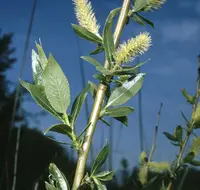
Stool bed coppicing

Create a dedicated stool bed by cutting stems back to 10–20 cm every 1–2 years to produce straight, flexible rods for basketry or living structures while keeping the plant vigorous.

Living fence training

Plant young whips in a staggered line and loosely weave or tie new shoots together with soft ties each spring to form a living screen or windbreak that thickens over time.

Flood and ice management

In flood-prone or icy areas, prune low, weak, or crossing branches in late winter so moving water, ice, or snowpack is less likely to snap limbs or uproot the plant.

Targeted wildlife support

When caring for shining willow as habitat, leave some older stems and allow a small amount of natural leaf litter at the base to support pollinators, browsing wildlife, and beneficial insects while still removing heavy, wet mats that could smother new shoots.

Common Pests and Diseases

Willow beetles

These insects feed on leaves, creating shot holes or skeletonized foliage and can cause heavy defoliation on young or stressed trees.

Solution

Hand-pick and destroy beetles and larvae on small trees, prune out heavily infested twigs, and encourage predators such as birds. For significant outbreaks, use a targeted foliar spray with a labeled insecticide or spinosad in late spring when larvae first appear, and avoid fertilizing heavily, which promotes tender new growth that beetles prefer.

Willow leaf sawfly

This pest appears as greenish larvae that cluster on leaves and quickly strip foliage, sometimes leaving only midribs behind.

Solution

Inspect foliage regularly in late spring and early summer and remove or crush larvae by hand or prune off small infested branches. On larger outbreaks, use a strong water spray to dislodge larvae and apply a low-impact insecticide such as insecticidal soap or spinosad, coating the undersides of leaves where larvae feed.

Willow scab

This disease causes blackened, water-soaked spots on young leaves and shoots, which may curl, wilt, and die back during cool, wet periods.

Solution

Prune out and dispose of infected shoots during dry weather, cutting back into healthy wood, and disinfect pruning tools between cuts. Improve air movement by thinning dense growth and avoid overhead watering; in areas with severe, recurring infections, a preventative fungicide labeled for willow can be applied at bud break and repeated as directed.

Black canker

This disease produces elongated, dark sunken lesions on twigs and branches that can girdle stems and lead to dieback, often following or combining with willow scab.

Solution

Cut out affected twigs and small branches at least 15–20 cm below visible cankers and destroy prunings, then promote vigorous growth with good watering and mulching rather than high-nitrogen fertilizer. Maintain an open crown by periodic thinning to improve drying of bark, and in sites with chronic issues, choose better-drained, less crowded planting locations as part of long-term Salix lucida care.

Interesting Facts

North American distribution

This willow is native to North America and occurs from Alaska and western Canada across the northern United States, but also appears in disjunct populations farther south where suitable wet habitats exist.

Strong wetland preference

It grows naturally along rivers, streambanks, lake margins, and fens, forming thickets in saturated or periodically flooded soils and helping stabilize banks with its extensive root system.

Hybridization tendencies

Salix lucida readily hybridizes with certain other native willows where their ranges overlap, which can make field identification challenging and contributes to high genetic variability in wild populations.

Botan icon

Did you know?

Some taxonomists treat the three regional forms of this species (often called shining willow, Pacific willow, and MacKenzie willow) as subspecies within Salix lucida, reflecting how one adaptable species can diversify across very different North American climates.

FAQs about shining willow

This species is generally fast-growing, often adding 60–120 cm of height per year in good conditions. Mature shrubs or small trees commonly reach 3–8 m tall, with a similar spread, depending on moisture and soil fertility.

Grow Healthy Plants with Botan Care

Keep your plants happy and healthy with plant identification, disease detection, and easy care guidance.


Botan plant care app — identify plants on mobile

Explore More Plants