purple willow Care (Salix purpurea)

Also known as: purpleosier willow, Purple Osier
purple willow

About purple willow

Purple willow, Salix purpurea, is a deciduous shrub or small tree from riverbanks and wetlands across Europe and western Asia. It is commonly grown for its fine, flexible stems and narrow blue-green leaves, which give the plant a soft, textured look in the landscape.

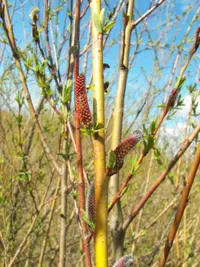
Plants form dense, upright to arching thickets and respond very well to pruning, which makes them useful for hedges, screens, or coppicing. Catkins appear in late winter to early spring, providing early-season interest and pollen for insects.

This species grows fast and is generally easy to manage if given consistent moisture, plenty of light, and reasonably fertile soil, which simplifies how to care for purple willow.

Main Plant Requirements

Care Difficulty

Moderate Care

Light Preference

Full Sun

Water Requirements

Keep Soil Moist

Temperature Preference

Cold Hardy

Hardiness Zone

4–8

Soil Texture

Sandy, Loamy, Clay

Soil pH

Acidic (5.5–6.5), Slightly acidic (6.5–7.0)

Soil Drainage

Waterlogged tolerant

Fertilization

Minimal (feed rarely)

Get Personalized Care Plan

Scan your plant to receive care tips personalized for your specific plant

Available on iOS and Android

How to Care for the purple willow

This shrub grows best with abundant direct light but tolerates some shade in hotter climates.

  • Provide 6–8 hours of direct sun daily; in hot summers, aim for morning sun and light afternoon shade to reduce leaf scorch risk.
  • Purple willow tolerates partial shade (3–5 hours sun) but will develop looser growth and fewer stems suitable for weaving or ornamental use.
  • In winter, full sun is ideal; avoid dense shade from buildings or evergreens, which can weaken new shoots in the following growing season.

This species prefers consistently moist conditions and naturally occurs near streams and wet ground.

  • Keep soil evenly moist to wet; do not allow more than the top 2–3 cm to dry out, especially during the first 1–2 growing seasons after planting.
  • In spring and summer, increase watering during dry spells, watching for limp, curling leaves as a sign the Salix purpurea is too dry.
  • Reduce watering frequency in fall and winter but prevent complete drying; avoid standing water on heavy, compacted clay that can cause root rot or dieback.

This hardy willow tolerates a wide temperature range but grows fastest in mild conditions.

  • Active growth is strongest at 60–77°F (16–25°C); expect rapid shoot extension and leaf production throughout spring and early summer within this range.
  • Mature plants tolerate winter lows near -20°F (-29°C) when fully dormant, but young or newly planted shrubs benefit from mulch to protect surface roots from freeze–thaw cycles.
  • In heat above 86°F (30°C), maintain ample soil moisture and consider light afternoon shade, as prolonged hot, dry wind can scorch leaves and slow growth.

This willow tolerates a wide humidity range and rarely needs special humidity management outdoors.

Salix purpurea prefers moist, deep loam that holds water yet still allows air to reach the roots.

  • Use a loam-based mix enriched with 20–40% compost to support rapid growth and moisture retention.
  • Ensure consistent moisture with slow-draining but not waterlogged soil; avoid compacted clay that stays saturated for long periods.
  • Aim for slightly acidic to neutral pH around 6.0–7.5, amending very alkaline sites with organic matter over time.
  • Improve aeration and structure in heavy soils by incorporating coarse sand or fine gravel through the top 20–30 cm.

This species can be grown in containers, especially for small spaces or decorative screens on patios.

  • Choose a large, heavy container at least 40–50 cm deep to provide root volume and prevent tipping in wind.
  • Select a thick-walled or wooden pot to moderate root temperature and slow excessive moisture loss in summer.
  • Elevate the container on feet or blocks so drainage holes stay clear and runoff exits quickly after irrigation or rain.

This shrub grows well in average soil but benefits from light feeding during the active season.

  • Use a balanced NPK fertilizer (such as 10-10-10) or a thin layer of compost in early spring as new growth starts.
  • Apply granular slow-release fertilizer once in spring for most garden-grown purple willow, avoiding mid-summer overfeeding.
  • Dilute liquid feeds to 1/2 strength and use no more than every 4–6 weeks during the growing season, if growth seems weak.
  • Stop feeding in late summer to early fall so shoots harden before winter, and never apply fertilizer to frozen or very dry soil.

Pruning supports dense growth and maintains size and form in Salix purpurea.

  • Carry out main pruning in late winter to very early spring, before buds break.
  • Remove dead, damaged, or crossing stems first, cutting back to healthy wood with clean, sharp bypass pruners or loppers.
  • Thin congested interior shoots to improve light and air flow, which reduces disease risk and enhances new stem color.
  • Shorten or stool older plants hard every 1–3 years to encourage vigorous, colorful young shoots and a compact outline.

This willow is usually grown in the ground, so transplanting is more common than long-term container culture.

  • Plan any major transplant for late fall after leaf drop or very early spring before buds swell, when the plant is dormant.
  • Look for signs such as roots circling a pot, roots emerging from drainage holes, or stalled growth in containers as cues to shift up size.
  • Lift with as large a root ball as manageable, keep roots shaded and moist, and replant at the same soil depth in a well-watered hole.
  • Water thoroughly after planting, then keep soil evenly moist for the first growing season to limit transplant shock and support new root growth.

Salix purpurea is commonly multiplied from cuttings rather than from seed for consistent traits.

  • Use hardwood cuttings in late fall to late winter, taking pencil-thick, 15–25 cm stems with several buds.
  • Insert cuttings 1/2–2/3 of their length into moist, well-drained soil or sand-based mix, keeping buds above the surface.
  • Maintain cool to mild temperatures and consistently moist substrate; roots usually form in early spring as growth resumes.
  • Softwood cuttings in late spring to early summer also root well if kept humid, shaded from strong sun, and trimmed below a node.

This species is generally cold hardy in much of the US and needs only modest winter care in the ground.

  • Tolerates typical frost in USDA zones where it is commonly grown, once plants are established.
  • Apply a 5–8 cm layer of organic mulch around the root zone in late fall, keeping it slightly away from the stems.
  • For container plants, move pots into a sheltered, unheated space or group and wrap containers so roots do not freeze solid.

Care Tips

Stool management

Renew over-aged shrubs by stooling: every 3–5 years cut all stems back to 5–10 cm from the ground in late winter to stimulate dense, colorful new shoots and maintain long-term vigor when growing purple willow.

Osier harvesting

For basketry or weaving, cut straight 1–2‑year rods in late winter while dormant, bundle by length, and store upright in a cool, shaded place so the wood dries evenly and stays usable.

Wind and snow resilience

In exposed sites, thin crowded interior stems in late winter so wind and snow can pass through the canopy more easily, which reduces breakage and trunk splitting.

Root zone protection

Maintain a 5–8 cm deep mulch ring out to the drip line, keeping it 5–8 cm away from the stems, to buffer soil temperature, reduce mower damage, and protect the shallow root system.

Waterway stabilization

When planting along stream banks or drainage swales, space plants 60–120 cm apart in staggered rows so their fibrous roots knit the soil together and limit erosion effectively.

Common Pests and Diseases

Willow leaf beetle

This pest skeletonizes leaves, leaving only the veins, and heavy infestations can defoliate young stems of purple willow. Symptoms include notched margins, transparent patches on leaves, and clusters of small metallic blue-green beetles or dark larvae.

Solution

Prune and destroy heavily infested shoots early in the season and encourage birds and predatory insects by maintaining plant diversity nearby. For active outbreaks, dislodge larvae and adults with a strong water spray, then treat remaining foliage with a targeted insecticidal soap or neem oil, repeating at 7–10 day intervals as needed.

Willow aphids

These insects cluster on young shoots and leaf undersides, sucking sap and causing leaf curling, yellowing, and sticky honeydew that can lead to sooty mold. New growth may appear distorted and stunted when populations are high.

Solution

Spray colonies off with a firm jet of water and clip off heavily infested shoot tips. If needed, apply insecticidal soap or horticultural oil thoroughly to the undersides of leaves, and avoid high-nitrogen fertilization that encourages soft, aphid-prone growth when caring for purple willow.

Willow scab

This disease causes dark olive to black lesions on young leaves and shoots, leading to leaf blight, wilting, and dieback of tender twigs in wet, cool weather. Symptoms include rapid browning and curling of new foliage, often starting at the tips.

Solution

Promptly prune out and dispose of affected shoots during dry weather, cutting back into healthy wood and disinfecting tools between cuts. Improve air circulation by thinning crowded stems and avoid overhead watering; in areas with persistent spring outbreaks, a preventive fungicide labeled for foliar blights on ornamentals can be used at bud break following label directions.

Black canker

This disease forms elongated, sunken, dark cankers on stems and branches, sometimes girdling shoots and causing dieback that follows earlier willow scab infections. Symptoms include rough, cracked bark around dead patches and progressive death of twigs beyond the canker.

Solution

Cut out infected branches well below visible cankers and destroy the material, disinfecting pruning tools between cuts to limit spread. Maintain plant vigor through adequate water and mulch, avoid wounding the bark, and remove nearby dead willow debris that can harbor the fungus.

Rust

This disease produces small yellow spots on upper leaf surfaces and orange to brown powdery pustules on the undersides, especially in warm, humid periods. Severe infections can cause premature leaf drop and reduced vigor in hedging or coppiced plants.

Solution

Rake and remove fallen leaves to reduce spore levels and thin dense stands or hedges to improve airflow. If rust recurs yearly and causes significant defoliation, consider applying a labeled fungicide at the first sign of spots and repeat according to directions, focusing on young, susceptible foliage.

Interesting Facts

Genetic origin species

Purple willow is one of the parental species used in breeding several ornamental willows, including some dwarf and fine-textured basket willows, because of its dense branching and slender, colorful twigs.

Specialist insect host

In Europe, purple willow is a key host for the purple willow aphid (Aphis farinosa), which in turn supports predators such as lady beetles and lacewings, making it an important species in riparian food webs.

Superior erosion stabilizer

Because of its very dense, fibrous root system and tolerance of waterlogged soils, purple willow is widely planted along streams and riverbanks in restoration projects to help stabilize banks and trap sediment.

Botan icon

Did you know?

Purple willow is naturally dioecious, which means individual plants are either male or female, and this clear separation of sexes is one reason it is used in ecological and genetic studies of sex determination in woody plants.

FAQs about purple willow

This shrub is generally fast-growing, often adding 30–90 cm of new growth per year under favorable conditions. Growth slows in poor soil, drought, heavy shade, or when roots are restricted, such as in small containers.

Grow Healthy Plants with Botan Care

Keep your plants happy and healthy with plant identification, disease detection, and easy care guidance.

Botan plant care app — identify plants on mobile

Explore More Plants