Cutback regeneration
In late winter, cut old woody stems back to 15–30 cm above the base to stimulate vigorous new shoots and keep the plant from becoming leggy and wind-prone.

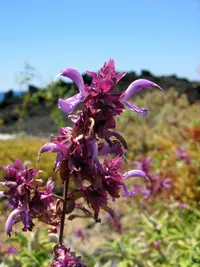
Canary Island sage, Salvia canariensis, is a fast-growing shrubby sage valued for its showy bracts and soft, felted leaves. It often forms a loose, upright mound with branching stems.
In its native Canary Islands, it grows in dry, sunny habitats with mild winters. The plant is generally considered easy to manage in warm climates because it tolerates drought and poor, well-drained soil.
Its rapid growth and tendency to become woody mean it benefits from periodic pruning to keep a tidy shape. Understanding how to care for Canary Island sage starts with providing plenty of sun, moderate watering, and good drainage.

Care Difficulty
Easy Care

Light Preference
Full Sun

Water Requirements
Low Water

Temperature Preference
Tropical / Frost Sensitive

Hardiness Zone
9–11

Soil Texture
Sandy, Loamy, Rocky

Soil pH
Slightly acidic (6.5–7.0), Slightly alkaline (7.0–7.5)

Soil Drainage
Well-drained

Fertilization
Minimal (feed rarely)
Scan your plant to receive care tips personalized for your specific plant
Available on iOS and Android
This sun-loving shrub thrives in bright, open positions with plenty of direct light.
This drought-tolerant species prefers deep, infrequent watering rather than constant moisture.
This Mediterranean-type subshrub performs best in warm, frost-free conditions.
This species prefers fairly dry air and rarely needs special humidity management.
Salvia canariensis prefers lean, fast-draining soil that mimics rocky, coastal slopes.
This species can be grown successfully in containers if the pot is chosen for strong drainage and stability.
This fast-growing shrub benefits from moderate feeding during the warm growing season.
Pruning keeps this vigorous sage compact, healthy, and flowering well.
This large, fast-growing shrub is most often grown in the ground but can be moved when necessary.
Salvia canariensis is commonly propagated from softwood cuttings or seeds in warm seasons.
This species is only lightly frost tolerant and needs protection in colder climates.

Plant Health Check
Not sure what's wrong with your plant? Check your plant's health inside the app.
This species is naturally restricted to the Canary Islands, where it grows as a large, short-lived shrub on dry, rocky slopes, scrub, and disturbed ground in subtropical climates influenced by Atlantic trade winds.
Its leaves are covered in dense, soft hairs that give a silvery, woolly appearance; this tomentose surface reduces water loss and reflects intense sunlight, an adaptation to its arid, high-light habitats.
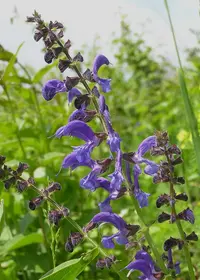
The plant produces tall flowering spikes with large, colorful bracts that often attract more attention than the relatively small tubular flowers, helping guide pollinators such as bees to nectar and pollen sources.

In its native range, this species can form extensive, visually dominant stands on dry hillsides after disturbance, quickly colonizing open ground and providing abundant nectar resources for local pollinator communities during its flowering season.
Lack of flowers often comes from too much shade, excess nitrogen fertilizer, or pruning at the wrong time. Ensure strong light, avoid high-nitrogen feeds, and prune lightly after flowering so new buds have time to form.
Keep your plants happy and healthy with plant identification, disease detection, and easy care guidance.