Rock Crevice Planting
Tuck plants into narrow rock crevices or between stacked stones, leaving the crown slightly proud of the surface, to mimic natural alpine conditions and reduce crown rot risk when growing Saxifraga erioblasta.

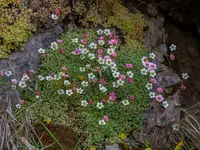
Saxifraga erioblasta is a compact alpine perennial forming low cushions or mats of small rosettes, often used in rock gardens and troughs. It usually carries fine, sometimes hairy foliage that creates a tight, textured surface.
In its natural habitat, it grows in cool, rocky, mountainous areas, anchoring into crevices with sharp drainage. Flowers are typically small, delicate, and held on short stems above the foliage, adding subtle seasonal interest.
This species can be moderately challenging, as it dislikes heat, waterlogging, and heavy soils. Those who learn how to care for Saxifraga erioblasta find that it rewards with steady, compact growth in cool, bright, moist but free-draining conditions.

Care Difficulty
Moderate Care

Light Preference
Partial Shade

Water Requirements
Moderate Water

Temperature Preference
Cool Climate

Hardiness Zone
5–7

Soil Texture
Sandy, Loamy, Rocky

Soil pH
Acidic (5.5–6.5)

Soil Drainage
Well-drained

Fertilization
Minimal (feed rarely)
Scan your plant to receive care tips personalized for your specific plant
Available on iOS and Android
This alpine species prefers bright, cool conditions that mimic rocky mountain slopes.
This plant prefers consistently moist but never waterlogged soil around its shallow roots.
This alpine perennial is adapted to cool conditions and tolerates moderate frost once established.
This alpine species prefers relatively dry, airy conditions and usually does not need elevated humidity.
Provide sharply drained, gritty soil that mimics a rocky alpine crevice for Saxifraga erioblasta.
This species is well suited to container growing, especially in shallow alpine troughs or pans.
This alpine plant is adapted to lean soils, so Saxifraga erioblasta needs only light, infrequent feeding in cultivation.
Pruning needs are minimal, mainly to keep rosettes tidy and flowering consistent.
This species dislikes disturbance, so repot or transplant Saxifraga erioblasta only when clearly necessary.
Propagation is most reliable by careful division of established clumps rather than seed.
This alpine plant is generally cold hardy, but light winter protection improves survival in wet or exposed sites.

Plant Health Check
Not sure what's wrong with your plant? Check your plant's health inside the app.
This species is native to high alpine limestone habitats in parts of the European Alps, where it grows in rock crevices and scree exposed to intense light, low nutrients, and strong temperature fluctuations.
The leaves form tight rosettes covered in fine hairs that create a woolly appearance, which helps reduce water loss and shields tissues from cold and strong radiation at high altitude.
It is calcicolous, meaning it is naturally restricted to calcium-rich limestone substrates and rarely occurs on siliceous or acidic rocks even within the same mountain ranges.
This alpine species performs best outdoors in cool, bright, well-drained rock gardens or troughs. Indoors, light and airflow are often insufficient long term, so Saxifraga erioblasta indoor care usually works only as a short display in very bright, cool rooms.
Keep your plants happy and healthy with plant identification, disease detection, and easy care guidance.