Encourage Dense Mats
Pinch or trim back leggy shoots after flowering to encourage tight, ground-hugging growth and to prevent older, woody stems from dominating the clump.

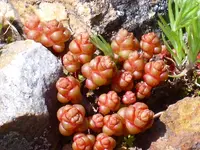
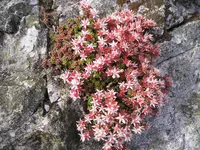
Sedum andegavense is a small, mat-forming succulent in the stonecrop group, valued mainly as a groundcover. It typically has low, spreading stems with small, fleshy leaves that store water.
This species is native to parts of western Europe, where it often grows on rocky slopes, old walls, and dry, shallow soils. Its drought tolerance and modest nutrient needs make it relatively easy to maintain.
Gardeners usually care for Sedum andegavense by giving it plenty of light, good drainage, and only occasional watering. It suits rock gardens, green roofs, and container plantings where low, carpet-like coverage is desired.

Care Difficulty
Easy Care

Light Preference
Full Sun

Water Requirements
Low Water

Temperature Preference
Cold Hardy

Hardiness Zone
5–9

Soil Texture
Sandy, Loamy, Rocky

Soil pH
Slightly acidic (6.5–7.0), Neutral (7.0)

Soil Drainage
Well-drained

Fertilization
Minimal (feed rarely)
Scan your plant to receive care tips personalized for your specific plant
Available on iOS and Android
This low-growing succulent thrives in bright, open conditions with plenty of direct sun.
This species prefers infrequent, deep watering and fast-drying soil.
This hardy sedum tolerates a wide temperature range but performs best in moderate conditions.
This species tolerates a wide humidity range and usually thrives in 30–50% indoor air.
Sedum andegavense needs sharply draining, mineral-based soil to prevent root rot.
This compact succulent is well suited to container growing.
This low-maintenance succulent needs only light feeding to maintain compact, healthy growth during the active season.
Pruning is mainly cosmetic and helps keep this mat-forming sedum dense and tidy.
This shallow-rooted groundcover rarely needs frequent repotting but benefits from occasional transplanting or division in containers or tight spaces.
Sedum andegavense is commonly increased by division and short stem cuttings taken in warm weather.
This hardy sedum generally needs minimal winter care in the ground in temperate climates.

Plant Health Check
Not sure what's wrong with your plant? Check your plant's health inside the app.
This species is naturally restricted to western France, especially the Loire Valley region, where it grows on rocky outcrops and walls in a relatively small geographic range compared with many other sedums.
It typically colonizes calcium-rich limestone substrates, forming low cushions in shallow, well-drained crevices that many other vascular plants cannot tolerate.
The species name andegavense refers to the historical province of Anjou (around Angers) in France, and it has been treated as a distinct species in European floras since the 19th century based on its combination of small leaves, growth form, and habitat preference.
This species forms low, slowly expanding mats through short stems and rooting at nodes. It can fill small gaps in rock gardens or walls but is not considered aggressive or difficult to control with normal maintenance.
Keep your plants happy and healthy with plant identification, disease detection, and easy care guidance.