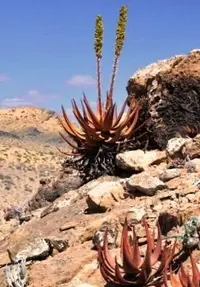
Wright's stonecrop Care (Sedum wrightii)

Wright's stonecrop

About Wright's stonecrop

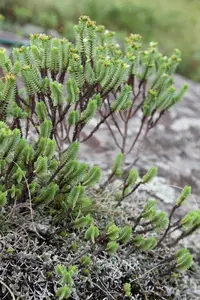
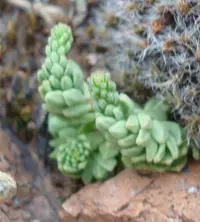
Wright's stonecrop (Sedum wrightii) is a small, clump-forming succulent native to rocky slopes and mesas in the Southwestern United States and northern Mexico. It typically forms low mats or cushions of fleshy leaves, often with small star-shaped flowers held just above the foliage.

This species is adapted to bright, dry habitats and lean, fast-draining soils, which makes it relatively low-maintenance in cultivation. Its drought tolerance and compact growth habit suit rock gardens, troughs, and containers.

For those who want to care for Wright's stonecrop successfully, it helps to provide plenty of light, avoid heavy watering, and use a gritty, well-aerated substrate.

Main Plant Requirements

Care Difficulty

Easy Care

Light Preference

Full Sun

Water Requirements

Low Water

Temperature Preference

Cold Hardy

Hardiness Zone

5–9

Soil Texture

Sandy, Loamy, Rocky

Soil pH

Slightly acidic (6.5–7.0), Neutral (7.0)

Soil Drainage

Well-drained

Fertilization

Minimal (feed rarely)

Get Personalized Care Plan

Scan your plant to receive care tips personalized for your specific plant

Available on iOS and Android

How to Care for the Wright's stonecrop

This high-elevation succulent thrives in strong light but benefits from some protection from harsh extremes.

  • Provide 6–8 hours of direct sun, preferably strong morning sun with lighter afternoon exposure, to keep growth compact and foliage well colored.
  • Allow light partial shade in very hot climates, especially after 2–3 p.m., to reduce leaf scorch and stress on Wright's stonecrop.
  • In winter, full sun is usually best; in summer, monitor for pale, stretched stems (too little light) or crispy leaf tips (too much intense sun).

This species is drought-tolerant and needs infrequent but well-judged watering.

  • Water only when the top 3–5 cm of soil are completely dry; in many outdoor beds this means long gaps between waterings, especially after rain.
  • Use gritty, fast-draining soil and avoid puddling or standing water around roots, as Sedum wrightii is highly susceptible to rot in saturated conditions.
  • In active growth, watch leaves: soft, yellowing, or translucent leaves suggest overwatering, while wrinkled, shriveled leaves indicate the plant is staying dry for too long.

This cold-hardy succulent tolerates a wide temperature range but grows best in moderate conditions.

  • Aim for active growth in 65–80°F (18–27°C), where stems stay firm and foliage fills in well without stress.
  • Established plants often survive down to about 0°F (-18°C) with excellent drainage, though repeated freeze–thaw cycles in wet soil can damage roots.
  • In hot spells above 90°F (32°C), provide light afternoon shade and avoid reflected heat from walls or rock that can overheat shallow roots.

This species handles typical indoor humidity well and rarely needs humidity adjustments.

  • Aim for a relative humidity around 30–50%, similar to most heated or air‑conditioned homes.
  • Wright's stonecrop tolerates very dry air, so focus on light and watering rather than raising humidity.
  • If leaf tips shrivel while soil stays evenly moist, check for intense drafty heat rather than low humidity itself.

Sedum wrightii prefers very fast-draining, mineral-rich soil that mimics rocky slopes.

  • Use a sandy or gritty mix with coarse particles that prevent compaction and hold little water around the roots.
  • Combine roughly 50–70% cactus mix with extra pumice, perlite, or coarse sand to increase drainage and aeration.
  • Keep pH slightly acidic to neutral (about 6.0–7.0), avoiding strongly acidic peat-heavy blends that stay wet for long periods.
  • Avoid dense clay, fine potting mixes, or unamended garden soil that remain soggy and promote root rot.

This compact succulent grows very well in small, well-drained containers.

  • Choose a shallow, wide pot to match the spreading root system and reduce the risk of water pooling in deep soil layers.
  • Select unglazed clay if the site is humid, as it allows faster evaporation and keeps the root zone drier.
  • Raise the pot on feet or bricks outdoors so drainage holes stay clear and excess water can exit quickly after rain.

This drought-tolerant succulent needs minimal feeding, so focus on light support rather than heavy fertilization for Wright's stonecrop.

  • Use a balanced, low-strength liquid or slow-release fertilizer labeled for succulents, diluted to 25–50% strength.
  • Feed once at the start of active growth in spring and, if growth is weak, once more in mid-summer.
  • Skip fertilizer in fall and winter when growth slows or plants go partially dormant to avoid soft, weak tissues.
  • In rich or amended soil, rely on compost in the planting area and omit synthetic fertilizer unless plants show clear nutrient deficiency.

Sedum wrightii benefits from light, targeted pruning to keep mats dense and tidy.

  • Best time for pruning is late winter to early spring, before strong new growth begins.
  • Remove dead, damaged, or mushy stems with clean, sharp scissors or pruners to limit disease entry.
  • Trim back leggy, sparse sections to encourage branching and a tighter, more compact habit.
  • Shear lightly after flowering if spent stems look untidy, avoiding cutting into very old, woody bases.

This species is more often transplanted in the garden than repotted, as it thrives in well-drained, permanent sites.

  • Transplant in spring or early fall when temperatures are mild and soil is workable.
  • Look for signs such as crowded clumps, bare centers, or roots circling a small container as prompts to move or divide plants.
  • Transplant every 3–5 years to refresh soil, widen spacing, or shift plants from poorly drained to gritty, fast-draining sites.
  • Lift clumps with a trowel, keep roots shaded and slightly moist, replant at the same depth, then water once to settle soil and reduce stress.

This succulent is commonly multiplied to expand groundcover patches or renew older clumps.

  • Use stem cuttings in late spring to summer; let cut ends callus for 1–2 days, then place on gritty, barely moist mix.
  • Divide dense clumps in spring, replanting healthy sections with firm roots and discarding weak, woody centers.
  • Sow seeds on the surface of a well-drained mix in spring, keeping them lightly moist and in bright, indirect light.
  • Maintain warm conditions around 65–75°F and avoid overwatering to support steady rooting and limit rot.

This cold-hardy species usually needs little winter attention in the ground across much of its range.

  • Tolerates typical light to moderate frost once established, especially in sharply drained soil.
  • Apply a thin gravel or coarse sand mulch around the crown to keep stems dry and reduce freeze-thaw heaving.
  • For containers, move pots to a sheltered, unheated area and keep the mix almost dry to prevent root rot.

Care Tips

Rocky planting pockets

Tuck plants into shallow crevices between rocks or gravel mulch to mimic native conditions, which stabilizes roots, sheds excess water, and reduces crown rot risk when growing Wright's stonecrop in wetter climates.

Winter drainage check

Before winter rain or snow, test beds by deeply watering once and watching how fast water disappears; if puddling lasts more than 30 minutes, lightly mound or add grit around plants to protect them from cold, waterlogged roots.

Controlled spreading management

Lift and thin congested mats every 2–3 years, replanting only the healthiest rosettes 2–3 in apart so air can move around foliage and stems stay compact rather than becoming leggy and patchy.

Targeted pest scouting

Inspect stems and leaf joints monthly with a hand lens in warm seasons, treating any early aphid or mealybug pockets with a directed spray of 70% isopropyl alcohol and water rather than blanket-spraying the entire planting.

Heat and drought acclimation

When moving nursery plants into hotter, drier sites, harden them off over 7–10 days by gradually increasing sun and reducing water so tissues adapt and avoid sunscald or sudden leaf shrivel.

Common Pests and Diseases

Mealybugs

This pest feeds on succulent leaves and stems, leaving cottony white clusters in leaf crevices and around growing tips. Symptoms include slowed growth, sticky honeydew, and occasional sooty mold on outdoor plants.

Solution

Isolate the plant, then dab visible insects with cotton swabs dipped in 70% isopropyl alcohol and repeat weekly until no new clusters appear. For larger outdoor clumps, use a firm water spray to dislodge insects and, if needed, apply a targeted insecticidal soap in the cool part of the day, ensuring good drying conditions afterward.

Aphids

These insects often colonize tender new growth and flower stalks, sucking sap and causing curling, distortion, or yellowing of leaves. Honeydew may attract ants, which protect aphids and worsen the infestation.

Solution

Rinse stems and foliage with a strong but controlled stream of water to knock aphids off, repeating every few days as needed. If populations persist, use insecticidal soap or a light horticultural oil, apply in the early morning or evening, and reduce nearby ant activity to prevent reintroduction.

Spider mites

This pest becomes more frequent in hot, dry conditions, causing fine stippling on leaves, dull color, and fine webbing in tight rosettes. Symptoms include gradual leaf drying and premature leaf drop if ignored.

Solution

Increase humidity around the plant slightly without keeping foliage constantly wet, and rinse both upper and lower leaf surfaces thoroughly with water to remove mites and webs. In outdoor collections, follow with a labeled miticidal soap or horticultural oil, making sure to cover all crevices and repeating after 7–10 days if needed.

Leaf scorch

This disorder occurs when intense sun, heat, or sudden exposure after shade causes tissue damage on thick leaves, leading to tan, reddish, or brown patches that feel dry and brittle. Symptoms include localized burned spots while unaffected tissue stays firm and the roots remain healthy.

Solution

Provide gradual acclimation to full sun over 7–14 days and avoid reflected heat from nearby hard surfaces when growing Wright's stonecrop in containers. Remove only the most severely damaged leaves, adjust placement to receive bright light with some protection at the hottest part of the day, and water deeply but infrequently so plants are not stressed before heat spikes.

Fungal leaf spots

This disease may appear in prolonged wet or humid periods, producing small dark lesions on leaves that can merge into larger patches, especially on crowded clumps. Symptoms include spotting mostly on lower, older leaves that stay wet longer.

Solution

Improve airflow by thinning dense growth and avoid overhead watering so leaves dry quickly, especially in the evening. Remove and discard affected leaves, keep debris away from the crown, and if spotting spreads during a wet spell, use a sulfur or copper-based fungicide labeled for succulents, applied according to package directions.

Interesting Facts

Sky-island specialist

This species is native to high-elevation rocky outcrops in the border region of Arizona, New Mexico, and northern Mexico, where it often forms small clumps in shallow soil pockets on cliffs and ledges exposed to intense sun and large temperature swings.

Thick, glaucous leaves

Its leaves are noticeably thick and often glaucous, meaning they have a bluish, waxy coating that reduces water loss and protects the plant from strong ultraviolet radiation common in its mountain habitat.

Late-summer flowering

Unlike many related sedums that bloom earlier in the season, it often flowers from late summer into early fall, providing nectar for late-season pollinators in its highland environments.

FAQs about Wright's stonecrop

This species spreads slowly by short stems and offsets, forming small clumps or patches over time. It does not behave aggressively or become invasive in typical garden conditions, even in rock gardens or sandy beds.

Grow Healthy Plants with Botan Care

Keep your plants happy and healthy with plant identification, disease detection, and easy care guidance.


Botan plant care app — identify plants on mobile

Explore More Plants