Handle Spines Safely
Use thick gloves and long tongs when repotting or dividing to avoid injury and to keep the rosette intact without snapping leaves at the base.

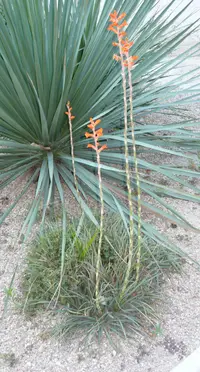
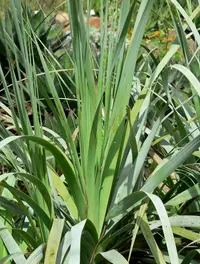
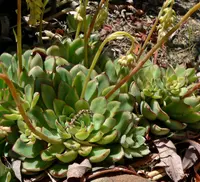
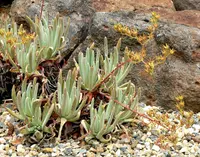
Dyckia remotiflora is a terrestrial bromeliad, related to pineapples but growing on rocky ground rather than on trees. It forms tight rosettes of stiff, arching leaves armed with sharp spines along the edges.
The foliage is usually gray-green to silvery, often with a rugged, architectural look that suits dry, sunny displays and rock gardens. In the wild, it occurs in arid, rocky areas of South America, where it tolerates strong sun and periods of drought.
Its toughness and slow, clumping growth habit make it relatively easy for patient growers who provide bright light and very free-draining soil. Understanding how to care for Dyckia remotiflora mainly involves balancing strong light with controlled watering to avoid rot.

Care Difficulty
Moderate Care

Light Preference
Full Sun

Water Requirements
Low Water

Temperature Preference
Warm Climate

Hardiness Zone
9–11

Soil Texture
Sandy, Loamy, Rocky

Soil pH
Slightly acidic (6.5–7.0), Neutral (7.0)

Soil Drainage
Well-drained

Fertilization
Minimal (feed rarely)
Scan your plant to receive care tips personalized for your specific plant
Available on iOS and Android
This sun-loving bromeliad prefers strong light to maintain compact growth and leaf color.
This drought-tolerant species prefers infrequent, thorough watering rather than constant moisture.
This terrestrial bromeliad handles heat well but is sensitive to hard frost.
This species prefers dry air and does not need added humidity.
Dyckia remotiflora thrives in very fast‑draining, mineral, cactus‑type mixes.
This species is well suited to container growing outdoors in warm climates or indoors under bright light.
This drought-tolerant bromeliad benefits from light feeding but does not need heavy fertilization.
Pruning is minimal and mainly focused on cleanliness and safety around the sharp rosette.
This species grows slowly and prefers tight conditions, so repotting is infrequent.
Propagation is commonly done by division of offsets, with seeds used more by collectors or breeders.
This hardy bromeliad tolerates light frost but still benefits from basic winter precautions in cold regions.

Plant Health Check
Not sure what's wrong with your plant? Check your plant's health inside the app.
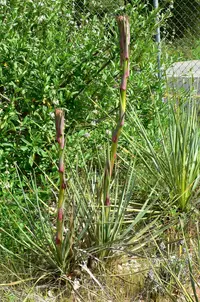
This species produces slim spikes of bright orange, tubular flowers that typically open in the evening, aligning with the activity of its primary pollinators such as moths and crepuscular insects in its native range of Bolivia and Paraguay.
It naturally grows on rocky outcrops and exposed slopes, anchoring into shallow crevices where roots experience intense sun, rapid drainage, and periodic drought, which explains its high tolerance for poor, mineral soils in cultivation.
Unlike many tropical bromeliads, this species tolerates brief light frosts and cool, dry conditions, reflecting its evolution in more open, seasonally cooler habitats rather than humid rainforests.

This species forms tight, compact rosettes with stiff, heavily armed leaves that create an efficient water-shedding structure, allowing rain to run quickly past the crown and reducing the risk of rot in the arid, high-radiation environments where it evolves.
This species grows slowly, forming compact rosettes that enlarge over several years rather than months. Growth rate depends on warmth, light, and nutrition. Expect modest size increases each growing season, not rapid expansion.
Keep your plants happy and healthy with plant identification, disease detection, and easy care guidance.