Dehesa beargrass Care (Nolina interrata)

Also known as: dehesa nolina
Dehesa beargrass

About Dehesa beargrass

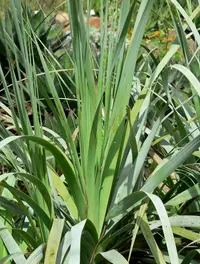
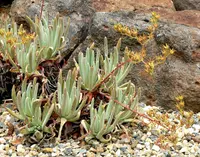
Dehesa beargrass, Nolina interrata, is a rare, grass-like succulent shrub native to dry chaparral and coastal sage scrub in southern California and northern Baja California. It forms dense clumps of narrow, bluish-green leaves that arch outward, giving a fine-textured, fountain-like look.

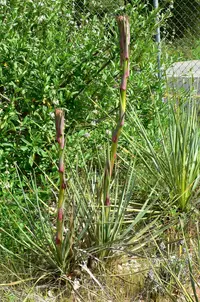
Older plants develop short woody stems and can create a broad mound that stands out in dry gardens. In late season, tall flowering stalks rise above the foliage with many small, creamy blossoms.

This species is adapted to full sun, lean rocky soils, and long dry periods, which makes it well suited to low-water landscapes. Its slow growth and drought tolerance influence how to care for Dehesa beargrass in home gardens.

Main Plant Requirements

Care Difficulty

Moderate Care

Light Preference

Full Sun

Water Requirements

Low Water

Temperature Preference

Warm Climate

Hardiness Zone

9–11

Soil Texture

Sandy, Loamy, Rocky

Soil pH

Slightly acidic (6.5–7.0), Slightly alkaline (7.0–7.5)

Soil Drainage

Well-drained

Fertilization

Minimal (feed rarely)

Get Personalized Care Plan

Scan your plant to receive care tips personalized for your specific plant

Available on iOS and Android

How to Care for the Dehesa beargrass

Nolina interrata thrives in bright, open conditions that mimic its native semi-arid habitat.

  • Provide 6–8 hours of direct sun daily, ideally with morning sun and some light afternoon shade in hotter inland areas.
  • The plant tolerates light partial shade, but growth becomes looser and flowering may decline if it receives less than 4–5 hours of direct sun.
  • In very hot summers, especially for young Dehesa beargrass plants, protect from intense late-afternoon sun to reduce leaf scorch and moisture stress.

Watering for this desert-adapted species must stay on the dry side to prevent root problems.

  • Allow soil to dry at least in the top 5–8 cm before watering; in gritty, fast-draining ground this often means long intervals between deep soakings.
  • During the warm growing season, watch leaf tips and outer leaves: crisp, folding tips suggest it is time for a thorough soak, then let excess drain away.
  • Reduce watering sharply in cool or wet weather; pale, soft, or yellowing lower leaves and a sour soil smell indicate Nolina interrata is receiving too much moisture.

This species prefers warm, dry conditions and handles heat better than prolonged cold.

  • Optimal growth occurs around 70–90°F (21–32°C), especially in low humidity with good air movement.
  • Established plants tolerate short drops to about 20–25°F (-6 to -4°C), but young plants are more sensitive and benefit from protection during hard frosts.
  • In extreme heat above 100°F (38°C), mulch the root zone and ensure some late-day shade to limit root overheating and reduce stress.

Humidity is a minor factor for Nolina interrata as long as air stays on the dry side.

  • Aim for 30–40% humidity, similar to arid indoor air, to match its desert-edge origin.
  • Plant tolerates very dry air; problems arise more from excess moisture around leaves and crown than from low humidity.
  • Watch for rot at the leaf bases or a musty smell in very damp rooms and improve air movement or reduce nearby humidifiers.

Nolina interrata needs very fast-draining, mineral-rich soil to prevent root and crown rot.

  • Use a gritty mix such as 50–60% coarse sand or small gravel with the rest cactus mix or lean loam.
  • Ensure drainage is rapid; water should pass through in seconds, not sit or pool on the surface.
  • Keep pH slightly acidic to neutral (pH 6.5–7.5), avoiding strongly acidic peat-heavy mixes that hold excess moisture.
  • For Nolina interrata plant care in pots, increase aeration with extra pumice or perlite and avoid any mix that compacts when dry.

This species adapts well to container culture when given a stable, fast-draining setup.

  • Choose a wide, relatively shallow pot to support the broad base and prevent toppling in wind.
  • Use a heavy clay or ceramic container if grown outdoors to counterbalance the stiff, fountain-like leaves.
  • Raise the pot slightly on feet or bricks so drainage holes stay clear and water does not collect under the base.

Nolina interrata grows in low-nutrient soils and needs only light, infrequent feeding in cultivation.

  • Use a balanced, slow-release fertilizer (for example 10-10-10) or a thin layer of compost in spring.
  • Feed once at the start of the warm growing season; a second light dose in midsummer is usually enough.
  • Dilute liquid products to 25–50% strength to avoid root burn and excessive soft growth.
  • Skip feeding in winter dormancy; this supports the naturally slow habit of Dehesa beargrass.

Nolina interrata needs minimal pruning, mainly to keep the clump clean and safe from decay.

  • Best time for pruning is late winter to early spring, before strong new growth starts.
  • Remove dead, browned, or damaged leaves at the base with clean, sharp pruners or shears.
  • Trim only spent flower stalks and avoid cutting healthy green foliage to maintain the plant’s form.
  • Light cleanup improves airflow, reduces hiding places for pests, and keeps the rosette outline defined.

This species is usually grown in the ground; transplant or repot Nolina interrata only when clearly necessary.

  • Look for roots circling the container, water running straight through, or stalled growth as signs of needing more space.
  • Plan transplanting for late winter to early spring, allowing roots to establish before peak summer heat.
  • Move up just 1 pot size, keep the root ball intact, and use a very well-drained, gritty mix.
  • Water thoroughly after planting, then let the soil partly dry; shade for 7–10 days helps reduce transplant stress.

Nolina interrata is typically propagated from seed and is considered a slow, specialist project rather than routine home propagation.

  • Collect ripe seed from mature flower stalks and sow in late winter to early spring.
  • Use a sterile, very well-drained medium and keep it just slightly moist, not wet.
  • Maintain warm temperatures around 70–80°F and bright, indirect light for germination.
  • Growth is slow; plan for patient, long-term Nolina interrata plant care rather than quick offsets or cuttings.

Established Nolina interrata plants are relatively cold tolerant in dry conditions and usually require only light winter attention.

  • In regions colder than about 20–25°F, add a 5–8 cm mulch layer around (not against) the crown.
  • Keep soil on the dry side; avoid winter waterlogging that can cause root and crown rot.
  • For container plants, move pots to a bright, frost-free spot such as an unheated garage or cold greenhouse.

Care Tips

Encourage Clumping Habit

Leave at least 30–45 cm of open, well-drained space around the plant so new offsets can form a natural clump instead of being crowded by neighboring plants or edging.

Selective Offset Removal

If the clump becomes too dense, remove a few outer offsets with a clean, sharp spade in late spring and replant them slightly higher than the surrounding soil line to maintain air flow at the crown and reduce rot risk.

Root-Zone Gravel Mulch

Apply a 3–5 cm layer of coarse gravel or crushed rock around the base instead of organic mulch to keep the crown dry, reflect heat, and mimic the plant’s native rocky habitat.

Protect From Soil Splash

In regions with occasional heavy rain, use a low rock border or gravel apron to limit soil splash onto the lower leaves, which helps reduce fungal spotting and keeps the foliage cleaner.

Winter Rain Management

In very wet winter climates, slightly mound the planting site or use a low, sloped berm so excess water drains quickly away from the crown, a key step in caring for Dehesa beargrass in non-native conditions.

Common Pests and Diseases

Agave snout weevil

This pest bores into the stem base and crown, causing internal tunneling, collapse of the rosette, and sudden plant wilt or toppling. Symptoms include yellowing leaves, a loose crown, and foul-smelling, rotted tissue at the base.

Solution

Remove and destroy any heavily infested plants, including the root crown, to prevent further spread, and discard soil immediately around the base. In areas where the weevil is present, monitor crowns regularly, keep plants stress-free with good drainage and sparse irrigation, and consider a targeted soil drench with a systemic insecticide labeled for snout weevils if early activity is confirmed outdoors.

Mealybugs

These insects cluster in leaf bases and along the stem, producing white cottony masses and sticky honeydew that can attract sooty mold. This pest often appears on plants under drought stress or grown in containers with poor air movement.

Solution

Isolate affected plants, then use a cotton swab dipped in 70% isopropyl alcohol to dab visible mealybugs and wash leaf bases with a firm stream of water. For persistent infestations, apply a horticultural soap or neem oil spray directed into leaf axils, repeating every 7–10 days until no new insects appear, and avoid excess nitrogen fertilization that promotes soft, susceptible growth.

Armillaria crown rot

This disease attacks the root crown in poorly drained or previously infected soils, leading to gradual yellowing, stunted growth, and eventual collapse of the rosette. Symptoms include a decaying crown that may show white fungal mats beneath the outer tissues and dark rhizomorphs (shoe-string like fungal strands) in nearby soil or on roots.

Solution

Remove and dispose of affected plants, including as much of the root system and surrounding soil as practical, and avoid replanting Nolina or closely related species in the same spot. Improve drainage, avoid overirrigation, and plant in raised mounds or well-drained native soil to reduce the risk of future infections when growing Dehesa beargrass outdoors.

Leaf spot

This disease shows as small, tan to brown lesions on older leaves that may expand, coalesce, and cause premature leaf drying, especially under overhead watering or high humidity. Symptoms include spotting strongest on lower, shaded foliage and along areas that stay wet longest.

Solution

Prune and discard badly spotted leaves, avoiding damage to the remaining healthy foliage, and switch to drip or low-level watering that keeps the leaf surface dry. Improve spacing and airflow around the plant, and if spotting continues, apply a broad-spectrum fungicide labeled for ornamental foliage, following label directions and focusing on young leaves before symptoms expand.

Interesting Facts

Naturally limited range

This species occurs naturally in only a few sites in San Diego County, California, and adjacent Baja California, making it a narrowly endemic desert plant with a highly fragmented distribution.

Thickened woody base

It forms a large underground woody caudex that stores water and starch, helping it survive prolonged drought and resprout after damage.

Clustered flowering stalks

Mature plants often produce several tall, branched flower stalks from a single clump, with small cream to greenish-white flowers that provide nectar for local insects in late spring to summer.

Botan icon

Did you know?

Nolina interrata is federally listed as a threatened species in the United States due to its very restricted range and ongoing habitat loss, making it one of the rarer members of the Asparagaceae family in the wild.

FAQs about Dehesa beargrass

This species forms tight clumps and spreads slowly by short offsets, not by running roots. It is not considered aggressive and is unlikely to overtake garden beds, even in lean, dry conditions.

Grow Healthy Plants with Botan Care

Keep your plants happy and healthy with plant identification, disease detection, and easy care guidance.

Botan plant care app — identify plants on mobile

Explore More Plants