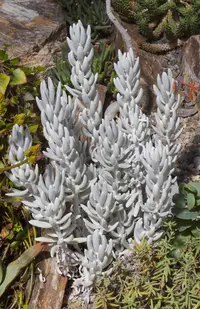
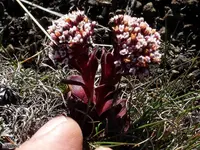
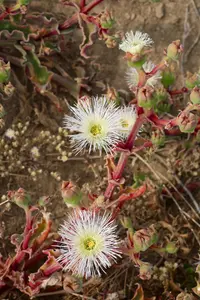
yellow-flowered houseleek Care (Sempervivum grandiflorum)

yellow-flowered houseleek

About yellow-flowered houseleek

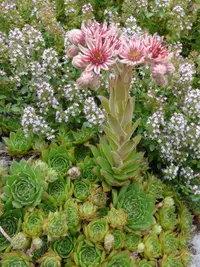
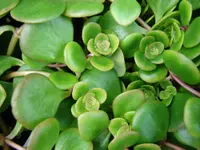
Yellow-flowered houseleek (Sempervivum grandiflorum) is a hardy, low-growing succulent forming tight rosettes of fleshy, often green to yellow-green leaves. In maturity it sends up short flowering stalks with bright yellow, star-shaped blooms that attract pollinators and then die back, while surrounding offsets continue to grow.

This species is native to rocky slopes and alpine habitats in parts of Europe, where it tolerates intense sun, wind, and poor, stony soils. Its drought tolerance and compact habit make it well suited to rock gardens, troughs, and containers, and it is generally easy to care for yellow-flowered houseleek in well-drained soil with plenty of light and moderate watering.

Main Plant Requirements

Care Difficulty

Easy Care

Light Preference

Full Sun

Water Requirements

Low Water

Temperature Preference

Cold Hardy

Hardiness Zone

4–9

Soil Texture

Sandy, Loamy, Rocky

Soil pH

Slightly acidic (6.5–7.0), Slightly alkaline (7.0–7.5)

Soil Drainage

Well-drained

Fertilization

Minimal (feed rarely)

Get Personalized Care Plan

Scan your plant to receive care tips personalized for your specific plant

Available on iOS and Android

How to Care for the yellow-flowered houseleek

Sempervivum grandiflorum thrives in bright, open positions with strong direct sun in most climates.

  • Provide 6–8 hours of direct sun daily; morning to early afternoon sun is ideal, with light afternoon shade in very hot regions.
  • Plant yellow-flowered houseleek in an exposed spot such as a rock garden, green roof, or south-facing bed where foliage stays compact and colorful.
  • In summer heatwaves, protect from reflected or all-day intense western sun to prevent leaf scorch; in deep shade rosettes stretch, pale, and lose vigor.

This hardy succulent stores water in its leaves and needs infrequent but careful watering.

  • Allow the soil to dry completely, at least the top 3–5 cm, before watering; in cool, rainy climates it may need no extra water once established outdoors.
  • Water slowly at the base until it just drains from the planting area, then let excess run off; avoid water pooling around rosettes or in poorly drained clay.
  • Reduce watering in cool seasons and watch for overwatering signs such as mushy, translucent leaves, versus underwatering signs like shriveled, tightly curled rosettes.

This species tolerates a wide temperature range and is well suited to outdoor conditions in many temperate regions.

  • Optimal active growth occurs around 60–75°F (16–24°C), especially in spring and early summer when days are warm and nights are cool.
  • Mature plants are cold-hardy to about -20°F (-29°C) or lower with good drainage; brief freezes are tolerated, but winter wet combined with frost increases rot risk.
  • In hot summers above 90°F (32°C), provide afternoon shade and extra airflow; rosettes may pause growth yet usually resume once temperatures fall back into the optimal range.

Humidity is not a significant factor for Sempervivum grandiflorum, which thrives in dry air.

This species needs very fast-draining, mineral-rich soil to prevent root and crown rot.

  • Use a gritty mix of roughly 50–70% inorganic material such as coarse sand, pumice, or fine gravel, with the rest a lean potting or cactus mix.
  • Aim for slightly acidic to neutral pH around 6.0–7.5, avoiding strongly acidic or strongly alkaline blends.
  • Improve aeration by avoiding fine peat-based mixes that stay wet; add extra pumice or perlite if water does not drain through within a few seconds.
  • For outdoor Sempervivum grandiflorum in the ground, mound or raise the planting area so water always runs off and never pools around the rosettes.

This species is very suitable for container growing due to its shallow roots and drought tolerance.

  • Choose a shallow, wide container so offsets can spread while excess water still drains quickly away from the crowns.
  • Use unglazed terracotta if possible, since its porous walls help moisture evaporate faster in wet climates.
  • Raise the pot slightly on feet or spacers so drainage holes never sit directly in standing water on patios or trays.

Sempervivum grandiflorum needs only minimal feeding, especially when grown in gritty, low-nutrient soil.

  • Use a very light application of balanced, low-nitrogen fertilizer (such as diluted 10-10-10) or a thin layer of compost in spring.
  • Feed once at the start of the active growing season; avoid monthly schedules that encourage weak, lush growth.
  • Dilute liquid fertilizer to 25–50% strength and apply to moist soil, never onto dry roots or rosettes.
  • Skip feeding in late fall and winter, since yellow-flowered houseleek rests in cool, low-light conditions.

Pruning needs for Sempervivum grandiflorum are minimal and focus on cleanliness rather than shaping.

  • In spring or early summer, remove dead or shriveled outer leaves by gently tugging them away from the rosette.
  • Snip off spent flower stalks at the base with clean scissors once they dry, preventing decay and tidying the clump.
  • Lift and discard dead rosettes after flowering, allowing offsets around them to fill the gap and maintain a compact mat.
  • Use small, sharp scissors or pruners, disinfected with alcohol, to reduce the risk of disease entering through wounds.

This species grows well in the same spot for years, so transplanting is only needed when clumps outgrow their space or containers.

  • Check containers every 2–3 years for roots circling the pot, reduced drainage, or noticeably slower growth as signs of crowding.
  • Plan repotting or outdoor transplanting for spring or early fall, when temperatures are mild and soil is workable.
  • Lift the clump gently, tease roots apart with fingers, and remove old, soggy soil while keeping most roots intact.
  • Replant in shallow, well-drained soil or a cactus mix, water lightly once, then let the plant dry between waterings to limit root stress.

Sempervivum grandiflorum is commonly propagated from offsets, which maintain the characteristics of the parent rosette.

  • In spring to early summer, select well-formed offsets attached by short stolons to the mother rosette.
  • Gently detach each offset with a small portion of roots; if rootless, allow the base to dry for 1–2 days before planting.
  • Set offsets into shallow trays or beds filled with gritty, fast-draining mix, keeping crowns above soil level.
  • Place in bright light with good air movement, water sparingly, and allow the mix to dry between light waterings to encourage firm rooting.

This hardy succulent usually needs little winter care in the ground across most temperate climates.

  • Mature plants tolerate significant frost when grown in sharply drained soil, especially on slopes or raised beds.
  • Apply a very thin layer of gravel mulch around rosettes in fall to keep crowns drier through freeze–thaw cycles.
  • For containers in very cold or wet regions, move pots to a cold, bright, sheltered spot such as an unheated porch.
  • Water sparingly in winter, just enough to prevent extreme shriveling, and avoid waterlogged soil around the roots.

Care Tips

Offset management

Lift and replant crowded offsets every 2–3 years, spacing them 3–5 cm apart to maintain good airflow and prevent rot in the center of the clump.

Rock crevice placement

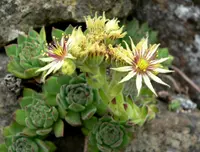
Tuck rosettes into shallow rock crevices or between pavers so excess water drains away quickly and the roots stay cool while the leaves receive full light.

Winter rain protection

In regions with cold, wet winters, place containers under an overhang or use a simple clear cover to keep rosettes drier while still allowing good light and ventilation.

Targeted pest checks

Inspect the tight leaf layers regularly for aphids or mealybugs, and if found, use a cotton swab dipped in isopropyl alcohol to dab pests without soaking the whole rosette.

Container depth control

Use wide, shallow pots (6–10 cm deep) with large drainage holes to encourage a broad, fibrous root system and reduce the risk of water collecting beneath the rosettes when growing yellow-flowered houseleek.

Common Pests and Diseases

Vine weevils

This pest feeds on roots and leaf edges, causing notched rosettes and sudden collapse of whole clumps when larvae are numerous.

Solution

Inspect plants at night and hand-pick adult beetles, then drench the soil with beneficial nematodes targeted at vine weevil larvae in late spring or late summer. Remove and destroy severely damaged rosettes and grow Sempervivum grandiflorum in well-drained containers or raised areas that make monitoring easier.

Mealybugs

These insects hide deep in the rosettes and between offsets, producing white cottony clusters and sticky honeydew that can lead to sooty mold.

Solution

Isolate affected plants, then use a strong jet of water or a soft brush dipped in alcohol-diluted water to remove visible insects from rosettes and crevices. For persistent infestations, repeat physical cleaning and apply an insecticidal soap spray labeled for succulents, making sure the plant dries quickly afterward.

Woolly aphids

This pest forms white, wool-like masses along leaf bases and flower stalks, weakening rosettes and distorting new growth.

Solution

Rinse colonies off with a firm stream of water, then spot-treat remaining clusters with a cotton swab dipped in alcohol or a mild insecticidal soap solution. Improve airflow around the rosettes and avoid overfertilizing, which encourages soft, susceptible growth.

Rust

This disease appears as orange to brown pustules on leaves, often starting on older outer foliage and spreading in humid, crowded plantings.

Solution

Remove and discard affected leaves promptly, then space plants to increase airflow and keep foliage dry when watering. In persistent or severe cases, apply a sulfur- or copper-based fungicide labeled for ornamental succulents, following label directions and avoiding use during high heat.

Crown and leaf rot

Symptoms include water-soaked, translucent leaves and a mushy central rosette, usually after prolonged moisture and poor drainage.

Solution

Discard severely rotted rosettes and save only firm, healthy offsets, replanting them into a very gritty, free-draining mix. Improve drainage, avoid overhead watering, and ensure the plant receives plenty of sun and good air movement, especially during cool, wet periods.

Interesting Facts

Subalpine rock specialist

This species is naturally native to rocky, subalpine habitats of the Eastern Alps, where it grows in shallow crevices and stone pockets with minimal organic matter.

Distinctive yellow rosettes

Unlike many other Sempervivum species that flower pink or reddish, this plant produces bright yellow, star-shaped flowers on short, sturdy stalks above compact green rosettes.

Clonal colony former

It spreads mainly through offsets (clonal rosettes), gradually forming tight mats that stabilize thin mountain soils and help reduce erosion on exposed rock faces.

Botan icon

Did you know?

In its native alpine range, this species often colonizes mortar joints and dry stone walls around traditional mountain settlements, where long-lived clumps can persist for decades in the same cracks with almost no accumulated soil.

FAQs about yellow-flowered houseleek

This species performs best outdoors in rock gardens, troughs, or shallow containers where it receives strong light, good airflow, and seasonal temperature changes. Yellow-flowered houseleek indoor care is possible but tends to produce looser rosettes and weaker color.

Grow Healthy Plants with Botan Care

Keep your plants happy and healthy with plant identification, disease detection, and easy care guidance.

Botan plant care app — identify plants on mobile

Explore More Plants