hen-and-chicks Care (Sempervivum marmoreum)

Also known as: houseleek
hen-and-chicks

About hen-and-chicks

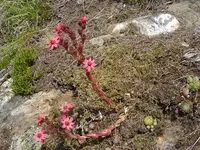
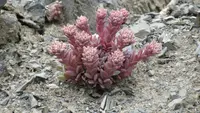
Hen-and-chicks (Sempervivum marmoreum) is a cold-hardy, rosette-forming succulent from mountainous regions of southern and central Europe. It grows as a tight cluster of a larger central rosette (the hen) surrounded by many small offsets (the chicks).

Leaves are thick, often green flushed with red or purple tones, and form low mats that slowly spread over time. This compact growth habit makes it useful for rock gardens, containers, and green roofs.

Its succulent leaves store water, so it tolerates drought and poor, stony soil, which makes it straightforward to care for hen-and-chicks. It generally prefers bright light, good drainage, and relatively dry conditions.

Main Plant Requirements

Care Difficulty

Easy Care

Light Preference

Full Sun

Water Requirements

Low Water

Temperature Preference

Cold Hardy

Hardiness Zone

3–8

Soil Texture

Sandy, Loamy, Rocky

Soil pH

Slightly acidic (6.5–7.0), Neutral (7.0)

Soil Drainage

Well-drained

Fertilization

Minimal (feed rarely)

Get Personalized Care Plan

Scan your plant to receive care tips personalized for your specific plant

Available on iOS and Android

How to Care for the hen-and-chicks

Sempervivum marmoreum thrives in strong light and forms compact, colorful rosettes when sun exposure is high.

  • Provide 6–8 hours of direct sun daily; full morning sun with lighter afternoon sun is ideal, especially in hotter regions.
  • Plants tolerate light partial shade, but rosettes may stretch, lose color, and become looser if they receive under 4–5 hours of direct sun.
  • In very intense summer sun, especially on reflective surfaces, slight afternoon shade helps prevent leaf scorch on hen-and-chicks and reduces heat stress.

This hardy succulent prefers infrequent, light watering and dries quickly between soakings.

  • Water only when the top 2–5 cm of soil is completely dry; in most outdoor conditions this means after hot, dry spells rather than on a fixed schedule.
  • Use very well-drained, gritty soil so water runs through fast; prolonged wetness around the roots leads to rot, translucent leaves, and a mushy rosette center.
  • Reduce watering sharply in cool or winter conditions; slight shriveling and thinner leaves signal mild thirst, while yellowing, splitting leaves usually indicate past overwatering in Sempervivum marmoreum.

This alpine-type succulent is cold-hardy yet also manages moderate summer heat when kept dry and well-ventilated.

  • Best growth occurs around 60–75°F (16–24°C), especially in spring and early summer when days are bright and nights are cool.
  • Established plants tolerate winter cold down to about 0°F (−18°C), often lower with sharp drainage; persistent wet cold is more damaging than simple frost.
  • In hot spells above 90°F (32°C), offer some afternoon shade and ensure rapid-draining soil to avoid root stress and prevent rosettes from baking against rock or metal surfaces.

Humidity is rarely a concern for this alpine succulent if air stays dry to moderately humid.

This species prefers very fast-draining, mineral-based soil that prevents water from sitting around the roots.

  • Use a gritty mix such as 50–70% mineral components (coarse sand, grit, or fine gravel) blended with 30–50% cactus mix.
  • Aim for a lean, low-organic substrate; too much compost or peat holds water and encourages rot in Sempervivum marmoreum.
  • Keep pH roughly neutral to slightly alkaline (pH 6.5–7.5), which suits its rocky, calcareous origins.
  • Improve drainage and aeration in heavy mixes by increasing coarse mineral content and raising plants in shallow, free-draining beds or troughs.

This species is very suitable for container growing, including shallow dishes and troughs.

  • Choose a wide, shallow pot to match the plant’s spreading rosette and offset pattern while preventing deep, soggy pockets of soil.
  • Select unglazed terracotta if extra evaporation is needed, or thicker ceramic in hot, windy spots to slow moisture loss.
  • Elevate containers on pot feet or bricks so drainage holes stay clear and excess water escapes quickly after rain or watering.

Sempervivum marmoreum grows well in lean soil and needs only very light feeding.

  • Use a low-dose balanced NPK fertilizer or very thin layer of compost in spring as new growth starts.
  • Feed once at the beginning of the growing season; frequent applications are unnecessary for hen-and-chicks.
  • Dilute liquid fertilizer to 25–50% strength to avoid soft, weak growth and root burn.
  • Stop feeding in late summer so plants harden off before winter dormancy.

Pruning Sempervivum marmoreum is minimal and focuses on hygiene rather than shaping.

  • In spring or early summer, remove dried, dead, or damaged rosettes by gently twisting them off.
  • Cut spent flowering rosettes at the base after they finish blooming to keep the clump tidy.
  • Thin out crowded, shading rosettes to maintain airflow and reduce rot risk.
  • Use clean fingers or small, sharp scissors and avoid cutting healthy fleshy leaves unnecessarily.

This species seldom needs frequent repotting but benefits from occasional division or transplanting.

  • Check for roots circling the container, reduced drainage, or slowed growth as signs repotting is useful.
  • Shift plants or clumps every 3–4 years in spring, choosing a shallow pot or sunny, well-drained outdoor spot.
  • Lift rosettes gently, shake off old soil, and tease apart offsets with minimal root breakage.
  • Replant at the same depth in gritty, fast-draining mix, water lightly once, then allow soil to dry well.

Sempervivum marmoreum is most commonly multiplied by offsets rather than seed.

  • In late spring to early summer, detach small rosette offsets that have formed short stolons or roots.
  • Prepare a shallow tray or pot with gritty, fast-draining mix and place offsets on the surface, just covering roots.
  • Keep in bright light with good airflow and water sparingly, letting the mix dry between light waterings.
  • For seeds, provide cool stratification, then sow on the surface and maintain even, light moisture until germination.

This hardy succulent generally needs little winter attention in most temperate climates.

  • Mature plants tolerate freezing and snow if soil drains sharply and does not stay waterlogged.
  • In very wet winters, add a light gravel mulch around rosettes to keep crowns drier.
  • Container plants in zones with severe freeze–thaw cycles can be moved to a cold, bright, sheltered spot.

Care Tips

Rosette Division Timing

Lift and divide congested rosettes only after flowering rosettes have died back and offsets are well rooted, so the plant uses stored energy efficiently and re-establishes quickly.

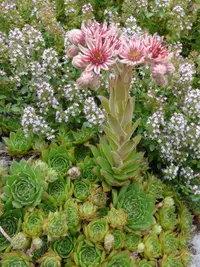
Offset Ring Planting

When planting offsets, arrange them in a loose ring around the original rosette with 3–5 cm spacing to create dense, self-mulching mats that shade the soil and suppress weeds.

Winter Wet Protection

In regions with cold, wet winters, place a clear, sloped cover over outdoor containers to keep excess rain and snow off the rosettes while still allowing cold air exposure for proper dormancy.

Gravel Neck Mulch

Top-dress around each rosette with a 0.5–1 in layer of coarse grit or pea gravel to keep leaf bases dry, reduce crown rot, and make inspection for pests faster when caring for hen-and-chicks.

Selective Flower Removal

If a rosette starts to flower in a small or crowded container and you want to keep the cluster shape, remove the developing flower stalk early to conserve space and maintain a compact display, accepting that this rosette will still die back eventually.

Common Pests and Diseases

Mealybugs

This pest hides in leaf rosettes and leaf axils, sucking sap and leaving white, cotton-like masses. Symptoms include stunted growth, sticky honeydew, and distorted young leaves.

Solution

Isolate affected plants, then dab visible insects with cotton swabs dipped in 70% isopropyl alcohol and repeat weekly until gone. Improve airflow, avoid overfertilizing, and if needed use a labeled ready-to-use insecticidal soap, making sure it reaches deep into the rosettes.

Aphids

These insects cluster on young rosettes, flower stalks, and offsets, feeding on sap and causing curling, yellowing, and sticky residue. Ants are often attracted to the honeydew they produce.

Solution

Rinse colonies off with a firm stream of water, focusing on the center of rosettes and underside of leaves. For persistent infestations, apply insecticidal soap or neem oil spray on cool, overcast days and repeat every 5–7 days until no new aphids appear.

Vine weevils

This pest affects both adults and larvae; adults chew notches in leaf edges while larvae feed on roots and the base of rosettes, causing sudden collapse. Symptoms include loose plants, poor growth, and rosettes that detach easily.

Solution

Inspect at night and hand-pick adult beetles from foliage, then dispose of them. For larvae in the soil, use a labeled biological control such as beneficial nematodes applied to moist soil in spring or late summer, and avoid keeping containers overly wet, as this favors larval survival.

Rust

This disease causes small orange, brown, or rust-colored pustules on leaves, especially in crowded, humid conditions. Symptoms include discolored patches, premature leaf death, and reduced vigor.

Solution

Remove and discard affected leaves and heavily infected rosettes, then space plants to improve airflow and keep foliage dry during watering. For persistent cases in outdoor plantings, a sulfur- or copper-based fungicide labeled for ornamental succulents can be used according to label directions.

Crown rot

This disease develops in the center of the rosette when moisture remains trapped around the crown, especially in poorly drained soil or containers. Symptoms include mushy, discolored inner leaves that pull away easily and a foul smell as the rosette collapses.

Solution

Promptly remove and discard affected rosettes, keeping any firm, healthy offsets and replanting them in sharply drained, gritty soil. To prevent recurrence, plant in shallow, fast-draining containers, water early in the day, avoid wetting the rosette center, and reduce watering frequency when growing hen-and-chicks in cool or low-light conditions.

Interesting Facts

Balkan mountain specialist

This species is naturally concentrated in rocky habitats of the Balkan Peninsula, where it grows in thin soil pockets on limestone and other calcareous rocks, tolerating strong temperature swings and intense sun exposure.

Distinct marbled rosettes

Its rosettes often show a characteristic marbled pattern of green, reddish, and purplish tones, especially in high light and cool conditions, which helps distinguish it from many other closely related houseleeks.

Offsets on stolon-like shoots

It produces numerous offsets on short, stolon-like runners that root in nearby crevices, allowing the plant to quickly form tight clumps that stabilize shallow, eroding substrates in its native rock faces and scree slopes.

Botan icon

Did you know?

Historical records from central and southeastern Europe show that traditional stone roofs sometimes hosted long-lived mats of this species, where its dense rosettes acted as a primitive green roof, helping shed water and protect roof materials from rapid weathering.

FAQs about hen-and-chicks

This species usually flowers once when a rosette is mature, then that rosette dies. Lack of blooms often comes from too much shade, very rich soil, or frequent disturbance. Stable, sunny, lean conditions support normal flowering.

Grow Healthy Plants with Botan Care

Keep your plants happy and healthy with plant identification, disease detection, and easy care guidance.

Botan plant care app — identify plants on mobile

Explore More Plants