


Encourage Offset Spread
Plant rosettes slightly spaced apart in a wide, shallow container or rock pocket so new offsets have room to root and form a dense, mat-like colony rather than crowding and weakening the mother plant.

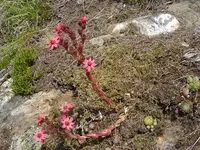
Mountain houseleek, Sempervivum montanum, is a small alpine succulent forming tight rosettes of fleshy leaves. It is part of the stonecrop family and is adapted to harsh, rocky environments. In nature, it occurs in mountain regions of central and southern Europe, often on sunny slopes and stony ledges. Its compact rosettes and offsets create dense mats that stay low to the ground. This species is generally easy to grow, as it tolerates poor, well-drained soils, strong light, and periods of drought. Those traits make it suitable for rock gardens, containers, and roofs, and simplify how to care for Mountain Houseleek at home.

Care Difficulty
Easy Care

Light Preference
Full Sun

Water Requirements
Low Water

Temperature Preference
Cold Hardy

Hardiness Zone
4–9

Soil Texture
Sandy, Loamy, Rocky

Soil pH
Slightly acidic (6.5–7.0), Neutral (7.0)

Soil Drainage
Well-drained

Fertilization
Minimal (feed rarely)
Scan your plant to receive care tips personalized for your specific plant
Available on iOS and Android
This alpine succulent prefers bright, cool sun to develop compact rosettes and strong color.
This hardy rosette succulent prefers infrequent, light watering and dries quickly between soakings.
This mountain species is strongly cold-hardy but still benefits from moderate temperatures during active growth.
This alpine succulent prefers dry air and rarely needs humidity adjustment indoors or outdoors.
This species needs very fast-draining, mineral-rich soil to prevent root and crown rot.
This species is very suitable for container growing in outdoor rock gardens, troughs, and shallow pots.
Sempervivum montanum needs only light feeding, as it is adapted to nutrient-poor, rocky soils.
Pruning for Sempervivum montanum focuses on hygiene and keeping rosettes open to light and air.
Transplanting or repotting Sempervivum montanum is infrequent and mainly done to prevent overcrowding or poor drainage.
Sempervivum montanum is commonly propagated from offsets, which keeps desirable traits consistent.
This species is cold hardy and usually needs minimal winter care in the ground.

Plant Health Check
Not sure what's wrong with your plant? Check your plant's health inside the app.
This species is naturally restricted to high mountain regions of the central and eastern Alps, where it grows on rocky, often calcareous slopes and ledges above the treeline. It is adapted to intense UV radiation, strong winds, and large temperature swings between day and night.
The plant forms tight, low rosettes that hug the ground, which reduces water loss and protects the growing point from cold and mechanical damage. This compact form also helps trap small amounts of soil and organic matter in rock crevices, improving its foothold in very shallow substrates.
Individual rosettes are monocarpic, meaning each rosette flowers once and then dies, typically after several years of vegetative growth. Before flowering, a rosette usually produces offsets, so the clump persists even though the flowering rosette itself does not survive.

In its native alpine habitats, this species often acts as a pioneer plant, colonizing bare rock and scree, stabilizing the substrate and gradually creating small pockets of organic matter that allow less stress-tolerant plants to establish later in succession.
Brown leaves usually result from rot at the base from excess moisture, sun scorch after sudden exposure, or natural aging of outer rosettes. Remove damaged leaves, improve drainage, and adjust exposure gradually to prevent further damage.
Keep your plants happy and healthy with plant identification, disease detection, and easy care guidance.

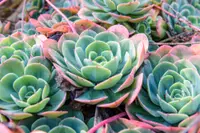
Chenille plush plant
Echeveria pulvinata
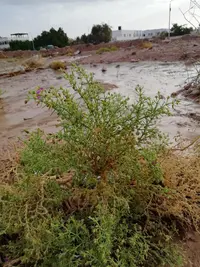
Zygophyllum arabicum
Zygophyllum arabicum
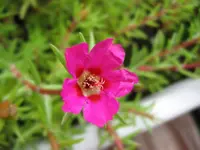
Moss Rose
Portulaca grandiflora
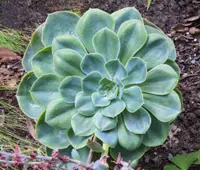
blue echeveria
Echeveria secunda
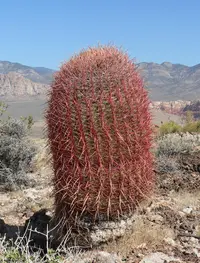
California barrel cactus
Ferocactus cylindraceus
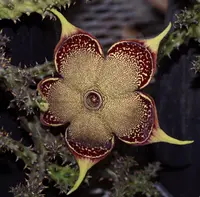
Persian Carpet Flower
Edithcolea grandis
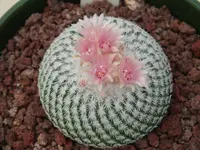
pingpong-ball cactus
Epithelantha micromeris
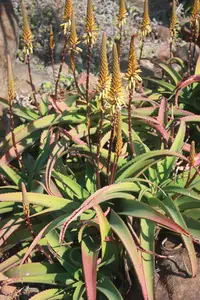
van Balen's aloe
Aloe vanbalenii