Provide sturdy staking
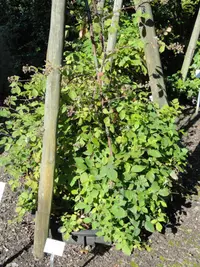
Install a solid stake or light trellis when the plant is young, then tie stems loosely with soft ties at 20–30 cm intervals to prevent wind damage and stem snapping as it gains height and weight.

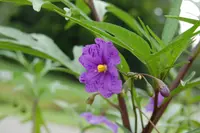
Solanum laciniatum, commonly called kangaroo-apple, is a fast-growing shrub in the nightshade family. It is often grown as an ornamental for its bold, divided leaves and showy purple flowers that mature into egg-shaped fruits.
In the wild it occurs mainly in coastal and lowland areas of New Zealand and southeastern Australia, where it can form dense thickets. In gardens it tends to be short-lived but vigorous, sometimes behaving almost like a tall perennial or small shrub.
The plant grows quickly in mild climates, prefers full sun and moist, well-drained soil, and can tolerate light frost only. Knowing how to care for kangaroo-apple is important because it can be both hardy and somewhat short-lived, and may self-seed readily.

Care Difficulty
Moderate Care

Light Preference
Full Sun

Water Requirements
Moderate Water

Temperature Preference
Warm Climate

Hardiness Zone
8–11

Soil Texture
Sandy, Loamy, Organic-rich

Soil pH
Acidic (5.5–6.5), Slightly acidic (6.5–7.0)

Soil Drainage
Moist but well-drained

Fertilization
Light (every 4–6 weeks)
Scan your plant to receive care tips personalized for your specific plant
Available on iOS and Android
Solanum laciniatum grows best in bright, direct outdoor light with some protection from harsh afternoon sun.
Solanum laciniatum prefers evenly moist, well-draining soil that never stays waterlogged.
This species prefers mild, frost-free conditions and reacts poorly to temperature extremes.
Humidity affects Solanum laciniatum only moderately, but extremes can stress the plant.
Solanum laciniatum prefers loose, well-aerated soil that drains freely yet holds some moisture.
This species can grow well in containers if the pot supports its fast, upright growth.
Solanum laciniatum responds well to moderate feeding during the active growing season.
Thoughtful pruning keeps Solanum laciniatum dense, safe, and flowering well.
Solanum laciniatum is more often transplanted in the ground than grown long term in containers.
Solanum laciniatum is commonly propagated from seed and softwood cuttings.
Solanum laciniatum has moderate frost tolerance but benefits from simple winter protection in colder regions.

Plant Health Check
Not sure what's wrong with your plant? Check your plant's health inside the app.
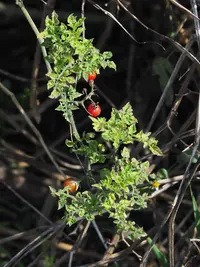
The leaves are unusually large and deeply lobed, especially on younger plants, giving a coarse, almost shrub-like texture that helps distinguish it from other nightshade relatives.
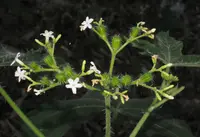
It produces conspicuous star-shaped purple flowers with bright yellow anthers, which are pollinated mainly by bees that use buzz-pollination, a vibration technique common in the nightshade family.
The unripe fruits and other tissues contain steroidal alkaloids such as solasodine, studied as a precursor for synthesizing certain pharmaceutical steroids, while still being toxic if ingested directly.

In its native New Zealand range, this shrub can grow rapidly on disturbed or coastal sites and is often one of the early colonizing species, helping stabilize soil and provide structural cover for other plants and wildlife in regenerating ecosystems.
All parts of this species are toxic if eaten, especially unripe fruit and leaves. It contains solanine-type alkaloids that can cause vomiting, diarrhea, abdominal pain, and neurological signs. Keep children and pets from chewing any part.
Keep your plants happy and healthy with plant identification, disease detection, and easy care guidance.