stiff-leaved goldenrod Care (Solidago rigida)

Also known as: stiff goldenrod
stiff-leaved goldenrod

About stiff-leaved goldenrod

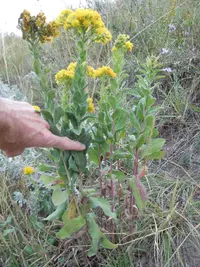
Stiff-leaved goldenrod (Solidago rigida) is a long-lived herbaceous perennial native to prairies and open habitats in central and eastern North America. It forms sturdy upright clumps topped with dense flat-topped clusters of yellow flowers in late summer to early fall.

The plant has thick, rigid leaves and strong stems that stand up well without staking, making it suitable for low-maintenance borders and meadow-style plantings. Once established, it tolerates drought and poor soils, which generally makes it easier to grow than many garden perennials.

It prefers full sun, moderately dry to medium moisture, and well-drained soil. Understanding these basic needs helps gardeners learn how to care for stiff-leaved goldenrod successfully.

Main Plant Requirements

Care Difficulty

Easy Care

Light Preference

Full Sun

Water Requirements

Low Water

Temperature Preference

Cold Hardy

Hardiness Zone

3–9

Soil Texture

Sandy, Loamy, Rocky

Soil pH

Acidic (5.5–6.5), Slightly acidic (6.5–7.0)

Soil Drainage

Well-drained

Fertilization

Minimal (feed rarely)

Get Personalized Care Plan

Scan your plant to receive care tips personalized for your specific plant

Available on iOS and Android

How to Care for the stiff-leaved goldenrod

Solidago rigida grows best in open, bright conditions with long daily sun exposure.

  • Provide full sun for 6–8 hours daily; plants bloom most heavily in unobstructed sun exposures such as prairies or open borders.
  • Tolerates light partial shade (around 3–4 hours of direct sun), but stems may lean and flower clusters can be fewer and smaller.
  • In very hot regions, some light afternoon shade reduces leaf scorch and moisture stress, while too much shade leads to weak, floppy growth.

This species prefers moderately dry to mesic soil and resents prolonged saturation.

  • In the ground, allow the top 3–5 cm of soil to dry between waterings; established clumps usually rely on natural rainfall except during long droughts.
  • Choose well-drained, sandy or loamy soil so water does not pool around the crown, which increases the risk of root rot and stem base decay.
  • Signs of underwatering include drooping stems and crisp leaf edges; yellowing lower leaves and soft, blackened roots point to overwatering in Solidago rigida.

This prairie perennial is adapted to wide outdoor temperature swings across temperate climates.

  • Optimal active growth occurs around 65–80°F (18–27°C), especially in late spring and early summer when soil is warming and nights are still moderate.
  • Mature plants tolerate winter lows well below 0°F (-18°C) when dormant, surviving in USDA zones 3–8 as long as soil drainage is adequate.
  • Summer heat up to 90–95°F (32–35°C) is tolerated if soil is not waterlogged; mulch helps buffer root temperatures and reduce stress during hot spells.

This species tolerates a wide humidity range and does not usually need special humidity management outdoors.

Solidago rigida grows best in mineral, moderately fertile soil with sharp drainage.

  • Use sandy or sandy-loam soil with 20–30% compost mixed in to add nutrients without making the substrate heavy.
  • Ensure very fast drainage; incorporate coarse sand or small gravel in the lower soil layer to prevent waterlogging.
  • Aim for slightly acidic to neutral pH around 6.0–7.0, avoiding strongly acidic or alkaline sites that restrict nutrient uptake.
  • Avoid dense clay or peat-heavy mixes; lighten them with coarse sand and fine gravel to improve aeration around the roots.

This species can be grown in containers, but the tall, stiff stems demand careful pot selection for stability.

  • Choose a deep, heavy pot (ceramic or clay) to counterbalance the tall tops and reduce tipping in wind.
  • Use a container at least 30–40 cm deep so the strong taproot can develop without circling tightly near the surface.
  • Position the pot where it is sheltered from strong gusts or group with other heavy containers to stabilize the upright growth.

Solidago rigida grows well in lean soil but benefits from light feeding in poor or heavily disturbed sites.

  • Apply a balanced slow-release fertilizer (around 10-10-10) at 1/2 strength once in early spring for in-ground plants.
  • In very poor soils, top-dress with 1–2 cm of compost instead of repeated synthetic feedings.
  • For container-grown plants, use diluted balanced liquid fertilizer every 4–6 weeks during active growth.
  • Stop feeding by late summer so plants harden off before winter dormancy.

Pruning supports tidy growth and flowering for Solidago rigida in garden settings.

  • Cut back spent flower stalks in late fall or early spring to focus energy on strong new shoots.
  • Remove dead, damaged, or diseased stems at the base using clean, sharp pruners.
  • Thin crowded stems in early spring to improve airflow and reduce foliar disease risk.
  • Optionally leave some seed heads over winter for wildlife, then trim them before new growth elongates.

This species is usually grown in the ground, so focus on careful transplanting rather than frequent repotting.

  • Transplant in early spring or early fall when temperatures are mild and soil is moist.
  • Move plants only every several years, when clumps outgrow their space or flowering declines.
  • Lift with a wide root ball to limit root breakage, then replant at the same depth in well-drained soil.
  • Water deeply after transplanting and keep soil evenly moist for 2–3 weeks to reduce transplant shock.

Solidago rigida is commonly propagated by division or seed to expand plantings or refresh older clumps.

  • Divide mature clumps in early spring or early fall, ensuring each division has several shoots and healthy roots.
  • Replant divisions promptly into prepared soil and water well until established.
  • Sow seeds outdoors in fall or after a cold, moist stratification period to improve germination.
  • Provide full sun and consistently moist, well-drained soil for young plants until root systems strengthen.

This prairie perennial is cold hardy across much of the US and generally needs minimal winter care.

  • Allow stems to stand over winter for crown insulation and wildlife value, then cut back in late winter.
  • In colder zones or exposed sites, apply a 5–7 cm mulch layer around the base after soil cools.
  • Container-grown plants are less insulated; move pots into a sheltered, unheated area to avoid root freeze-thaw cycles.

Care Tips

Deep root establishment

In the first growing season, allow the soil to dry slightly between thorough soakings to encourage a deep taproot, which helps the plant withstand future drought and reduces flopping in mature clumps.

Discreet staking strategy

In windy or exposed sites, insert low, unobtrusive stakes or short plant rings around young shoots in late spring so the stems grow through the support and remain upright when the tall flower stalks develop.

Targeted deadheading

If self-seeding is not desired, remove spent flower clusters before seed set, leaving some if you want wildlife value, as this controls volunteer seedlings while still allowing energy to return to the crown.

Clump renewal division

Every 4–6 years, lift and divide crowded clumps in early spring, replanting only the most vigorous outer sections to maintain strong flowering and reduce the risk of center die-out.

Seasonal pest monitoring

From late spring through bloom, inspect the undersides of leaves and flower stems weekly for aphids or leaf-chewing insects, using a firm water spray or targeted insecticidal soap only when populations are high, which keeps interventions minimal while still effectively caring for stiff-leaved goldenrod.

Common Pests and Diseases

Goldenrod bunch gall midge

This pest causes distinct spherical or irregular galls on stems near the upper part of the plant, often making shoots look swollen and clustered. Symptoms include distorted growth and reduced flowering on affected stems.

Solution

Prune out and destroy gall-bearing stems before adults emerge in late spring to break the life cycle. Avoid fertilizing heavily, which can encourage soft growth that is more easily attacked, and tolerate low levels of damage, as it rarely threatens overall plant health when infested shoots are removed regularly.

Goldenrod gall fly

This insect creates hard, round galls on stems, usually about halfway up, which can stunt or bend the stem and slightly reduce flowering. This pest is common in naturalized plantings and prairie gardens with Solidago species.

Solution

Cut and discard stems with galls in late fall through early spring before fly adults emerge, placing them in the trash rather than compost. Maintain plant vigor through proper sun exposure and moderate watering so surrounding stems can compensate for the minor loss in flowering stems.

Rust

This disease produces yellow to orange-brown powdery pustules on leaf undersides and sometimes on stems, leading to premature leaf yellowing and drop. Symptoms include scattered spots at first that can merge into larger discolored patches in humid conditions.

Solution

Remove and discard infected leaves as soon as they are noticed and clean up fallen debris at the end of the season to reduce overwintering spores. Improve airflow by avoiding overcrowding, and if rust is persistent, use a labeled fungicide containing chlorothalonil or myclobutanil, applying according to label directions and only when conditions favor disease spread.

Powdery mildew

This disease appears as a white to gray, powdery film on leaves and sometimes stems, which can cause leaf curling and reduced vigor late in the season. Symptoms include a dusty coating that is easy to wipe off at first but soon spreads across the foliage.

Solution

Increase sunlight and airflow by spacing plants adequately and thinning dense stands, and avoid overhead watering late in the day so foliage dries quickly. Remove heavily infected leaves and, if needed during prolonged humid periods, apply a registered fungicide such as a sulfur or potassium bicarbonate product, following all label instructions as part of Solidago rigida care instructions.

Interesting Facts

Prairie and savanna specialist

This species is characteristic of dry to mesic tallgrass prairies and open oak savannas, often marking high-quality remnant habitats on gravelly or rocky soils where many other goldenrods are absent.

Stout, rigid architecture

It forms a thick, upright stem and broad, stiff basal leaves that give the plant a very robust outline, unlike the more arching and plume-like forms seen in many other goldenrod species.

Late-season pollinator resource

Its flat-topped clusters of yellow flower heads open late in the growing season and are heavily visited by native bees, wasps, butterflies, and beetles, providing nectar and pollen when many other prairie plants have finished flowering.

Botan icon

Did you know?

Solidago rigida is one of the key larval host plants for the goldenrod flower moth (Schinia nundina), whose caterpillars feed within the flower heads, making this species important for the life cycle of a highly specialized native moth.

FAQs about stiff-leaved goldenrod

This species spreads slowly by short rhizomes and self-seeding. In average garden soils it is not usually aggressive. Deadhead spent flower heads before seeds ripen if a more controlled, clump-forming habit is desired.

Grow Healthy Plants with Botan Care

Keep your plants happy and healthy with plant identification, disease detection, and easy care guidance.

Botan plant care app — identify plants on mobile

Explore More Plants