Rhizome Containment
Install a buried plastic or rubber barrier 20–30 cm deep around planting areas in lined ponds or small water gardens to prevent rhizomes from spreading into liners, plumbing, or adjacent planting zones.

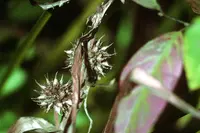
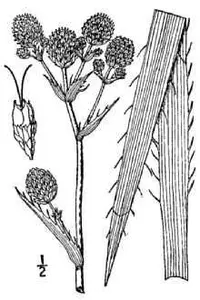
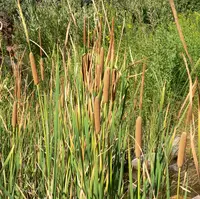
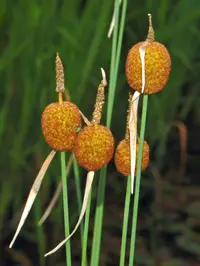
American bur-reed, Sparganium americanum, is an emergent aquatic plant commonly found in shallow freshwater wetlands, ponds, and slow-moving streams. It forms dense clumps that rise above the water surface. Upright grassy leaves and distinctive round, spiky seed heads give it a coarse, architectural look that provides shelter and food for wildlife. The plant spreads by rhizomes, so it can form colonies where conditions stay wet. It is generally easy to care for American bur-reed in naturalistic ponds or water gardens if constant moisture and full to partial sun are available. It prefers mucky, nutrient-rich substrates rather than dry or fast-draining soils.

Care Difficulty
Moderate Care

Light Preference
Full Sun

Water Requirements
Aquatic

Temperature Preference
Cold Hardy

Hardiness Zone
4–9

Soil Texture
Loamy, Silty, Organic-rich

Soil pH
Acidic (5.5–6.5), Slightly acidic (6.5–7.0)

Soil Drainage
Waterlogged tolerant

Fertilization
Minimal (feed rarely)
Scan your plant to receive care tips personalized for your specific plant
Available on iOS and Android
This aquatic native thrives in full sun but tolerates some shade, especially in warmer regions.
This species is adapted to saturated soils and shallow standing water rather than intermittently dry conditions.
This hardy aquatic plant tolerates a wide temperature range but responds best to moderate growing conditions.
This emergent aquatic prefers constantly wet conditions, so air humidity is rarely a limiting factor for American bur-reed outdoors.
This species thrives in permanently wet, organic-rich substrates that mimic the edges of ponds, ditches, or slow streams.
This species can be grown in containers when they are used as aquatic or bog planters kept consistently waterlogged or shallowly submerged.
This wetland native usually needs little feeding when rooted in natural, nutrient-rich muck or pond soils.
Pruning for Sparganium americanum focuses on safety, tidiness, and maintaining open water flow rather than shaping.
Management for this species is usually about transplanting established clumps within wetlands or water gardens rather than classic indoor repotting.
Propagation for Sparganium americanum is most practical by division of established clumps in managed wetlands or water gardens.
This hardy native aquatic generally needs minimal winter care in ponds and naturalized wetlands across most temperate US climates.

Plant Health Check
Not sure what's wrong with your plant? Check your plant's health inside the app.
This species often forms dense stands in shallow, slow-moving freshwater, where its thick rhizome network helps stabilize soft sediments and reduce shoreline erosion in eastern North American wetlands.
Its distinctive round, spiny-looking fruit heads are clusters of many small achenes, each capable of dispersing separately and sometimes floating short distances before settling into new wet areas.
The plant’s submerged and emergent stems create shelter for aquatic invertebrates and small fish, while waterfowl and other wildlife use its dense growth as cover and, in some cases, forage on its seeds.

Sparganium americanum is considered a characteristic species of high-quality, unpolluted freshwater wetlands in parts of its range, so its presence is often used by botanists and ecologists as an indicator of relatively intact, functioning aquatic habitat.
This species spreads by rhizomes and self-seeding, forming dense colonies in shallow water or saturated soil. In small ponds or constructed wetlands, monitor and thin clumps regularly to prevent it from crowding out other marginal plants.
Keep your plants happy and healthy with plant identification, disease detection, and easy care guidance.