


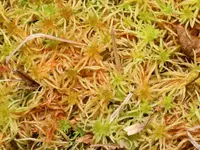
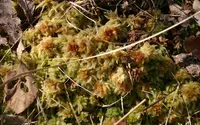
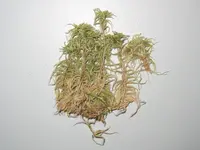
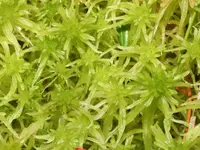

Best Soil for sphagnum (Sphagnum flexuosum)

For healthy growth, Sphagnum flexuosum needs an acidic, organic, moisture-retentive substrate that supports delicate rooting and steady plant function.

Soil Texture

Peaty, Organic-rich, Silty

Soil pH

Strongly acidic (4.5–5.5)

Soil Drainage

Waterlogged tolerant

Sphagnum flexuosum Soil Guide

Native across cool, wet parts of the Northern Hemisphere, Sphagnum flexuosum grows in bogs, fens, and other saturated peat-forming habitats. Those conditions explain the best soil for sphagnum: very moisture-retentive, organic-rich, and low in minerals, with a strongly acidic reaction.

Instead of relying on deep anchoring roots, this moss absorbs water across much of its tissue and forms dense, sponge-like mats. A peaty, soft, silty substrate suits that growth habit because it stays consistently wet while still holding some air in the upper layer rather than behaving like compacted mud.

A simple custom mix helps keep Sphagnum flexuosum evenly supported without becoming heavy or sealed over time.

100% total mix = 20 scoops
10%
perlite2 scoops
15%
fine sand or silt-rich loam3 scoops
25%
composted bark fines5 scoops
50%
peat moss or rinsed coco peat10 scoops

The finished blend should feel soft, slightly springy, and cohesive, holding steady moisture while still allowing slow gas exchange around the base.

Sphagnum flexuosum grows best in strongly acidic soil, around 4.5–5.5 pH. In that range, nutrient availability stays closer to what this species is adapted to in low-mineral, acidic settings.

If the substrate drifts much higher, some nutrients become less accessible while dissolved minerals may build more easily. A consistently acidic root zone is usually more useful than frequent small pH corrections.

This species is sensitive to mineral buildup and stale substrate conditions. When growth seems off, soil conditions are one possible place to check first.

Compaction:

Compaction: if the surface feels dense or sealed and the base stays stagnant, gently loosen only the top layer and replace part of the mix if needed.

Mineral buildup:

Mineral buildup: a crusty surface or stiffened texture can point to excess dissolved solids, so remove the top layer and refresh with cleaner material.

pH drift:

pH drift: if the medium has been in use a long time, test it and swap in a more suitable acidic mix rather than making repeated strong adjustments.

Decomposed mix:

Decomposed mix: older organic media can collapse into a sour, airless mass, so the first step is replacing it with a fresher, more open blend.

Scan. Match. Grow.

Botan can help match this plant to a more suitable substrate so it is easier to choose the right soil setup from the start.

FAQ

Usually yes. Drainage holes make it easier to prevent stale conditions and salt buildup, even for moisture-loving species. If a cachepot is used, avoid letting excess water sit around the inner container for long.

More Plant Soil Guides

Soil Problem? Scan It.

A photo-based check can help show whether soil conditions may be contributing to decline and what to review next.

Botan app helping with soil and plant care
12 Best Plants That Repel Spiders For Your Home and Garden

8 min read · 24 Jul 2026

12 Best Plants That Repel Spiders For Your Home and Garden

Spiders constantly appear in places you don't want them. A few common plants can help repel them using scent alone. Here are 12 options suitable for both indoors and outdoors, plus care tips for each.

Plant Recommendations

12 Best Plants That Repel Spiders For Your Home and Garden
Banana Peel Water for Plants: 5 Things to Know Before Trying It

5 min read · 9 Jul 2026

Banana Peel Water for Plants: 5 Things to Know Before Trying It

Banana water can provide potassium and some nutrients that may support plant growth, but it is not a universal fix. Use it carefully and only when the plant actually shows signs of nutrient deficiency rather than as a routine treatment.

Plant Care
Banana Peel Water for Plants: 5 Things to Know Before Trying It
How to Mist Plants – Proper Technique and Common Mistakes

7 min read · 30 Jul 2026

How to Mist Plants – Proper Technique and Common Mistakes

Find out when misting works well and when to avoid it. Here, you’ll find detailed information about compatible and incompatible species, tips on how often to mist plants and do it correctly, and some great alternatives for raising humidity.

Beginner Guides
How to Mist Plants – Proper Technique and Common Mistakes