firewheel tree Care (Stenocarpus sinuatus)

firewheel tree

About firewheel tree

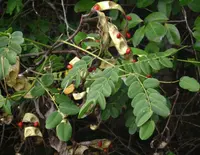
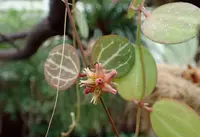
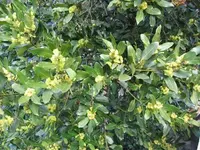
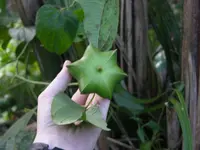
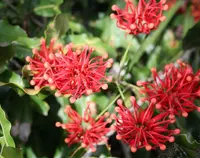
The firewheel tree, Stenocarpus sinuatus, is an evergreen tree from the rainforests of eastern Australia and New Guinea. It belongs to the Proteaceae family. In suitable climates it forms a medium to large tree with dense, dark green foliage and striking red-orange flower clusters arranged in wheel-like circles. Young trees often have deeply lobed leaves that become more simple as the plant matures.

It is valued as an ornamental for its flowers and neat form, but it grows slowly and prefers mild, frost-free conditions. Understanding how to care for firewheel tree starts with providing bright light, free-draining soil, and steady, moderate moisture without waterlogging.

Main Plant Requirements

Care Difficulty

Moderate Care

Light Preference

Full Sun

Water Requirements

Moderate Water

Temperature Preference

Tropical / Frost Sensitive

Hardiness Zone

10–11

Soil Texture

Sandy, Loamy, Organic-rich

Soil pH

Acidic (5.5–6.5), Slightly acidic (6.5–7.0)

Soil Drainage

Moist but well-drained

Fertilization

Minimal (feed rarely)

Get Personalized Care Plan

Scan your plant to receive care tips personalized for your specific plant

Available on iOS and Android

How to Care for the firewheel tree

This species prefers bright, gentle sun with some protection from intense afternoon exposure.

  • Provide 4–6 hours of direct morning sun or light, filtered sun under high canopies; avoid harsh west-facing exposure in hot climates.
  • Tolerates light to medium partial shade, but flowering on a firewheel tree decreases if grown in dense shade or under 3–4 hours of sun.
  • Watch leaves: pale, sparse growth indicates insufficient light, while leaf scorch or crispy edges suggest too much intense midday or afternoon sun.

Stenocarpus sinuatus prefers evenly moist, well-drained soil that never stays waterlogged.

  • Water when the top 3–5 cm of soil feels dry, then soak deeply so moisture reaches the root zone, allowing excess to drain away fully.
  • Reduce frequency in cool seasons, but do not let the soil become dust-dry; slight surface dryness is fine, prolonged cracking or wilting is not.
  • Watch for yellowing, soft leaves or sour-smelling soil as signs of overwatering; dry, curling leaves and slow recovery after heat indicate underwatering.

This species grows best in mild, frost-free climates with warm summers and gentle winters.

  • Aim for an optimal range of 65–80°F (18–27°C) during active growth, where metabolism and leaf development stay steady.
  • Protect from frost; damage often occurs below 30°F (-1°C), with young plants especially vulnerable to tissue injury and dieback.
  • Mature trees tolerate short heat spikes up to about 95°F (35°C) if soil moisture is adequate, but prolonged extreme heat can stress foliage and reduce flowering.

This species prefers moderate humidity but usually tolerates typical indoor levels if not extremely dry.

  • Aim for 40–60% humidity to reduce leaf edge browning and tip scorch on young foliage.
  • Tolerates short dry spells in heated rooms, but persistent humidity below 30% can cause curling, dull leaves, and slowed growth.
  • Increase humidity with a nearby open tray of water and stones or by grouping plants, rather than misting, which adds only brief moisture.

Stenocarpus sinuatus grows best in airy, well-draining, slightly acidic to neutral soil that still retains moderate moisture.

  • Use a mix of roughly 50% loam or general potting mix, 25% fine bark, and 25% coarse sand or perlite to balance moisture retention and drainage.
  • Aim for pH 6.0–7.0; avoid strongly alkaline substrates that can cause nutrient lockout and pale foliage.
  • In heavy or clay-based garden soil, incorporate coarse sand, fine gravel, or bark chips to improve structure and root aeration.
  • Avoid compacted, waterlogged, or peat-only mixes, which promote root rot and poor oxygen supply to the root zone.

This species can be grown in containers, especially when young or where space is limited.

  • Choose a deep, heavy container to anchor the developing woody canopy and reduce tipping in strong wind.
  • Select a pot material with moderate porosity, such as thick-walled ceramic, to prevent rapid drying while avoiding water stagnation.
  • Keep the soil surface 3–5 cm below the rim so water does not overflow and can drain evenly through the whole root ball.

Stenocarpus sinuatus benefits from light, measured feeding rather than heavy fertilization.

  • Use a balanced slow-release fertilizer (around 10-10-10 or similar) or well-rotted compost at the start of spring.
  • Feed container or young firewheel tree plants every 6–8 weeks in the growing season, using half the label strength.
  • Reduce or stop feeding in winter when growth slows, especially in cooler regions.
  • Water before and after applying fertilizer to limit root burn and improve nutrient uptake.

Stenocarpus sinuatus needs only modest pruning to maintain a healthy structure and good flowering.

  • Prune in late winter or early spring before strong new growth begins.
  • Remove dead, diseased, crossing, or storm-damaged branches first to improve safety and airflow.
  • Lightly thin crowded inner branches to maintain a single main leader and balanced crown shape.
  • Use sharp, clean bypass pruners or a pruning saw, making smooth cuts just outside the branch collar.

This tree is usually grown in the ground but can be transplanted or moved from containers with care.

  • Look for roots circling the pot, water running straight through, or slowed growth as signs it has outgrown its container.
  • Plan major transplanting for late winter or early spring, before vigorous growth and heat stress.
  • For containers, shift to a pot 1–2 in wider every 2–3 years, using a free-draining, slightly acidic mix.
  • Water deeply before and after moving, keep the root ball intact, and shade briefly to reduce transplant shock.

Stenocarpus sinuatus is most often propagated from seeds, with cuttings attempted by more experienced growers.

  • Collect ripe seed pods, extract seeds, and sow in late winter or early spring in a well-drained seed mix.
  • Maintain warmth around 70–75°F, high but not saturated moisture, and bright indirect light for germination.
  • Use semi-hardwood cuttings in late summer, applying rooting hormone and placing in a humid, bottom-heated propagator.
  • Keep all propagation media just moist, avoiding waterlogging that encourages damping-off and rot.

This subtropical tree is frost-sensitive and needs protection in regions with cold winters.

  • In ground, add a 5–8 cm layer of mulch around the root zone, keeping it clear of the trunk flare.
  • Wrap young trunks with breathable tree wrap or horticultural fleece in areas with light frost.
  • Move container plants indoors or into a sheltered greenhouse when temperatures approach 32°F.

Care Tips

Root establishment support

Stake young plants with 2–3 sturdy stakes set outside the root ball and use soft, flexible ties so the trunk stays upright but can still move slightly in the wind, which encourages strong root and trunk development during the first 2–3 years.

Canopy training

Select 3–5 well-spaced main branches in the early years and remove weak or crowded competitors gradually, which creates an open framework that allows better light penetration and reduces the risk of limb breakage as the tree matures.

Mulch management

Maintain a 5–8 cm layer of coarse organic mulch in a wide ring under the canopy, keeping it 5–10 cm away from the trunk to conserve moisture, moderate soil temperature, and reduce weed competition without risking collar rot.

Cold event protection

Before forecast cold snaps below about 30°F, water the root zone thoroughly, add an extra layer of mulch, and wrap the trunk with breathable frost cloth or horticultural fleece to reduce cold damage to young trees.

Flowering optimization

For better flowering when growing firewheel tree in the ground, avoid heavy nitrogen lawn fertilizers near the root zone and instead use a balanced, low-phosphorus product labeled safe for Australian natives, applied in late winter or early spring according to label rates.

Common Pests and Diseases

Myrtle rust

This disease causes bright yellow powdery spots and pustules on young leaves, shoots, and sometimes flower buds, often leading to leaf distortion or dieback. Symptoms include premature leaf drop and thinning of the canopy, especially on stressed or young trees.

Solution

Remove and bag affected leaves and shoots promptly and avoid overhead watering to keep foliage dry. Improve airflow around the plant, monitor nearby Myrtaceae hosts that can harbor spores, and in regions where myrtle rust is established, follow local guidelines for fungicide use and reporting, as part of broader Stenocarpus sinuatus care instructions.

Grevillea looper caterpillar

This pest chews irregular holes in leaves and can rapidly skeletonize foliage on young or sheltered trees. Damage is often most visible along the leaf margins and may appear overnight when caterpillar numbers are high.

Solution

Handpick caterpillars where reachable and prune heavily infested shoots on small trees. For larger or recurrent infestations, encourage beneficial birds and predatory insects, and if needed use a Bacillus thuringiensis (Bt) biological spray directed only at affected foliage, following label directions carefully.

Bronze orange bug

These insects suck sap from young shoots and flower stems, causing wilting, distortion, and occasional shoot dieback. This pest releases a strong caustic fluid when disturbed, which can stress the plant and make handling difficult.

Solution

Physically remove nymphs and adults using gloves and eye protection, dropping them into soapy water. Reduce sheltering weeds around the tree, and for heavier outbreaks use targeted horticultural soap or oil sprays to cover nymphs on stems and the undersides of leaves.

Scale insects

These insects appear as small, fixed bumps on stems and leaf midribs, often accompanied by sticky honeydew and black sooty mold on foliage. This pest can weaken young firewheel trees by steadily removing sap, leading to reduced growth and dull, sticky leaves.

Solution

Wipe or gently scrub small colonies off stems and leaves with a soft cloth dipped in soapy water, then rinse with clean water. On larger trees, use horticultural oil to smother scale, applied thoroughly to branches and the undersides of leaves, and improve light and airflow to discourage reinfestation.

Leaf spot

This disease causes small to medium brown or dark purple spots on leaves, sometimes with yellow halos, which can merge into larger dead patches. Symptoms include premature shedding of older leaves, especially in humid, shaded positions or where foliage stays wet for long periods.

Solution

Prune and discard affected leaves and any dead twigs to reduce sources of infection, and avoid overhead irrigation so foliage dries quickly. Improve air circulation by thinning crowded branches, and if the problem persists in very humid climates, consider a registered broad-spectrum fungicide used according to label instructions.

Interesting Facts

Unusual wheel-like flowers

The species produces bright orange-red flowers in circular clusters that resemble a spoked wheel, which is why it is commonly called the firewheel tree. These flower heads are composed of many small tubular flowers arranged around a central point, a characteristic feature within the Proteaceae family.

Rainforest and dry forest native

This tree is naturally distributed along the eastern coast of Australia, from subtropical rainforests in New South Wales to drier forests in Queensland. It can occur both as an understory tree in dense forest and as a more exposed tree on rocky slopes, showing notable ecological flexibility.

Proteaceae-style seed release

Its woody seed follicles are typical of the Proteaceae family and split open when mature to release winged seeds. These seeds are adapted for wind dispersal, allowing the species to colonize suitable open sites over some distance from the parent tree.

Botan icon

Did you know?

The species was first described scientifically by German botanist Carl Ludwig Willdenow in 1798 based on material collected from the east coast of Australia, making it one of the earlier Australian rainforest trees to enter European botanical literature and horticulture, and it has since become a distinctive ornamental tree in mild-climate public gardens around the world.

FAQs about firewheel tree

Lack of flowers is usually due to insufficient light, a young plant not yet mature, or excess nitrogen fertilizer. Ensure strong sun exposure, avoid heavy pruning of new wood, and use a balanced, low‑phosphorus fertilizer.

Grow Healthy Plants with Botan Care

Keep your plants happy and healthy with plant identification, disease detection, and easy care guidance.

Botan plant care app — identify plants on mobile

Explore More Plants