hazel sterculia Care (Sterculia foetida)

Also known as: Java Olive
hazel sterculia

About hazel sterculia

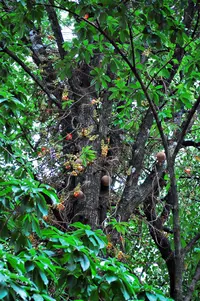
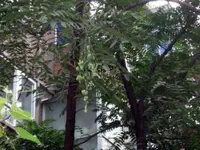
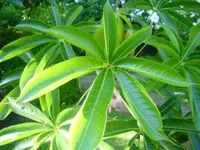
Hazel sterculia (Sterculia foetida) is a fast-growing tropical tree known for its straight trunk, spreading crown, and large, hand-shaped leaves. It is often grown as an ornamental shade tree in warm climates. The tree produces dangling clusters of reddish, boat-shaped pods that split to reveal shiny black seeds, giving it a distinctive look in the landscape. It is native to tropical regions of Asia but is now planted in many other warm areas. Growth is vigorous in full sun, with warmth and a well-drained soil. These traits make it relatively easy to manage outdoors in suitable climates, but how to care for hazel sterculia indoors or in cool regions is more challenging.

Main Plant Requirements

Care Difficulty

Moderate Care

Light Preference

Full Sun

Water Requirements

Moderate Water

Temperature Preference

Tropical / Frost Sensitive

Hardiness Zone

10–12

Soil Texture

Sandy, Loamy, Organic-rich

Soil pH

Slightly acidic (6.5–7.0), Neutral (7.0)

Soil Drainage

Well-drained

Fertilization

Minimal (feed rarely)

Get Personalized Care Plan

Scan your plant to receive care tips personalized for your specific plant

Available on iOS and Android

How to Care for the hazel sterculia

Sterculia foetida grows best with strong light in warm, open sites.

  • Provide 6–8 hours of direct sun daily, ideally with morning sun and light afternoon shade in very hot climates to reduce leaf scorch.
  • Young trees tolerate partial shade, but hazel sterculia develops denser crowns and better flowering in full sun once established.
  • In summer, monitor for pale, crispy leaf edges as a sign of excess sun; in cooler seasons, avoid heavy shade, which leads to sparse growth and weak branching.

This species prefers evenly moist but well-drained soil, especially during active growth.

  • Water when the top 3–5 cm of soil feels dry, then soak deeply so moisture reaches the main root zone without leaving standing water.
  • During spring and summer, expect more frequent watering; in fall and winter, reduce frequency as growth slows and natural rainfall may be sufficient for in-ground trees.
  • Watch for yellowing, soft leaves and persistent wet soil as signs of overwatering, and for dull, curling, or browning leaf tips as signs of underwatering or drought stress.

This tropical tree thrives in warm, frost-free climates with stable temperatures.

  • Optimal growth occurs around 70–90°F (21–32°C), supporting steady shoot and leaf development throughout the growing season.
  • The tree is highly frost-sensitive and can suffer damage below 40°F (4°C), with serious injury or death likely near 32°F (0°C) or during prolonged cold snaps.
  • Mature plants cope with short heat waves up to about 100°F (38°C) if soil moisture is adequate, but young trees benefit from mulch and occasional shade in extreme heat.

This species tolerates a wide humidity range but benefits from slightly humid air when young.

  • Aim for 40–60% humidity, which is typical of many homes in mild climates.
  • It tolerates short dry spells, but prolonged very dry air can cause leaf edge browning and tip dieback.
  • Increase humidity around hazel sterculia with grouped plants, a nearby open tray of water, or short periods outdoors in mild, moist weather.

This tree prefers moderately fertile, well-drained soil with a loose, deep structure.

  • Use a mix of roughly 50% loam or regular garden soil, 30% coarse sand, and 20% compost to balance drainage and nutrients for Sterculia foetida.
  • Ensure very fast drainage; water must not pool on the surface or in the planting hole after irrigation.
  • Target a slightly acidic to neutral pH around 6.0–7.2, avoiding strongly acidic or saline ground.
  • Improve aeration on heavier sites by incorporating coarse sand or fine gravel through the top 20–30 cm and never planting where water stands after rain.

This species can be grown in large containers for a limited period, especially while young.

  • Choose a deep, wide, heavy container that resists tipping as the trunk thickens and the canopy becomes wind-sensitive.
  • Select a pot material such as thick terracotta or concrete if outdoor placement in windy areas requires extra stability and slower moisture loss.
  • Allow generous lateral root space by using low, broad tubs rather than narrow, tall pots to reduce circling roots and stress in strong sun.

This fast-growing tropical tree benefits from light, balanced feeding in containers or poor soils but often needs no fertilizer in rich ground.

  • Use a balanced granular or slow-release fertilizer (for example 10-10-10) for container or nutrient-poor plantings.
  • Feed lightly at 1/2 label strength every 6–8 weeks during the warm growing season.
  • Reduce or stop feeding in cool winter conditions when growth slows or stops.
  • In the ground, focus on compost or organic mulch rather than frequent synthetic fertilizers for hazel sterculia.

Pruning Sterculia foetida is mainly done to maintain structure, clearance, and safety rather than to control size.

  • Carry out structural pruning in late winter or very early spring before active growth resumes.
  • Remove dead, diseased, storm-damaged, or crossing branches with clean, sharp loppers or a pruning saw.
  • Thin crowded interior branches to improve light penetration and airflow through the canopy.
  • Guide young trees with selective cuts, shaping a single strong leader and well-spaced main scaffold branches.

Transplanting this fast-growing tree requires planning, since root disturbance can slow recovery if done poorly.

  • Transplant in late winter or early spring, before vigorous new growth, to reduce stress and encourage rapid re-establishment.
  • Look for roots circling the container, becoming root-bound, or for slowed growth as signals that a young potted tree needs a larger container.
  • Shift up containers only 1–2 sizes, loosening circling roots gently and trimming damaged ones with sterile pruners.
  • After transplanting, water deeply, apply a 5–8 cm mulch layer around but not touching the trunk, and shade temporarily in hot, windy sites.

New Sterculia foetida plants are most commonly produced from seed rather than vegetative methods.

  • Collect ripe seeds from mature pods and sow them fresh in late spring or early summer for best germination.
  • Use a free-draining mix, such as 50% quality potting soil and 50% coarse sand or perlite, to reduce rot.
  • Scarify thick seed coats lightly with sandpaper and soak seeds 12–24 hours in lukewarm water before sowing 2–3 cm deep.
  • Keep the medium evenly moist, warm at 75–85°F, and provide bright light to support strong seedling development.

This tropical tree is frost-sensitive and needs protection or relocation in climates with cold winters.

  • Avoid planting outdoors where temperatures fall below about 30°F, as prolonged freezes can kill young trees.
  • Mulch the root zone with a 5–10 cm layer of organic material in marginal climates to buffer soil temperature.
  • For container plants, move pots indoors or into a heated greenhouse before the first frost and provide bright light.

Care Tips

Early structural training

Select a single strong leader stem while the tree is young and remove competing uprights in late winter so the crown develops an open, stable framework that can handle the species’ naturally heavy branches and seed pods.

Wind and load management

In windy areas or where pods set heavily, thin out excess fruit clusters and lightly reduce the length of overextended branches to lower the risk of breakage and storm damage.

Root space planning

Plant well away from foundations, paved areas, and underground utilities, as the vigorous root system can lift hardscape and interfere with pipes over time.

Pod and litter control

Schedule regular collection of fallen pods and leaves, especially near walkways or parking areas, to reduce slipping hazards and limit volunteer seedlings establishing in unwanted spots.

Urban air tolerance

When growing hazel sterculia in urban settings, prioritize sites with good air circulation and slightly elevated positions so exhaust fumes and stagnant air do not accumulate around the canopy.

Common Pests and Diseases

Pod borer larvae

This pest feeds inside the developing seed pods, causing premature pod yellowing, distortion, and seed loss. Symptoms include frass (insect droppings) and small entry holes on pods.

Solution

Prune and destroy infested pods as soon as damage is noticed to break the life cycle. For repeated problems, use light pheromone or light traps to reduce adult moth populations and, where permitted, apply a targeted biological insecticide containing Bacillus thuringiensis (Bt) to young pods according to label directions.

Leaf-chewing caterpillars

These insects feed on the foliage, leading to irregular holes, skeletonized leaves, and sometimes partial defoliation, especially on younger trees. Damage is usually most visible on tender, newly flushed leaves.

Solution

Handpick larger caterpillars where practical and remove heavily infested leaves. If feeding is extensive, use a biological spray with Bacillus thuringiensis (Bt) in the evening and encourage natural predators by limiting broad-spectrum insecticides nearby.

Scale insects

This pest attaches to twigs, leaf undersides, and young stems, sucking sap and causing leaf yellowing, reduced vigor, and sticky honeydew that can attract sooty mold. Heavy infestations can stunt young trees and reduce flowering.

Solution

Gently scrub small colonies from stems with a soft brush and mild soapy water, then rinse well. For ongoing problems, apply a horticultural oil spray to thoroughly coat stems and leaf undersides, repeating as needed according to the product label to target newly hatched crawlers.

Leaf spot

This disease causes small brown, tan, or dark lesions on leaves that may enlarge, merge, and lead to early leaf drop during humid or wet periods. Symptoms include more severe spotting on older, shaded foliage and under poor air circulation.

Solution

Collect and dispose of fallen, spotted leaves to reduce fungal spore levels, and avoid wetting the foliage during irrigation. Improve airflow around the canopy through light pruning, and in high-value specimens, consider a registered foliar fungicide applied preventively at the start of wet seasons if local regulations allow.

Sooty mold

This disease appears as black, powdery to crusty fungal growth on leaves and stems that grow where honeydew from sap-sucking insects such as scale or aphids accumulates. Symptoms include a dull, blackened leaf surface that can reduce photosynthesis but usually does not penetrate plant tissues.

Solution

Control underlying honeydew-producing insects first using horticultural oil or insecticidal soap. Then gently wash affected leaves with water and a small amount of mild soap, rinsing thoroughly to restore light penetration and reduce fungal buildup, which supports long-term Sterculia foetida care instructions.

Interesting Facts

Rancid butter smell

The crushed leaves and flowers release a strong odor often compared to rancid butter or unwashed socks, which is caused by volatile fatty acids in the plant tissues.

Unusual boatlike pods

Its woody fruit pods are large, inflated, and boat-shaped; when they split open, they expose bright red seeds that are attractive to birds but considered inedible for humans in many regions due to potential toxicity concerns.

Urban tolerance and risks

This species is sometimes planted as a roadside or park tree in tropical cities because it grows fast and tolerates heat and poor soils, but the heavy woody pods can pose a hazard if they fall near walkways or parked cars.

Botan icon

Did you know?

Mature trees can develop very tall, straight, branch-free trunks with a broad, spreading crown, which has led to their use as living masts and shade trees in some coastal and port areas in the Old World tropics.

FAQs about hazel sterculia

All parts contain toxic compounds, especially seeds and pods. Ingestion can cause vomiting, diarrhea, abdominal pain, and serious illness in pets and children. Treat it as poisonous and prevent chewing, grazing, or playing with fallen pods.

Grow Healthy Plants with Botan Care

Keep your plants happy and healthy with plant identification, disease detection, and easy care guidance.

Botan plant care app — identify plants on mobile

Explore More Plants