powdery sulfur bolete Care (Pulveroboletus ravenelii)

Also known as: Ravenel's bolete
powdery sulfur bolete

About powdery sulfur bolete

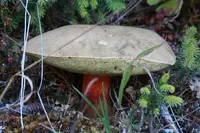
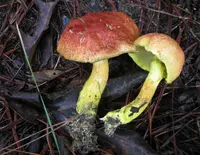
Powdery sulfur bolete, Pulveroboletus ravenelii, is a mycorrhizal mushroom that forms a partnership with tree roots rather than growing as a typical garden plant. It produces small, bright yellow caps with a fine powdery surface and thick stalks, often appearing in groups on soil rich in leaf litter.

This species is native to eastern North America and is usually found in forests, especially near oaks and pines. It can be challenging to cultivate at home because it depends on a living host tree and specific soil fungi. For those who want to learn how to care for powdery sulfur bolete, the main focus is maintaining healthy trees, undisturbed leaf litter, and consistently moist but not waterlogged soil.

Main Plant Requirements

Care Difficulty

Hard Care

Light Preference

Partial Shade

Water Requirements

Keep Soil Moist

Temperature Preference

Warm Climate

Hardiness Zone

Unknown

Soil Texture

Loamy, Organic-rich

Soil pH

Acidic (5.5–6.5)

Soil Drainage

Moist but well-drained

Fertilization

Minimal (feed rarely)

Get Personalized Care Plan

Scan your plant to receive care tips personalized for your specific plant

Available on iOS and Android

How to Care for the powdery sulfur bolete

This mycorrhizal fungus prefers dappled woodland light rather than direct, open sun.

  • Site powdery sulfur bolete under deciduous trees where it receives 2–4 hours of weak morning sun and bright, filtered light for the rest of the day.
  • Avoid strong midday and afternoon sun; prolonged exposure can overheat the soil surface, drying leaf litter and suppressing fruiting.
  • In summer, denser shade (under full canopy) is beneficial, while in spring and fall more broken light through thinner foliage is acceptable.

Pulveroboletus ravenelii depends on consistently moist, not saturated, woodland soil to fruit well.

  • Aim for soil that stays evenly moist in the top 5–8 cm; allow only the upper 1–2 cm of leaf litter to dry slightly between natural rain events or supplemental watering.
  • Use well-drained, humus-rich soil; standing water or sour, anaerobic smells indicate overwatering and can damage the fungal mycelium.
  • During hot, dry spells, increase watering frequency, watching for very dry, crumbly duff as a sign of drought stress, but avoid puddling around tree roots.

This woodland species fruits best in warm, mild conditions typical of late spring to early fall.

  • Optimal fruiting temperatures are about 68–77°F (20–25°C), with steady soil moisture and shade helping buffer daily air temperature swings.
  • The fungus can persist in soil outside the fruiting range, but visible mushrooms decline below about 55°F (13°C) and above roughly 86°F (30°C).
  • It is sensitive to hard frost; repeated drops below 32°F (0°C) halt fruiting, while extreme heat above 90°F (32°C), combined with dry soil, quickly shrivels caps.

This mycorrhizal fungus does not need controlled humidity for cultivation in outdoor conditions.

This ectomycorrhizal species depends on suitable host trees and naturally acidic, organic forest soil rather than a conventional potting mix.

  • Use loose, humus-rich, slightly sandy forest-like soil with abundant leaf litter and decayed wood fragments to mimic natural conditions.
  • Ensure rapid drainage and avoid waterlogged or compacted substrates, since prolonged saturation suppresses mycelium activity and encourages competing fungi.
  • Aim for acidic conditions around pH 4.5–5.5, avoiding limed or alkaline ground that interferes with nutrient exchange with host roots.
  • Inoculate near compatible tree species in undisturbed, mulched ground instead of trying to grow Pulveroboletus ravenelii in isolated, sterilized soil.

This species is not suitable for long-term container growing, because it relies on ectomycorrhizal association with living tree roots, which containers rarely support adequately.

This ectomycorrhizal fungus relies on its tree partner for nutrition, so powdery sulfur bolete usually needs no direct fertilizing.

There is no conventional pruning for Pulveroboletus ravenelii, since it is a wild ectomycorrhizal mushroom rather than a landscape plant.

Transplanting focuses on preserving the underground mycelium and its association with host tree roots, not moving individual fruiting bodies.

  • Shift soil only when relocating a young host tree, keeping as much original root-zone soil intact as possible.
  • Transplant during cool, moist conditions in spring or fall to reduce mycelium stress and desiccation risk.
  • Avoid breaking up or shaking off soil from roots; disturb the fungal network as little as possible.
  • Water gently after transplanting to settle soil around roots without waterlogging the site.

Propagation of Pulveroboletus ravenelii is complex and rarely controlled by home growers, as it depends on tree-fungus symbiosis.

This species overwinters as mycelium in soil and generally needs no special winter care in its natural range.

Care Tips

Use host roots

Establish this mycorrhizal fungus near compatible tree hosts such as oak or pine, placing inoculated substrate right at the root zone rather than in isolated beds to improve the chance of stable colonization.

Respect duff layer

When preparing a site, disturb leaf litter and top humus as little as possible, tucking spawn under intact leaf duff instead of fully turning the soil, since the fungus benefits from a stable, moist organic layer.

Moisture buffering

After introducing spawn, apply a thin layer of shredded hardwood leaves or fine bark over the area to buffer moisture and reduce rapid surface drying, which supports better mycelium establishment.

Gentle harvest method

During fruiting, cut mushrooms at the base with a clean knife and lightly replace surrounding leaf litter, avoiding deep pulling that can damage underlying mycelium and reduce future flushes.

Seasonal observation log

Keep a simple log of rainfall, temperatures, and fruiting times in the patch, which helps refine timing for any supplemental watering or site adjustments when caring for powdery sulfur bolete over several seasons.

Common Pests and Diseases

Mycetophilid fungus gnats

This pest consists of small, dark flies whose larvae feed on fungal tissue and surrounding substrate, sometimes tunneling through young fruiting bodies. Symptoms include pitted, misshapen caps and stems, with fine larvae visible in cut tissue or substrate.

Solution

Limit excess surface moisture, remove heavily infested fruiting bodies, and cover substrate with a breathable mesh to block egg‑laying adults. Yellow sticky traps placed near the colony help reduce adult numbers, and a biological control such as Bacillus thuringiensis israelensis (Bti) in moist substrate can target larvae without harming the fungus significantly when used according to label directions.

Mite infestations

These pests are tiny arthropods that may graze on fungal tissue or associated microorganisms, leading to scarring, discoloration, or collapse of developing fruiting bodies. Symptoms include roughened cap surfaces, small pale patches, and very small moving dots on close inspection.

Solution

Reduce clutter and decaying debris around the fruiting site to limit mite habitat, and remove severely damaged fruiting bodies. In controlled culture, maintain moderate humidity with strong but indirect airflow, and use fine mesh barriers or clean casing material; predatory mites can be introduced in specialized setups to keep pest mite populations low.

Bacterial blotch

This disease causes greasy, water‑soaked, or yellow‑brown lesions on caps and stems, often starting where free water sits on the mushroom surface. Symptoms include soft patches that spread in humid, stagnant conditions and may develop an unpleasant odor.

Solution

Avoid overhead watering or direct wetting of fruiting bodies, and ensure good airflow so surfaces dry quickly after humidity cycles. Remove and discard affected mushrooms promptly, clean nearby surfaces and tools with a mild disinfectant, and adjust humidity so it stays high but without persistent surface water droplets.

Green Trichoderma mold

This disease is caused by competitive Trichoderma fungi that colonize the same substrate, forming dense white mycelium that turns green as spores develop. Symptoms include stunted or aborted Pulveroboletus ravenelii fruiting bodies near green patches and a powdery spore layer on the substrate surface.

Solution

Physically remove and discard heavily contaminated substrate and fruiting bodies in sealed bags to avoid spreading spores, then clean containers and tools thoroughly. Improve hygiene of the culture process, pasteurize or replace substrate if cultivating, and increase airflow and light exposure at the surface, which can make conditions less favorable for dense mold growth and is central to practical Pulveroboletus ravenelii care.

Slugs and snails

These pests feed directly on soft fungal tissue, leaving irregular holes, shredded caps, and slime trails on or around fruiting bodies. Symptoms include overnight loss of young mushrooms and chewed edges along the cap and stem base.

Solution

Remove slugs and snails by hand during cool, damp periods, and reduce nearby hiding places such as dense leaf litter and boards touching the ground. Physical barriers like copper tape around containers, coarse grit around cultivated beds, or fine mesh guards around clusters can effectively limit access without chemical baits.

Interesting Facts

Yellow-staining pores

The pore surface of this bolete starts bright yellow and slowly turns darker or olive-brown with age or bruising, which helps distinguish it from many other yellow-capped boletes in mixed hardwood forests.

Powdery sulfur cap

Mature fruiting bodies often show a dry, finely powdery surface and sulfur-yellow to golden colors, which inspired the common name powdery sulfur bolete and make it visually distinctive on the forest floor.

Mycorrhizal forest partner

This species forms ectomycorrhizal associations with hardwood trees, especially oaks, meaning its underground fungal filaments wrap around tree roots and exchange mineral nutrients for sugars from the host tree.

Botan icon

Did you know?

The bright yellow cap and tissues of this species have traditionally been used in parts of the southeastern United States as a natural dye source for fibers, producing yellow to yellow-brown colors depending on the mordant used.

FAQs about powdery sulfur bolete

This mushroom is considered edible but is not widely sought after due to modest flavor and texture. Accurate identification is essential, as some yellow boletes can cause stomach upset. Consume only after expert confirmation and proper cooking.

Grow Healthy Plants with Botan Care

Keep your plants happy and healthy with plant identification, disease detection, and easy care guidance.

Botan plant care app — identify plants on mobile

Explore More Plants