Use Fresh Logs
For reliable fruiting, inoculate recently felled hardwood logs (ideally within 2–6 weeks of cutting) so competing fungi have less time to colonize the wood first.

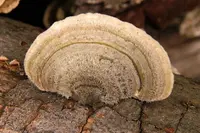
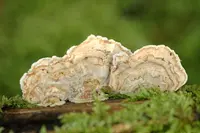
Hairy bracket (Trametes hirsuta) is a wood-decaying bracket fungus, not a leafy houseplant. It forms tough, shelf-like clusters on dead or weakened hardwood, often stacked in overlapping tiers. The upper surface is usually whitish to gray-brown with fine hairs, while the underside shows tightly packed, small pores instead of gills.
This species is common in temperate forests across Europe, North America, and parts of Asia, where it plays an important role in breaking down wood. It is generally left to grow outdoors on logs or stumps, since it needs consistently damp, woody substrates. For those interested in how to care for Hairy Bracket in cultivation, the main challenge is providing decaying wood and stable moisture rather than typical pot culture.

Care Difficulty
Easy Care

Light Preference
Shade

Water Requirements
Keep Soil Moist

Temperature Preference
Cold Hardy

Hardiness Zone
3–9

Soil Texture
Loamy, Organic-rich

Soil pH
Acidic (5.5–6.5), Slightly acidic (6.5–7.0)

Soil Drainage
Moist but well-drained

Fertilization
Minimal (feed rarely)
Scan your plant to receive care tips personalized for your specific plant
Available on iOS and Android
This wood-decay fungus thrives on fallen or standing dead wood in shaded to semi-shaded forest conditions.
This species depends on natural moisture in its host wood rather than direct watering.
This fungus is adapted to temperate climates with cool to mild conditions over much of the year.
Humidity is not a controlling factor for Trametes hirsuta, which naturally fruits on dead wood in open air.
This wood-decay fungus relies on dead hardwood rather than conventional soil, so conditions must mimic rotting logs.
This species is only moderately suitable for container cultivation when grown on wood sections rather than potting mix.
This wood-decay fungus normally gains nutrients from its host and surrounding debris, so Hairy Bracket needs no intentional fertilization in gardens or landscapes.
Trametes hirsuta generally needs no deliberate pruning, as it develops and decomposes naturally on dead wood.
This bracket fungus is usually left on dead logs or stumps and is not maintained as a container or garden specimen.
Intentional propagation is uncommon, since this fungus naturally spreads by spores and colonizes suitable dead wood on its own.
This species is cold hardy across most temperate climates and generally needs no special winter care outdoors.

Plant Health Check
Not sure what's wrong with your plant? Check your plant's health inside the app.
The fruiting bodies of this species have a finely hairy to woolly upper surface, which is unusual among bracket fungi and gives it its name hirsuta, meaning hairy. Under magnification, the hairs can be seen as dense, short setae that help distinguish it from similar Trametes species.
This fungus is a classic white-rot species that efficiently breaks down lignin, the rigid structural polymer in wood, leaving the remaining wood pale and fibrous. Its strong lignin-degrading enzymes make it a model organism for research into biotechnological applications such as biopulping and bioremediation.
Mature brackets often show clear, contrasting concentric zones of color in shades of gray, brown, and whitish. These zones correspond to changes in growth conditions over time, such as moisture and temperature variation, and help mycologists confirm identification.

Trametes hirsuta is frequently used as a reference strain in laboratory studies on laccases, a group of copper-containing enzymes that can oxidize a wide range of phenolic and industrial pollutants, making it an important species in research on environmentally friendly processing technologies.
This wood-decaying fungus grows best outdoors on dead or dying hardwood, where it can colonize logs, stumps, or fallen branches. Indoor cultivation is difficult without controlled laboratory conditions and sterilized woody substrate, so home indoor growing is rarely successful.
Keep your plants happy and healthy with plant identification, disease detection, and easy care guidance.