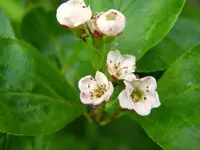
Renewal thinning
Every 2–3 years, remove a few of the oldest stems at ground level in late winter to stimulate fresh, floriferous shoots and keep the thicket from becoming woody and bare inside.

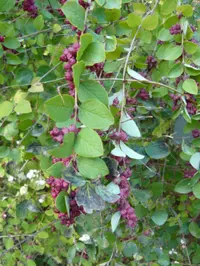
Coralberry, Symphoricarpos orbiculatus, is a compact deciduous shrub valued for its dense growth and colorful berries. It typically forms low, arching thickets with small leaves and many slender stems.
In late summer and fall, it produces clusters of showy pink to red berries that often persist into winter and attract wildlife. This species is native to central and eastern North America, where it grows in open woods, thickets, and along slopes.
Coralberry is generally easy to grow, tolerating poor soils, partial shade, and urban conditions, which makes it useful for low-maintenance landscapes. Understanding how to care for coralberry starts with providing well-drained soil and moderate, consistent moisture.

Care Difficulty
Easy Care

Light Preference
Full Sun

Water Requirements
Low Water

Temperature Preference
Cold Hardy

Hardiness Zone
2–7

Soil Texture
Sandy, Loamy, Clay

Soil pH
Slightly acidic (6.5–7.0), Slightly alkaline (7.0–7.5)

Soil Drainage
Well-drained

Fertilization
Minimal (feed rarely)
Scan your plant to receive care tips personalized for your specific plant
Available on iOS and Android
This deciduous shrub grows best in bright outdoor conditions with moderate direct sun exposure.
This shrub prefers evenly moist but not saturated soil, especially during establishment.
This hardy shrub tolerates a wide temperature range typical of many temperate climates.
This shrub tolerates a wide humidity range, so extra humidity control is rarely necessary outdoors.
This species adapts well to many soils but performs best in moderately fertile, well-drained ground.
This species can be grown in containers, especially dwarf or compact forms for patios or small spaces.
This hardy native shrub needs only light feeding in most garden soils, so fertilizer use should stay modest.
Pruning supports a dense habit and reliable berry production in Symphoricarpos orbiculatus.
This shrub is usually grown in the ground, so guidance focuses on transplanting rather than container repotting.
Symphoricarpos orbiculatus is commonly propagated to expand plantings or restore hedgerows.
This species is quite cold hardy and generally needs minimal winter care in typical garden settings.

Plant Health Check
Not sure what's wrong with your plant? Check your plant's health inside the app.
This species typically flowers in late spring to early summer, but its pink to purple berries often persist into winter and provide visual interest long after leaf fall.
The berries are eaten by many bird species and small mammals, and the dense twiggy structure offers nesting and cover habitat, especially in hedgerows and field margins.
Its suckering root system forms dense colonies that help stabilize soil on slopes and disturbed sites, so it is sometimes used in conservation plantings and roadside reclamation.

This shrub is native to central and eastern North America yet has become naturalized in parts of Europe, where it is sometimes considered invasive because its suckering growth and heavy berry production allow it to spread aggressively in semi-natural habitats.
This shrub spreads by underground suckers and can form dense thickets over time. In small gardens, use root barriers, remove unwanted shoots regularly, and avoid planting near natural areas where it could escape cultivation.
Keep your plants happy and healthy with plant identification, disease detection, and easy care guidance.