Syneilesis aconitifolia Care

Syneilesis aconitifolia

About Syneilesis aconitifolia

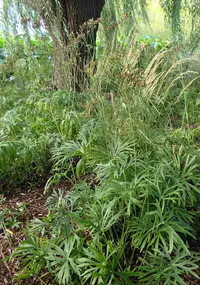
Syneilesis aconitifolia, often called shredded umbrella plant, is a herbaceous perennial grown mainly for its unusual foliage. It forms clumps of tall, slender stems topped with deeply cut, umbrella-like leaves that emerge fuzzy and closed, then slowly open and flatten as they mature.

This species is native to woodland areas in East Asia, where it grows in light shade and humus-rich, moist but well-drained soil. Once established, it is fairly hardy and long-lived but can be slow to settle in and resents very dry or hot, exposed conditions.

For gardeners wondering how to care for Syneilesis aconitifolia, consistent moisture, dappled shade, and organically enriched soil usually provide the best results.

Main Plant Requirements

Care Difficulty

Moderate Care

Light Preference

Partial Shade

Water Requirements

Moderate Water

Temperature Preference

Cold Hardy

Hardiness Zone

4–8

Soil Texture

Loamy, Silty, Organic-rich

Soil pH

Acidic (5.5–6.5), Slightly acidic (6.5–7.0)

Soil Drainage

Moist but well-drained

Fertilization

Minimal (feed rarely)

Get Personalized Care Plan

Scan your plant to receive care tips personalized for your specific plant

Available on iOS and Android

How to Care for the Syneilesis aconitifolia

This woodland perennial prefers bright conditions without harsh, direct midday sun.

  • Provide 3–5 hours of gentle morning sun with light or dappled shade from late morning through afternoon for Syneilesis aconitifolia.
  • Site the plant under open deciduous trees or on the east or north side of buildings, where foliage is protected from strong 12–4 pm sun that can scorch leaves.
  • In hotter summers, increase shade slightly; in cooler, cloudy climates, allow a bit more direct morning sun to maintain compact, sturdy growth.

This plant prefers consistently moist but not waterlogged soil with good structure and drainage.

  • Water when the top 3–5 cm of soil feels dry, aiming for evenly moist soil around the root zone during active growth in spring and early summer.
  • Use humus-rich, well-drained soil so excess water can drain; prolonged soggy conditions cause yellowing leaves, limp stems, and root rot.
  • Reduce watering in late autumn and winter once foliage dies back, but avoid complete soil dryness, which shows as crisp leaf edges and slow spring emergence in established clumps.

This hardy perennial tolerates cold winters and moderate summer warmth when soil moisture is stable.

  • Optimal growth occurs around 60–75°F (16–24°C) in spring and early summer, when shoots elongate and leaves expand fully.
  • Dormant crowns typically survive down to about -20°F (-29°C) with mulch or snow cover, though new shoots can be damaged by late frosts near 28–30°F (-2– -1°C).
  • In hotter regions, sustained highs above 86°F (30°C) can stress plants; provide extra shade and moisture to prevent leaf scorch and premature dormancy.

This woodland perennial prefers moderate humidity but usually adapts to typical household air.

  • Aim for 40–60% relative humidity to keep foliage expanding evenly and leaf edges smooth.
  • Tolerates brief dips into drier air, but persistent levels below 30% may cause browning tips and crisped lobes.
  • Increase humidity with a nearby pebble tray or grouped plants rather than misting, which adds little lasting moisture.

This species grows best in loose, humus-rich soil that drains freely yet holds consistent moisture.

  • Use a loamy mix made from roughly 50% high-organic compost, 30–40% garden loam, and 10–20% mineral grit such as perlite or coarse sand.
  • Aim for slightly acidic to neutral pH around 6.0–7.0, which supports nutrient uptake and healthy root growth.
  • In heavier soils, improve aeration and drainage by incorporating shredded bark or leaf mold to create a crumbly, well-structured profile.
  • Avoid compacted clay, standing water, or mixes high in unamended peat that stay waterlogged and suffocate roots of Syneilesis aconitifolia.

This species can be grown in containers if the pot is set up to mimic a cool, moist, woodland root zone.

  • Choose a deep, wide container to allow its slowly spreading rhizomes room to expand without circling tightly.
  • Select a heavier material such as ceramic or double-walled plastic to stabilize the tall, umbrella-like stems against wind.
  • Layer coarse gravel or chunky bark above the drainage holes to prevent mix from sealing them and slowing water escape.

This woodland perennial benefits from light, seasonal feeding but tolerates relatively lean soil.

  • Apply a balanced, slow-release fertilizer (around 10-10-10) at half strength once in early spring as shoots of Syneilesis aconitifolia emerge.
  • Supplement with a thin layer of compost around the clump to improve soil structure and gentle nutrient supply.
  • Avoid high-nitrogen products that cause weak, floppy growth; aim for steady, moderate vigor.
  • Stop feeding by late summer and do not fertilize during fall and winter dormancy.

This plant needs minimal pruning, mainly to keep the clump tidy and healthy.

  • In late fall or very early spring, cut back dead foliage at ground level with clean, sharp pruners.
  • Remove any damaged or diseased leaves promptly during the growing season to reduce pest and disease pressure on Syneilesis aconitifolia.
  • Thin out congested stems only if clumps become crowded, which slightly improves air flow and leaf display.
  • Disinfect tools before and after use, especially if disease is present.

This species is usually grown in the ground and prefers infrequent disturbance once established.

  • Plan any transplanting for early spring or early fall when temperatures are mild and soil is moist but not waterlogged.
  • Move plants only when growth declines, clumps become overcrowded, or roots circle in a container, typically every 4–6 years.
  • Dig widely around the clump of Syneilesis aconitifolia to keep as much root mass and attached soil as possible.
  • Replant at the same depth, water thoroughly, then shade and keep evenly moist for several weeks to reduce transplant stress.

Division is the most practical method for increasing this plant in gardens.

  • Divide mature clumps in early spring as new buds appear or in early fall after flowering slows.
  • Lift the clump carefully and split it into sections with at least 2–3 buds and healthy roots each.
  • Replant divisions of Syneilesis aconitifolia promptly into moist, well-drained soil and water thoroughly.
  • Seed propagation is possible but slower; sow fresh seed in cool conditions and keep evenly moist until germination.

This hardy perennial tolerates typical winters in many temperate regions with minimal intervention.

  • Established plants withstand freezing temperatures once dormant, as the foliage naturally dies back.
  • After frost blackens leaves, cut them to ground level and remove debris to limit overwintering pests around Syneilesis aconitifolia.
  • Apply a 5–8 cm layer of mulch over the root zone in colder climates, keeping mulch slightly away from the crown.
  • For container-grown plants in very cold areas, move pots to a sheltered, unheated but frost-sheltered space.

Care Tips

Mark emergence zone

Mark the clump’s position with a discreet tag or stones in autumn so you do not accidentally damage the slow-emerging crowns when cultivating or replanting in late winter and early spring.

Provide spring slug control

Set out beer traps or iron phosphate slug bait just as new shoots pierce the soil, since young foliage is very tender and a single heavy slug attack can disfigure the entire season’s display.

Use light leaf mulch

Apply a thin, airy layer of shredded leaf mulch around but not over the crowns each autumn to keep the root zone cool, conserve moisture, and reduce soil splash without smothering emerging shoots.

Divide infrequently and deeply

When clumps become crowded, lift and divide only in early spring as buds swell, using a sharp spade to take generous, deep sections so each division keeps several buds and a substantial root system.

Shelter from overhead drip

Site plants away from un-guttered roof edges or heavy overhead drip points, as repeated pounding by concentrated runoff can flatten the foliage and compact the soil around the crowns, making caring for Syneilesis aconitifolia more difficult over time.

Common Pests and Diseases

Slugs and snails

This pest is strongly attracted to the tender unfolding leaves and can skeletonize the foliage, especially in cool, moist spring weather. Symptoms include irregular holes, shredded edges, and slime trails on or around the plant.

Solution

Hand-pick slugs and snails in the evening or early morning, use beer traps or iron phosphate bait around but not touching the clump, and keep mulch thin near the crown to reduce hiding spots. Copper tape barriers around pots or raised beds and removing nearby debris also help protect new shoots when growing Syneilesis aconitifolia.

Leaf spot (fungal)

This disease appears as small brown or purplish spots that may enlarge and merge, giving the leaves a blotchy, scorched look in prolonged wet conditions. Symptoms include most visible damage on older leaves and in dense plantings with poor air movement.

Solution

Remove and discard affected leaves, avoid overhead watering, and water at soil level in the morning so foliage dries quickly. Thin or divide crowded clumps to improve airflow, and in severe or recurring cases apply a labeled ornamental fungicide early in the season according to the product directions.

Powdery mildew

This disease shows up as a white or gray powdery coating on the leaf surface, often during warm days and cool nights. Symptoms include dull, distorted foliage and gradual loss of vigor if the problem persists.

Solution

Increase air circulation by spacing plants properly and avoiding heavy shade, and water the soil rather than the foliage. Remove the worst-affected leaves and, if needed, apply a sulfur or potassium bicarbonate fungicide labeled for ornamentals at the first sign of infection.

Aphids

These insects cluster on young stems and the undersides of leaves, sucking sap and causing curling or distortion of new growth. This pest also excretes sticky honeydew that can attract sooty mold on nearby surfaces.

Solution

Spray the plant with a strong stream of water to dislodge colonies, and repeat every few days as needed. For persistent infestations, use insecticidal soap or a light horticultural oil, ensuring thorough coverage of undersides of leaves while treating in the cool part of the day.

Vine weevils

These insects cause notched, semicircular feeding damage along leaf edges, while the larvae in soil chew on fine roots and can weaken the clump over time. Symptoms include slow growth, drooping foliage despite adequate moisture, and visible adult feeding on leaves at night.

Solution

Inspect plants at night and hand-remove adult beetles from leaves, and avoid keeping the soil constantly wet. In containers or high-value clumps, apply beneficial nematodes targeting vine weevil larvae to the soil in late summer or early fall according to label instructions.

Interesting Facts

Shredded Umbrella Foliage

The emerging leaves are tightly furled and covered in silvery hairs, then expand into deeply dissected, umbrella-like blades that give the plant its common name, shredded umbrella plant.

Early-season Woodland Emergence

It is a woodland perennial that sends up its shoots very early in spring, often appearing through leaf litter before many neighboring understory plants have awakened.

Clustered Button Flowers

Despite its dramatic foliage, the plant produces small, pale flower heads in loose clusters on separate stems, which attract small pollinating insects but are relatively inconspicuous to the human eye.

Botan icon

Did you know?

This species is native to cool, mountainous woodlands of East Asia, especially Japan, where its unusual, shredded foliage has made it a sought-after collector’s plant in specialized shade gardens and rock gardens, leading to its gradual introduction into botanical collections in Europe and North America.

FAQs about Syneilesis aconitifolia

This woodland perennial performs best outdoors in lightly shaded garden beds with cool, moist, well-drained soil. Indoors it struggles with low humidity and stagnant air, so Syneilesis aconitifolia indoor care is usually short-term and challenging.

Grow Healthy Plants with Botan Care

Keep your plants happy and healthy with plant identification, disease detection, and easy care guidance.

Botan plant care app — identify plants on mobile

Explore More Plants