hookedspur violet Care (Viola adunca)

Also known as: Early Blue (Hook) Violet, Early Blue Violet, Sand Violet
hookedspur violet

About hookedspur violet

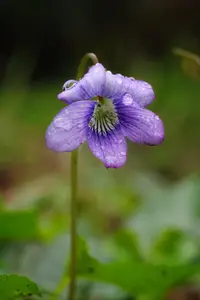
Hookedspur violet (Viola adunca) is a small perennial wildflower known for its heart-shaped leaves and delicate purple-blue blooms with a short hooked spur. It forms low clumps or loose mats, often creating soft carpets in open woodland edges, meadows, and grasslands.

This species is native to North America and is commonly found in cooler regions with moist, well-drained soils. It is generally easy to grow in gardens that mimic its natural habitat, especially where soil stays evenly moist and light ranges from partial shade to gentle sun. Gardeners who want to learn how to care for hookedspur violet usually find it a low-maintenance, quietly attractive groundcover for naturalistic plantings.

Main Plant Requirements

Care Difficulty

Easy Care

Light Preference

Partial Shade

Water Requirements

Moderate Water

Temperature Preference

Cold Hardy

Hardiness Zone

3–8

Soil Texture

Sandy, Loamy, Organic-rich

Soil pH

Acidic (5.5–6.5), Slightly acidic (6.5–7.0)

Soil Drainage

Moist but well-drained

Fertilization

Minimal (feed rarely)

Get Personalized Care Plan

Scan your plant to receive care tips personalized for your specific plant

Available on iOS and Android

How to Care for the hookedspur violet

Viola adunca prefers cool conditions with soft light rather than intense, direct sun.

  • Provide 3–5 hours of morning sun with light shade or dappled light the rest of the day, especially in warmer climates.
  • Tolerates partial shade and can grow under open shrubs or light tree canopies, but flowering is reduced in deep shade.
  • Protect hookedspur violet from strong midday and afternoon sun, which can scorch leaves; in summer, shift to more filtered light if foliage looks pale or wilted.

This violet prefers consistently moist, cool soil that never stays waterlogged.

  • Water when the top 2–3 cm of soil feel just barely dry, aiming to keep the root zone evenly damp during active growth.
  • Use loose, well-drained soil rich in organic matter so excess water runs through quickly and roots receive enough oxygen.
  • In hot, dry weather, monitor closely for wilting or crispy leaf edges, and reduce watering in cool, wet seasons to avoid yellow, mushy roots from overwatering in Viola adunca.

This species is adapted to cool, temperate climates and tolerates significant cold once established.

  • Best active growth occurs around 55–70°F (13–21°C), with steady flowering and compact foliage in spring and early summer.
  • Plants tolerate down to about 0°F (-18°C) in the ground with mulch, dying back above ground and regrowing from the crown in spring.
  • In summer, prolonged heat above 85°F (29°C) can stress plants; provide more shade and consistent moisture to prevent scorch and dormancy.

This species handles a wide humidity range and usually does not need special humidity control outdoors or in cool indoor spaces.

  • Target 40–60% humidity, similar to typical home or mild outdoor conditions, for reliable growth and flowering.
  • Plants tolerate brief drier indoor air but may show humidity stress as curled leaf edges, slower growth, and buds that dry before opening.
  • To raise humidity gently for hookedspur violet, group pots together or place them near a shallow water tray without letting pots sit in water.

This violet prefers loose, moist, well‑drained soil that mimics a woodland edge.

  • Use a loamy, organic‑rich mix made from roughly 50% compost, 30% garden loam, and 20% drainage material such as perlite or coarse sand.
  • Keep soil consistently moist but never waterlogged; add extra perlite or sand if water pools on the surface or the pot feels heavy for long periods.
  • Aim for slightly acidic to neutral pH (6.0–7.0) for Viola adunca, avoiding strongly alkaline soils that can limit nutrient uptake and weaken growth.
  • Improve aeration by incorporating fine bark or leaf mold, and avoid compacted clay or peat‑only mixes that collapse and smother roots.

This species is suitable for container growing, especially in cool, temperate outdoor settings.

  • Choose a wide, shallow pot to accommodate its spreading root system and allow space for natural clump expansion.
  • Use a relatively heavy container or add stones at the base to prevent tipping when foliage and flowers lean outward.
  • Raise the pot slightly on feet or bricks so drainage holes stay clear and overflow water can escape quickly after rain or watering.

Viola adunca grows naturally in lean soils and needs only light feeding in gardens or containers.

  • Apply a balanced, dilute liquid fertilizer (such as 10-10-10 at 1/4–1/2 strength) every 4–6 weeks in spring and early summer.
  • Use a thin top-dressing of compost instead of heavy synthetic feeding for caring for hookedspur violet in the ground.
  • Avoid fertilizing during winter dormancy; stop feeding once flowering and active growth slow.
  • Rinse pots occasionally with plain water to prevent salt buildup from repeated liquid fertilizers.

Pruning needs for Viola adunca are minimal and focus on tidiness and plant health.

  • In late spring or after main bloom, shear back spent flower stems and messy foliage with clean scissors or hand shears.
  • Remove dead, diseased, or winter-damaged leaves and stems whenever noticed to limit disease spread.
  • Thin crowded clumps by cutting out older, weaker sections to maintain airflow and a compact mound.
  • Disinfect tools before and after use to reduce the risk of transferring fungal or bacterial problems.

This violet is more often transplanted in garden beds than repotted, since Viola adunca is usually grown as a small groundcover.

  • Transplant in early spring or early fall when temperatures are mild and soil is evenly moist.
  • Look for tight clumps, slow growth, or roots circling a container as signs a division or larger pot is needed.
  • Lift plants with a trowel, keeping as much root ball and surrounding soil intact as possible to limit shock.
  • Water gently after replanting, shade for a few days if sun is strong, and keep soil moist but not soggy until established.

Viola adunca is commonly propagated by seed or by division of mature clumps.

  • Divide established plants in early spring or early fall, separating small clumps with a sharp knife or spade.
  • Replant divisions promptly at the same depth, firm the soil, and keep evenly moist until new growth appears.
  • For seed, sow fresh or stratified seed on the surface of moist, well-drained mix and barely cover with fine grit.
  • Maintain cool conditions and gentle moisture; germination may be uneven, so label trays and be patient.

This violet is cold hardy in much of its range and usually needs little specific winter care in the ground.

  • In colder regions, add a light 3–5 cm mulch layer after the ground cools to insulate the root zone.
  • Avoid heavy, wet mulch directly against crowns to reduce rot risk during freeze–thaw cycles.
  • Move containers into a sheltered, unheated but frost-moderated spot, such as against a wall or in a cold frame.

Care Tips

Spring division timing

Divide mature clumps in early spring just as new growth emerges, replanting divisions at the same depth to keep plants vigorous and to quickly establish new patches.

Wildlife-friendly spacing

Plant in small drifts with 15–20 cm spacing to create dense ground coverage that suppresses weeds while supporting pollinators and butterfly larvae that rely on this species.

Light mulch strategy

Apply a thin, loose mulch layer such as shredded leaves around, but not on top of, the crowns to conserve moisture and moderate soil temperature without risking rot.

Seedling protection method

Use low hoops with insect netting or a fine mesh over newly sown or emerging seedlings to reduce damage from slugs, snails, and browsing wildlife without chemicals.

Naturalizing edge placement

Establish plants along the edges of paths, rock features, or open woodland borders where soil stays cool and lightly shaded, which simplifies caring for hookedspur violet over time.

Common Pests and Diseases

Violet sawfly larvae

This pest feeds on foliage, chewing irregular holes and sometimes skeletonizing the leaves of wild violets. Symptoms include notched or missing leaf tissue, often starting at the leaf edges.

Solution

Hand-pick and destroy visible larvae, especially on smaller plantings, and rinse foliage with a strong stream of water to dislodge any remaining caterpillars. For heavier infestations, apply a targeted biological control such as Bacillus thuringiensis (Bt) labeled for caterpillars, and keep surrounding vegetation diverse to support natural predators.

Leaf spots

This disease complex, often caused by Colletotrichum or leaf-spotting fungi, leads to small brown or purple spots that may merge into larger blotches on leaves. Symptoms include premature yellowing and early leaf drop in humid or crowded plantings.

Solution

Remove and discard affected leaves to reduce spores, and avoid overhead watering so foliage dries quickly. Improve spacing and airflow around clumps, and if symptoms are severe and recurring, apply a labeled ornamental fungicide early in the season according to instructions for Viola adunca care instructions in outdoor beds or naturalized plantings.

Powdery mildew

This disease produces a white to gray, powdery coating on upper leaf surfaces, especially in shaded, humid locations with poor air movement. Symptoms include distorted new growth and reduced vigor if the infection is heavy and persistent.

Solution

Increase sunlight exposure within the plant’s tolerance, thin surrounding vegetation to improve airflow, and water at soil level rather than on the foliage. Remove heavily infected leaves and, if needed, use a sulfur or potassium bicarbonate-based fungicide labeled for ornamentals at the first sign of the white coating.

Aphids

These insects cluster on tender stems and undersides of leaves, sucking sap and excreting sticky honeydew that can attract sooty mold. Symptoms include curled or distorted new growth and the presence of small soft-bodied insects in green, black, or reddish colors.

Solution

Wash plants thoroughly with a firm spray of water to remove aphids, repeating every few days as needed. Encourage beneficial insects such as lady beetles, and if populations stay high, use an insecticidal soap or horticultural oil applied carefully to cover the undersides of leaves.

Slugs and snails

This pest group feeds at night, leaving irregular holes and ragged edges on leaves and sometimes consuming seedlings entirely. Symptoms include silvery slime trails on soil or foliage and damage concentrated near ground level.

Solution

Hand-pick slugs and snails in the evening or early morning and use traps or barriers such as copper tape or rough mulch around vulnerable clumps. Reduce hiding places like dense debris, and in persistent cases, place iron phosphate-based slug baits according to label directions, keeping them away from children and pets.

Interesting Facts

Early spring nectar source

This violet often flowers very early in spring at low elevations, providing nectar and pollen for emerging native bees when few other wildflowers are in bloom.

Specialist butterfly host

Its leaves serve as a larval host plant for several fritillary butterflies, including the threatened Oregon silverspot butterfly, which relies on it for caterpillar development.

Wide habitat tolerance

The species naturally occurs from coastal dunes and prairies to open conifer forests and mountain meadows across western North America, showing strong adaptation to varied light and soil conditions.

Botan icon

Did you know?

The hooked spur on the back of each flower, which gives the plant its common name hookedspur violet, is an elongated nectary that favors pollination by long-tongued insects such as certain bees and butterflies, shaping which pollinators can effectively access its nectar.

FAQs about hookedspur violet

Lack of flowers often comes from too much shade, dry soil during spring, or nutrient-poor ground. Older clumps can also become crowded. Improve moisture, add light organic mulch, and divide dense patches to restore flowering.

Grow Healthy Plants with Botan Care

Keep your plants happy and healthy with plant identification, disease detection, and easy care guidance.

Botan plant care app — identify plants on mobile

Explore More Plants