red pricklypoppy Care (Argemone sanguinea)

red pricklypoppy

About red pricklypoppy

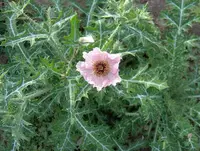
Red pricklypoppy (Argemone sanguinea) is an annual wildflower known for its vivid crimson, papery flowers and sharp, spiny foliage. It forms an upright, branching habit with showy blooms that contrast against bluish-green, prickled leaves.

This species is native to dry, open areas of the southern United States and northern Mexico, where it thrives in heat, full sun, and poor, sandy or rocky soils. Once established, it tolerates drought and low fertility, which makes it relatively low-maintenance in suitable climates.

Because it self-seeds readily and prefers lean, well-drained soil, gardeners usually find it easier to grow outdoors than in containers. Understanding these natural conditions is the key to how to care for red pricklypoppy.

Main Plant Requirements

Care Difficulty

Easy Care

Light Preference

Full Sun

Water Requirements

Low Water

Temperature Preference

Warm Climate

Hardiness Zone

8–11

Soil Texture

Sandy, Loamy, Rocky

Soil pH

Slightly acidic (6.5–7.0), Slightly alkaline (7.0–7.5)

Soil Drainage

Well-drained

Fertilization

Minimal (feed rarely)

Get Personalized Care Plan

Scan your plant to receive care tips personalized for your specific plant

Available on iOS and Android

How to Care for the red pricklypoppy

Argemone sanguinea performs best in strong, direct sun typical of open, dry habitats.

  • Provide 6–8 hours of full sun daily; morning and early afternoon sun support compact growth and abundant flowering in red pricklypoppy.
  • Plant in an open, unshaded site; it tolerates very light afternoon shade but stems may stretch and flowering can decrease with less than 5 hours of sun.
  • In hot summers, plants handle intense sun well if soil drains freely; insufficient light leads to lanky growth, pale foliage, and fewer blooms.

This drought-tolerant annual prefers dry, fast-draining conditions and is sensitive to excess moisture.

  • Allow the soil to dry thoroughly between waterings; in the ground, water only after prolonged dry spells when the top 5–8 cm are dusty and the plant shows slight leaf droop.
  • Use very well-drained, sandy or gritty soil so water moves through quickly; standing water or slow drainage greatly increases root rot risk for Argemone sanguinea.
  • Reduce or stop supplemental watering in cool or rainy seasons; signs of overwatering include yellowing lower leaves and soft stems, while persistent wilting with crisp leaves indicates underwatering.

This species prefers warm, dry climates and does not tolerate prolonged cold or hard frost.

  • Aim for active growth in temperatures around 70–90°F (21–32°C); flowering and seed set are strongest in consistently warm weather.
  • Protect plants when temperatures drop near 32°F (0°C); light frost may burn leaves, while hard freezes usually kill the plant outright.
  • In hot regions, Argemone sanguinea tolerates brief spikes up to about 100°F (38°C) if soil is well drained; problems arise more from wet, cool conditions than from dry heat.

This species is adapted to dry climates, so humidity is rarely a concern for red pricklypoppy.

Argemone sanguinea prefers lean, very well-drained, often sandy or gravelly soil that mimics its native dry habitats.

  • Use a sandy or gritty mix, such as 60% coarse sand or grit with 40% low-organic garden soil.
  • Ensure rapid drainage; raised beds or mounded planting areas help excess water run off.
  • Aim for slightly acidic to slightly alkaline conditions, roughly pH 6.0–8.0, as the plant is tolerant.
  • Avoid heavy clay, dense compost, or water-retentive mixes that stay wet for more than a few hours after rain or watering.

This species can be grown in containers if the potting setup is adapted to its deep taproot and drought tolerance.

  • Choose a tall, deep pot to accommodate the taproot and reduce the risk of the plant becoming root-bound quickly.
  • Use a very fast-draining, gritty mix so water runs through within seconds, preventing root rot in compacted media.
  • Select a heavy or wide-based container to keep the plant stable against wind, since stems can become top-heavy when flowering.

This drought-tolerant native usually needs little feeding, but light fertilization can support flowering in lean soils when caring for red pricklypoppy.

  • Use a balanced, low-dose granular or liquid fertilizer (around 5-5-5 or 10-10-10), diluted to 1/2 strength for container plants.
  • Feed once at the start of active growth in spring, and again mid-summer only if growth is weak or leaves pale.
  • Avoid rich compost or heavy organic amendments that increase foliage at the expense of flowers.
  • Stop all fertilization in late summer to allow growth to harden before cooler weather.

Pruning Argemone sanguinea is minimal and focuses on safety, tidiness, and encouraging more blooms.

  • In late spring to mid-summer, deadhead spent flowers by cutting just below the seed capsule to extend blooming.
  • Remove dead, diseased, or storm-damaged stems at the base with clean, sharp hand pruners.
  • Thin out crowded or crossing stems to improve airflow and reduce foliar disease risk.
  • Wear gloves and long sleeves when cutting, as the plant has spines and a latex sap that can irritate skin.

This species dislikes root disturbance, so transplant Argemone sanguinea only when clearly necessary.

  • Look for roots circling the container drainage holes, rapid wilting, or very slow growth as signs it has outgrown its pot.
  • Transplant in early spring while temperatures are mild, using a deep container and very free-draining, sandy mix.
  • Plant into the new site or pot at the same depth, handling the root ball gently to avoid breaking the taproot.
  • Water once to settle soil, then keep slightly dry to limit transplant shock and root rot risk.

New Argemone sanguinea plants are most reliably raised from seed rather than vegetative methods.

  • Collect seeds from mature, dry capsules and sow in late winter to early spring.
  • Use shallow trays with gritty, well-draining mix; press seeds into the surface and barely cover.
  • Provide warmth around 65–75°F and bright light; keep the medium just lightly moist until germination.
  • Transplant seedlings to individual pots while small, disturbing roots as little as possible to preserve the taproot.

This annual or short-lived perennial from warm regions generally needs little structured winter care.

  • In mild climates, allow plants to complete their life cycle and self-seed; seedlings often appear the following spring.
  • Where frost is severe, treat plants as annuals and collect seed before hard freezes.
  • Container plants in cooler areas can be moved to a cold, bright, frost-free space to extend flowering slightly.

Care Tips

Use puncture-resistant gloves

Always handle this plant with thick, puncture-resistant gloves and long sleeves, as its spines can easily penetrate thin fabric and skin during planting, thinning, or deadheading work.

Plan safe placement

Site plants away from narrow paths, play areas, and pet routes so that the spiny stems and seed pods do not cause accidental injury when brushing past mature clumps.

Control self-seeding

If you want to limit spread, remove most seed capsules as they turn brown but before they fully dry and split, leaving only a few for seed saving or naturalized reseeding.

Collect seed efficiently

For growing red pricklypoppy in future seasons, bag a few nearly ripe seed pods with breathable paper bags, then cut and dry them indoors so seed does not scatter on the ground before harvest.

Monitor for invasiveness

In mild, dry climates, check surrounding beds and gravel areas a few times each year for volunteer seedlings and rogue plants, and hoe or pull them before they develop deep taproots and sharp spines.

Common Pests and Diseases

Leaf-mining fly

This pest creates winding, pale tunnels inside the leaves, which can reduce photosynthesis and weaken the plant during dry or nutrient-poor conditions.

Solution

Remove and destroy mined leaves to break the life cycle, then monitor new growth closely; if damage continues, use a spinosad-based spray targeted to the foliage in the early morning, and reduce excess nitrogen fertilization that encourages tender, susceptible growth.

Seedling damping-off

This disease affects young seedlings grown in trays or nursery beds, causing stems to constrict at soil level and collapse, especially under cool, wet conditions.

Solution

Discard affected seedlings and use clean, well-drained, sterile seed-starting mix, avoid overwatering, provide good air circulation, and if damping-off has been a recurring problem, drench the seedling medium with a biological fungicide containing Trichoderma or Bacillus species before sowing to improve Argemone sanguinea care outcomes.

Leaf spot

This disease causes small brown or tan spots on leaves that may merge into larger blotches, often following periods of warm, humid weather or overhead irrigation.

Solution

Remove and dispose of heavily spotted leaves, water at the base rather than overhead, space plants so air can move freely, and in persistent cases apply a copper-based fungicide to new foliage, following label directions and avoiding application during very hot, sunny periods.

Interesting Facts

Blood-red latex

This species produces a deep red to crimson latex in its stems and capsules, a distinctive feature that contrasts with the yellow or white sap more typical of other Argemone species.

Bee-pollinated desert annual

Argemone sanguinea is a short-lived annual native to arid and semi-arid regions of Texas and northern Mexico, where its large red flowers with abundant pollen are visited mainly by native bees.

Spiny seed capsules

The plant forms elongated, heavily spined seed capsules that protect the developing seeds from many herbivores and gradually split open when dry to release numerous small seeds.

Botan icon

Did you know?

Historically, the striking red flowers of Argemone sanguinea inspired the common name Texas pricklypoppy, and it has been used as a symbolic wildflower in regional artwork and native-plant displays highlighting the flora of the southern Great Plains.

FAQs about red pricklypoppy

This species self-seeds readily, especially in disturbed, sunny sites with bare soil. In suitable climates it can form dense patches. Deadhead spent flowers before seed pods mature if unwanted spreading is a concern.

Grow Healthy Plants with Botan Care

Keep your plants happy and healthy with plant identification, disease detection, and easy care guidance.

Botan plant care app — identify plants on mobile

Explore More Plants