Mark Emergence Zone
Mark the clump’s location with a label or small ring of mulch in fall so you avoid disturbing or damaging the slow-emerging shoots when cleaning or replanting nearby in early spring.

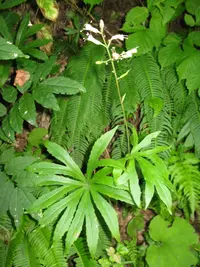
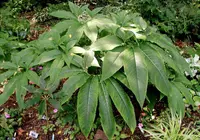
Syneilesis palmata, commonly called palmate umbrella plant or shredded umbrella plant, is a hardy herbaceous perennial grown mainly for its unusual foliage. In spring, tightly furled shoots emerge and slowly open into narrow, deeply divided leaves that form a lacy, umbrella-like canopy.
This species is native to woodland and mountain regions of East Asia, where it grows in dappled light and humus-rich soils. It spreads gradually by rhizomes, forming small clumps rather than aggressive colonies.
Once established, it is relatively low-maintenance but can be slow to settle in and resents very dry or very hot, exposed conditions. Understanding how to care for palmate umbrella plant starts with providing consistent moisture, good drainage, and protection from harsh midday sun.

Care Difficulty
Moderate Care

Light Preference
Partial Shade

Water Requirements
Moderate Water

Temperature Preference
Cold Hardy

Hardiness Zone
4–8

Soil Texture
Loamy, Silty, Organic-rich

Soil pH
Acidic (5.5–6.5), Slightly acidic (6.5–7.0)

Soil Drainage
Moist but well-drained

Fertilization
Minimal (feed rarely)
Scan your plant to receive care tips personalized for your specific plant
Available on iOS and Android
This woodland perennial prefers soft, filtered light that mimics a bright forest edge.
This plant prefers consistently moist, cool soil without becoming waterlogged.
This hardy perennial thrives in cool to mild conditions with a distinct winter dormancy.
This woodland perennial prefers moderate, steady humidity rather than very dry air.
This species thrives in loose, moist, humus-rich soil that mimics a deciduous woodland floor.
This plant can grow successfully in containers if moisture and root space are managed carefully.
Syneilesis palmata is a woodland perennial that benefits from modest feeding in nutrient-poor soils.
Pruning needs for Syneilesis palmata are minimal and mostly focused on cleanliness and appearance.
This woodland perennial is usually grown in the ground, so care focuses on occasional division and transplanting rather than frequent repotting.
Syneilesis palmata is most commonly propagated by division, with seed raising reserved for patient growers.
This hardy woodland perennial tolerates typical temperate winters well and usually needs only light care.

Plant Health Check
Not sure what's wrong with your plant? Check your plant's health inside the app.
This species emerges very early in spring, sending up tightly furled, hairy shoots that gradually unfurl into umbrella-like leaves while many woodland plants are still dormant.
The mature leaves are strongly palmate and divided into many narrow segments, giving the plant a finely cut, almost shredded appearance that is unusually delicate for a hardy woodland perennial.
In summer it produces tall, airy stems topped with small, pale flower clusters that rise above the foliage, providing a light, plume-like effect without obscuring the leaves.

The young foliage is so densely covered with fine hairs when it first emerges that it often appears silvery or gray, a trait thought to protect the developing tissues from cold spring temperatures and excess light in its native East Asian woodlands.
Flowering is modest and can be unreliable. Lack of blooms often comes from plants being too young, grown too dry, or overly shaded. Stable moisture, cool winters, and a few seasons of establishment usually improve flowering.
Keep your plants happy and healthy with plant identification, disease detection, and easy care guidance.