

Persian lilac Identification (Syringa persica)

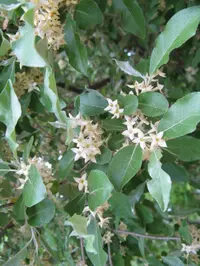
Recognize Persian lilac by its small opposite leaves, usually narrow-elliptic to lance-shaped, on many slender woody stems that form a fine-textured shrub. It stays relatively compact, often around 4 to 8 feet tall (1.2 to 2.4 m).

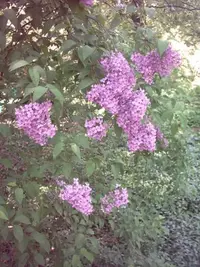
The flowers are borne in loose, narrow clusters, with long tubular bases and four short spreading lobes.

Syringa persica Identification

Is This Persian lilac?

Upload a clear image to check whether your plant ID is correct.

Clear images work best. Avoid photos taken too close or too far away

Check the shrub’s shape, leaves, and flower clusters for Syringa persica.

  • Usually a many-stemmed, rounded shrub about 4-8 feet (1.2-2.4 m) tall, often nearly as wide.
  • Leaves are opposite, simple, narrow oval to lance-shaped, and about 1-3 inches (2.5-7.5 cm) long.
  • Leaf margins are smooth, and the leaf tips taper to a slender point.
  • Flowers sit in loose, branched clusters at stem tips; each small flower has a long tube and 4 spreading lobes.

A light, airy habit with narrow opposite leaves is a useful visual check.

Persian lilac shows clear visual differences between early growth, flowering, and fruiting stages.

  • Young plant: Young plants are compact and twiggy, with slender stems and smaller, often narrower opposite leaves before the broader, arching shrub outline develops.
  • Mature plant: Mature plants form a dense, many-stemmed shrub about 5-8 feet (1.5-2.4 m) tall, with finer branching and a more spreading, rounded profile.
  • Flowering stage: Flowering shoots carry loose terminal clusters of narrow-tubed, pale lilac flowers that stand beyond the foliage, making branch tips look lighter and more open.
  • Fruiting stage: After flowering, the showy clusters are replaced by small dry capsules at the branch tips, shifting the outline from soft flower plumes to firmer seed structures.

In spring, Syringa persica becomes easier to recognize as fresh leaves emerge and the shrub quickly covers with airy clusters of pale lilac to nearly white flowers. Bloom is usually in spring, when the flowers stand out clearly against the new foliage. By late fall and winter, the leaves drop. The plant is then seen as a fine-textured, many-branched deciduous shrub with bare twigs and visible buds.

A few lilacs can be mistaken for Persian lilac at a glance.

common lilac(Syringa vulgaris)

Similar spring flower clusters and opposite leaves can mislead. Common lilac is usually a larger, coarser shrub with broader heart-shaped leaves. Syringa persica stays smaller and has narrower leaves.

Chinese lilac(Syringa × chinensis)

This hybrid also has arching branches and purple, fragrant flower clusters. Chinese lilac typically grows taller, often 8 to 15 feet (2.4 to 4.6 m), and its flower panicles are larger and denser than those of Syringa persica.

Syringa persica is native to parts of southwestern and central Asia, including Iran and nearby regions. It is associated with dry, rocky hillsides and open scrub rather than deep forest. That setting helps with identification because this lilac is linked to inland, semi-arid landscapes, not wetlands, shade woodland, or coastal habitats. Finding a similar shrub naturalized far outside that region usually points to cultivation rather than a truly wild native occurrence.

Not Sure About the ID?

Upload a photo to Botan for a quick second opinion that helps confirm what you found before labeling or comparing similar plants.

FAQ

The quickest clue is the airy cluster of very fragrant lilac flowers paired with small, narrow, entire leaves. This species is also a relatively fine-textured shrub, often with arching branchlets, which helps in identifying Persian lilac.

More Plant Identification Guides

Know Your Plant Better

Use a photo with Botan to identify it, then review plant details, care information, and common problems matched to the result.

Botan app identifying a plant from a photo
How to Plant Pumpkin Seeds for a Fall Harvest and Grow Your Own Patch

7 min read · 4 Nov 2026

How to Plant Pumpkin Seeds for a Fall Harvest and Grow Your Own Patch

A backyard pumpkin patch starts months before the first leaves turn: the harvest that ends up on the porch in October is decided by what a gardener does in late spring.

Beginner Guides
How to Plant Pumpkin Seeds for a Fall Harvest and Grow Your Own Patch
Top 15 Fast-Growing Trees For Your Garden

13 min read · 28 Jul 2026

Top 15 Fast-Growing Trees For Your Garden

Learn which of the 15 fastest-growing trees will suit your area. We’ll share detailed information on each: growth rate, mature spread, key tree demands, and main vulnerabilities. Read on and make the best choice possible.

Plant Recommendations
Top 15 Fast-Growing Trees For Your Garden
How Fast Does Bamboo Grow Per Day, Month, and Year

10 min read · 7 Jul 2026

How Fast Does Bamboo Grow Per Day, Month, and Year

Bamboo grows extremely fast: some species can reach 5-6 m in just 3-4 months under the right conditions. This guide explains how much bamboo can grow per day, week, and year, and what affects its growth rate.

Plant Recommendations
How Fast Does Bamboo Grow Per Day, Month, and Year